

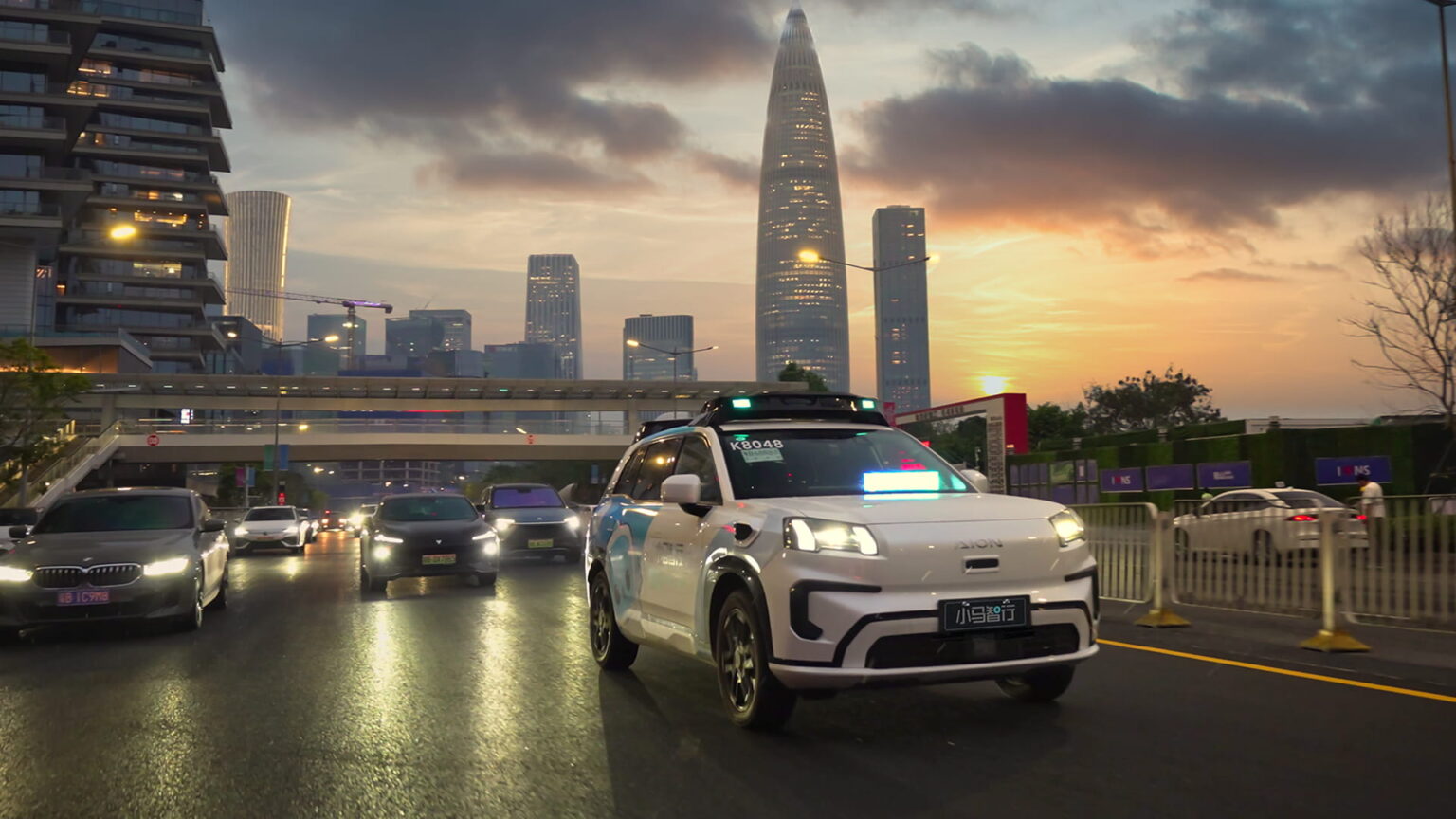
When hail darkened the sky over Beijing one day in September 2025, Yu Fei was not behind the wheel of any of the robotaxis caught in the storm. She was sitting in front of a computer, watching as the vehicles’ emergency fallback systems brought them to the side of the road.
Her job was to check each car, make sure it had stopped safely, and call passengers who were still inside. For several hours, she moved between vehicles and riders on her screens, trying to keep both calm and accounted for.
“It was tense and incredibly busy,” Yu said.
Yu works in remote assistance at Pony.ai, the Chinese autonomous driving company. The role has emerged to serve commercial robotaxi services that operate without an in-vehicle safety operator, following earlier stages of supervised testing. The driver is no longer in the front seat, but some of the work has moved to an office.
Remote assistance is often misunderstood as remote driving. It is not. Operators do not steer, brake, or accelerate a car through a virtual cockpit. When a vehicle requests for help, they review the situation and provide high-level information or guidance. The autonomous driving system decides how to proceed and remains responsible for vehicle control.
“Pony.ai’s remote assistance operators never control the vehicle directly,” said Song Yun, another member of the team. “We send instructions through the computer system. The vehicle itself carries them out.”
The work can move quickly between machine problems and human ones. On a typical day, operator Lan Zhi may call a passenger after an in-cabin system detects an unfastened seat belt, then contact another rider about earphones left behind after a trip.
Later, a robotaxi might encounter a temporary road closure where a traffic officer is directing vehicles away. Lan can remotely review the scene and provide guidance to take another route. The car’s system then plans and carries out the maneuver. If a robotaxi detects an ambulance behind it and proposes moving aside, she can assess whether the plan is appropriate. Again, the vehicle carries out the maneuver itself.
Pony.ai is not alone in building a human layer around driverless fleets. Alphabet’s Waymo calls its equivalent function Fleet Response. It says its vehicles contact human agents for additional context in unusual situations while the automated driving system remains in control. This past February, Waymo said about 70 remote assistance agents were on duty worldwide at any given time for a fleet of roughly 3,000 vehicles.
The terminology and responsibilities vary by company, but the underlying idea is becoming part of the operating model for robotaxis: autonomy handles the driving, while people remain available for ambiguity, emergencies, and passenger support.
Taking the human out of the car
Few careers trace that transition as clearly as Sun Jian’s. In 2021, he left his job as a driving instructor in Hebei, China, and joined Pony.ai as an in-vehicle safety operator. At the time, he said, the car might require five or six takeovers in a day and the testing area was limited.
Sun assumed fully driverless operations were at least seven or eight years away. By the end of 2022, however, Pony.ai had received approval to begin fully driverless road testing. He moved out of the car and into remote assistance.
The progression reflects the broader development of robotaxis in China. Safety operators first sat in the driver’s seat, then moved to the front passenger seat and later the back. Eventually, they left the vehicle. Services advanced in parallel from road tests to free passenger demonstrations and then fare-charging commercial operations.
Song and Lan joined Pony.ai directly as remote assistance operators in 2022, when the team was still being assembled and many vehicles still had safety personnel on board. Four years later, the cars need help with fewer driving situations.
Sun said robotaxis can now independently pass slow-moving vehicles or navigate around street-cleaning trucks in situations that once triggered a request for assistance. Song remembers when a robotaxi would stop behind a vehicle parked at the roadside and wait for guidance. Now, it can usually recognize the obstruction and drive around it on its own.
That improvement changes the job rather than simply eliminating it. As routine driving situations require less intervention, remote assistance operators can spend more time on unusual cases and passenger support.
Pony.ai requires candidates to hold a driver’s license and have a safe driving record. Attention to detail, judgment under pressure, and clear communication are also essential. New hires undergo about a month of classroom and practical training covering vehicle fundamentals, the remote assistance system, operating procedures, and emergency response.
Trainees must also learn local roads and pickup and dropoff points. Yu, who had studied art, drew maps to help memorize them. Guo Wei found turning around on narrow roads and dealing with temporary closures more stressful; he worried about selecting the wrong guidance.
After the initial assessment, employees typically spend about six months working under one-on-one supervision from an experienced operator. Yu remembers how reassuring it was to have a veteran colleague ready to answer any question. The feeling changed when she began working independently.
“Everyone was still nearby, but it felt different,” she said. “You were truly responsible for the vehicle.”
The better the car, the more human the job
Remote assistance began largely as a way to help vehicles navigate difficult road situations. As the technology matures, the role has taken on more of the qualities of customer service.
Yu, who joined in 2024, now spends much of her day reminding riders to fasten seat belts, close doors properly, or leave safety equipment alone. One call began with an angry passenger. After listening, she realized the rider was in a driverless car for the first time and had become frightened when it made a normal U-turn amid fast-moving traffic. The driving maneuver was routine. The fear was not.
Guo remembers helping a passenger during heavy rain in Guangzhou. The robotaxi had already reached its destination, so the rider could no longer change the endpoint using the standard in-car controls. The passenger pressed the customer service button and asked to be taken closer to a shopping mall to avoid the downpour. Guo provided the appropriate guidance through the system, and the vehicle completed the short diversion.
“The passenger said, ‘Wow, this is more considerate than I expected,'” Guo recalled. “I still remember that.”
Other requests are harder to predict. Passengers arrive with oversized luggage or try to exceed the vehicle’s capacity. Visually impaired riders traveling with guide dogs may need help commencing a trip. Pony.ai later introduced accessibility features for visually impaired users, reducing the need for assistance in some of those cases.
Scale brings a different kind of pressure. During China’s Labor Day holiday in 2026, Chinese pop group Teens in Times held concerts in Guangzhou’s Nansha district. As crowds left late at night, Pony.ai’s dispatch system sent robotaxis toward nearby transport hubs. The company said the vehicles completed about 3,000 passenger trips over four nights during peak departure periods.
Many riders were using a robotaxi for the first time. They pressed the customer service button to ask where to put luggage, whether a destination could be changed, or simply what to expect from a car with no driver.
A vehicle may be able to plan a route, but it cannot always explain a detour, calm a nervous passenger, or understand the emotion behind a complaint. The closer the driving system gets to handling ordinary road situations by itself, the more the remaining work can center on exceptions and human reassurance.
A labor market still taking shape
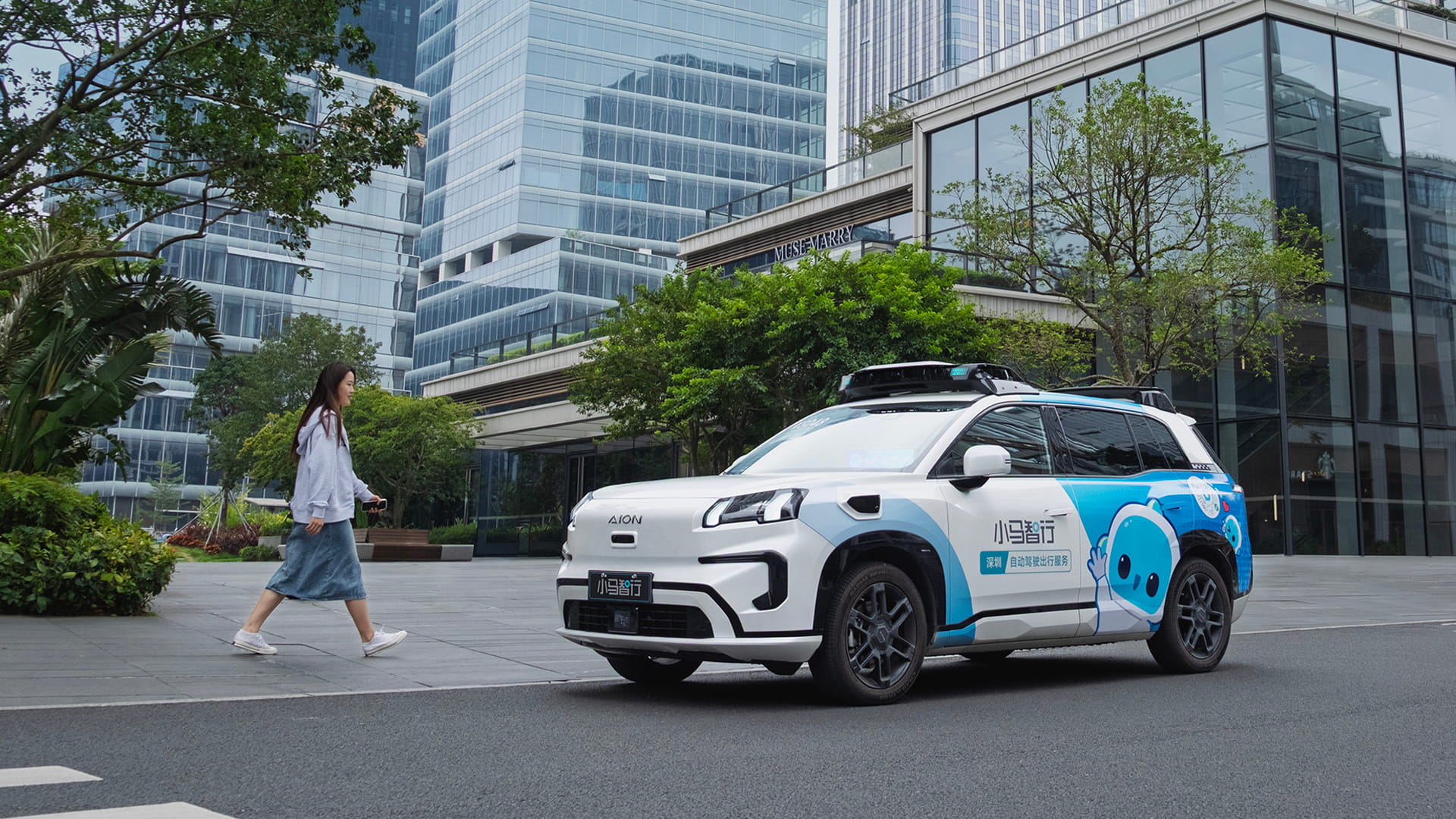
Remote assistance remains a small occupation, but the market forming around it could be substantial. Goldman Sachs Research expects the global commercial robotaxi fleet to expand from about 7,000 vehicles in 2025 to one million in 2030 and roughly six million in 2035, when it forecasts the market will be worth about USD 415 billion. In a separate forecast published in April this year, Goldman analysts projected China’s robotaxi fleet would reach 3.1 million vehicles by 2035.
The expansion should support jobs across the autonomous vehicle supply chain, from engineering and data annotation to testing, fleet operations, and maintenance. Remote assistance will form part of that ecosystem, but staffing is unlikely to increase in lockstep with the number of vehicles.
As the technology improves, each remote assistance agent should be able to support a larger fleet. Goldman estimates that the ratio of vehicles to human remote operations staff could rise from six to one currently to 26 to one by 2035, sharply reducing labor costs per mile. The result is a paradox: the industry is creating new roles even as it works to reduce how often each vehicle needs them.
That tension is closer to what economist Joseph Schumpeter meant by creative destruction than the simplified claim that technology merely replaces one job with another. In “Capitalism, Socialism and Democracy,” he described a process of “industrial mutation” that “incessantly revolutionizes the economic structure from within, incessantly destroying the old one, incessantly creating a new one.” The destruction and creation do not necessarily happen at the same speed, in the same place, or for the same workers.
The automobile created repair shops, filling stations, road construction, and modern logistics even as it displaced older forms of transport. Robotaxis may produce a similar reordering, but it is too early to know whether the new jobs will offset the driving work that automation could eventually remove.
For the first generation of remote assistance operators, the career path is already becoming clearer. Song still keeps a record of the first time she helped a vehicle out of a difficult situation. Lan remembers the characteristics of every high-risk area. Both have become team leaders, as has Sun. Guo now helps improve other operators’ work and trains new hires. Yu has gone from sketching road locations as a trainee to managing a fleet through a hailstorm.
A passenger who unlocks a driverless robotaxi in 2026 may see no one in the front seat. But when the road becomes ambiguous or the ride becomes unsettling, a human voice is still waiting somewhere beyond the screen.
Note: Yu Fei, Sun Jian, Lan Zhi, and Guo Wei are pseudonyms used at the interviewees’ request to preserve their anonymity.