
After a disappointing 2025, Li Auto is positioning itself for a rebound. The company’s immediate priority is to reinforce its position in the range-extended and premium vehicle segments, areas that have historically driven its growth.
Citing market sources, 36Kr reported that Li Auto has set a preliminary target of roughly 40% growth in 2026, equivalent to sales of at least 550,000 vehicles. That would mark a sharp increase from about 410,000 units delivered last year.
The goal broadly aligns with those of its peers. According to 36Kr, Xpeng is targeting 550,000 to 600,000 vehicle sales in 2026. Nio CEO William Li has said the company is aiming for annual growth of 40% to 50%, implying deliveries of around 450,000 vehicles. Xiaomi, still in a rapid expansion phase, has also set a 2026 target of 550,000 units.
To support that ambition, Li Auto is refocusing on what it knows best: range-extended vehicles. Management has identified reclaiming leadership in the segment as a key objective for 2026.
During the company’s third-quarter 2025 earnings call, Li Auto president Ma Donghui said the L series will receive a major refresh in 2026. The lineup will revert to a simplified SKU structure, with fewer variants and core features offered as standard across trims, including 5C fast charging.
People familiar with the matter told 36Kr that Li Auto is concentrating its top resources on the next-generation Li L9, which management views as central to reviving the broader product lineup. The updated L9 is expected to be larger, feature a redesigned chassis, and carry a battery exceeding 70 kilowatt-hours, enabling more than 400 kilometers of pure electric range.
The new L9 will also debut Li Auto’s self-developed M100 chip. Its smart cockpit is slated to receive a panoramic front display, upgraded interactive software, and Qualcomm’s latest 8797 in-car processor.
The model will feature a refreshed exterior as well. With a wide range of upgrades, Li Auto hopes the L9 can move further upmarket and reinforce its premium positioning. “The L9 alone carries a sales forecast of over 100,000 units,” a supply chain source told 36Kr.
The Li Mega is also expected to receive its annual update.
Over the past year, Li Auto shifted much of its attention to pure electric vehicles, launching the Mega Home, Li i8, and Li i6. The results fell short of expectations. The company delivered about 406,300 vehicles in total, just 63% of its annual target, which had already been revised down to 640,000 units from an initial goal of 700,000. Deliveries declined 18.81% year-on-year, falling below the 500,500 vehicles delivered in 2024.
With its EV lineup still far from achieving scale and overall deliveries under pressure, Li Auto’s product strategy has grown more conservative. According to 36Kr, the company is likely to launch only one new pure-electric SUV in 2026, shifting its focus back to range-extended models.
Refocusing on range-extended vehicles
Li Auto built its early success by dominating the mid- to large-size SUV market with range-extended vehicles, at one point reaching monthly deliveries of 58,000 units. That momentum stalled in 2025, when sales in the category dropped by more than half from their peak.
At the same time, heavy investment in EV development has yet to generate meaningful volume, stretching internal resources. For a company still dependent on a narrow product mix for profitability, competing aggressively across two capital-intensive fronts has increased operational risk.
Faced with intensifying competition and finite resources, Li Auto has opted to stabilize its core business before pursuing additional growth.
That task is becoming more difficult. Range-extended vehicles are no longer a lightly contested niche. Since last year, more automakers have been introducing models with large batteries and extended electric range, often at mainstream price points. 36Kr reported that Xpeng plans to launch range-extended versions of the G7 and G01, while Xiaomi is preparing a seven-seat range-extended SUV. Leapmotor’s D series will feature an 80.3 kilowatt-hour battery pack.
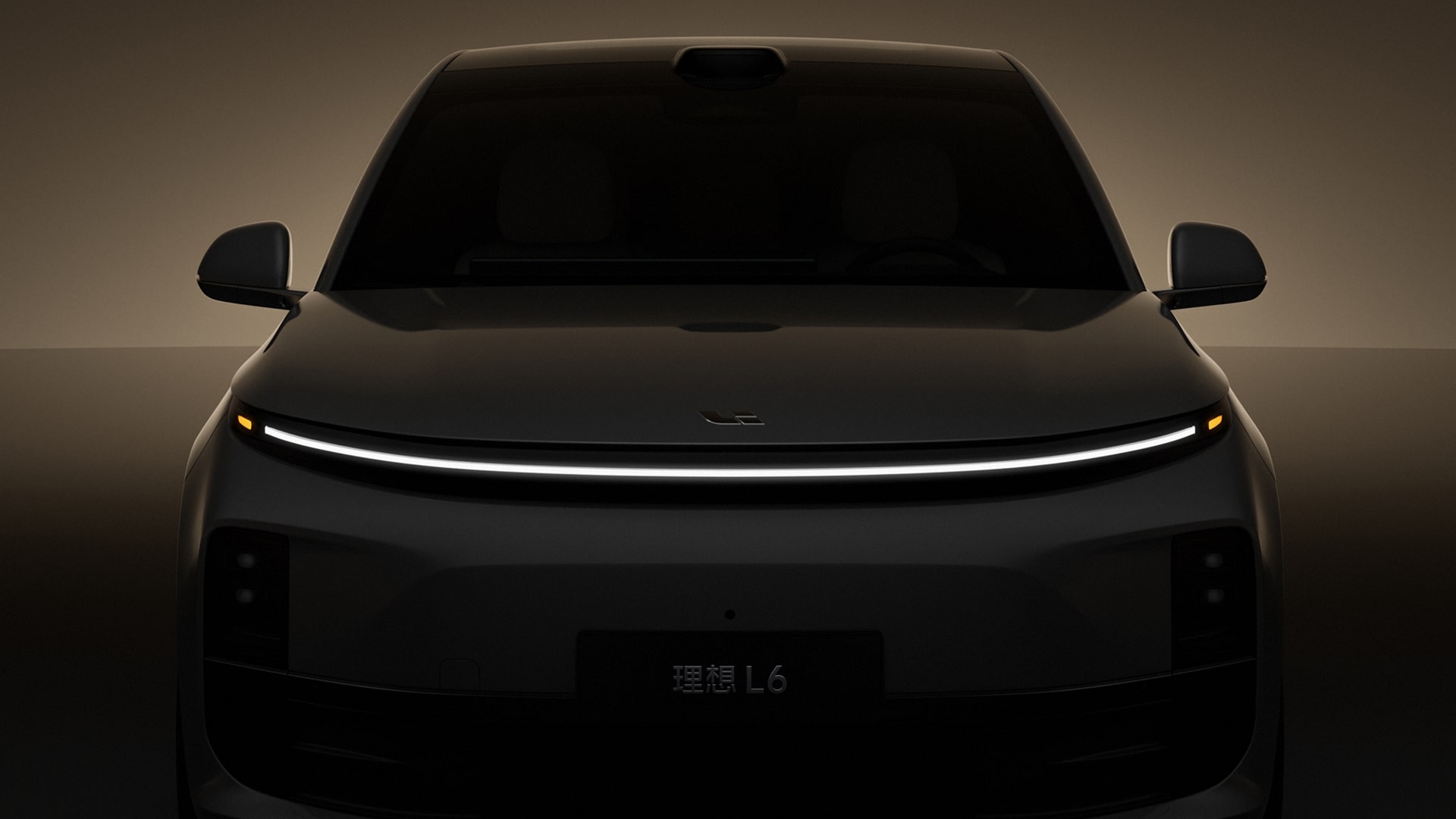
By comparison, Li Auto’s upcoming L9 will carry a battery exceeding 70 kilowatt-hours, while the L6 will use a 45 kilowatt-hour pack. Relative to rivals, the company’s battery strategy appears more restrained.
Li Auto is also developing new technical features to remain competitive. Supply chain sources told 36Kr that the next-generation L series will receive significant upgrades to its chassis and vehicle control systems.
Steer-by-wire systems are emerging as a key differentiator in 2026 models. As 36Kr previously reported, Li Auto, Xpeng, Chery, and Huawei’s Harmony Intelligent Mobility Alliance have all secured suppliers for EMB (electromechanical braking) systems, which are expected to enter mass production this year.
Internally, Li Auto is also narrowing its focus. “We believe the core range-extended car market will eventually center above RMB 400,000 (USD 56,000),” one source said.
After falling from first place to below third among new energy vehicle startups last year, Li Auto faces a difficult recovery. “Our market share above RMB 200,000 (USD 28,000) probably won’t return to 2022 and 2023 levels, but in 2026, we aim to regain a leading position,” a senior executive told investors.
RELATED ARTICLE
Climbing out of the EV slump
After rolling out most of its planned pure-electric models last year, Li Auto’s EV roadmap for 2026 remains unclear. Following two consecutive setbacks, the company has begun reassessing its organizational structure and leadership.
Zhang Xiao, who led development of models including the L9 and the original Li One, recently left the company, prompting a reorganization of its product teams.
After the underwhelming debut of the Li Mega, Li Auto had split its product operations into three price-based lines. That structure has since been consolidated into two. One line, covering the Li Mega, L9, L8, and L7, is now led by Tang Jing. The other, responsible for the Li i6 and Li i8, is headed by Li Xinyang.
Any competitive impact from these changes will take time to materialize. According to 36Kr, just over 1,000 new orders for the Li i8 come in each month, while monthly sales of the Li Mega have fallen below that level.
Li Auto is working to add Sunwoda as a second battery supplier for the Li i6 to ease delivery constraints. 36Kr reported that Sunwoda can now supply up to 3,000 battery packs per month, supplementing output from CATL (Contemporary Amperex Technology) and improving delivery capacity.
Li Auto is also restructuring its offline retail network. Some showrooms are appointing store managers to lead demonstrations, raising expectations for product knowledge and sales capability among frontline staff. Employees who fail to meet those standards may be reassigned, according to people familiar with the changes.
At the same time, a number of mall-based stores are set to close as leases expire, reflecting weak performance. One insider said many of these locations were opened rapidly during Li Auto’s expansion phase and no longer meet efficiency benchmarks.
Whether these adjustments will be enough remains an open question. For Li Auto, 2026 is shaping up to be both its most turbulent and most consequential year yet, a test of whether it can rebuild momentum and restore investor confidence.
KrASIA Connection features translated and adapted content that was originally published by 36Kr. This article was written by Xiao Man for 36Kr.