
Xpeng reported its latest earnings on March 20, posting its first quarterly net profit. The Chinese electric vehicle maker recorded RMB 383.21 million (USD 55.6 million) in net profit for the fourth quarter of 2025 on RMB 22.25 billion (USD 3.2 billion) in revenue. It guided first-quarter deliveries to 61,000–66,000 vehicles and revenue to RMB 12.20–13.28 billion (USD 1.8–1.9 billion), both down from a year earlier.
What stood out in the reported quarter was the source of the earnings lift. Revenue from services and other solutions rose 121.9% year-on-year to RMB 3.18 billion, supported by technical R&D services for a carmaker, parts and accessories sales, and carbon credit trading. That segment carried a 70.8% margin, well above Xpeng’s 13% vehicle margin, indicating that its technology and software stack may be starting to generate returns beyond vehicle sales.
That distinction matters because Xpeng’s car business, while improved, did not tell the full story. Gross margin rose to a record 21.3%, up from 14.4% a year earlier and 20.1% in the third quarter, but vehicle margin was essentially flat sequentially at 13%, compared with 13.1% in the prior quarter. The company’s first profit was therefore driven more by revenue mix than by a structural change in vehicle economics alone.
The quarter also benefited from non-core factors. Other income rose to RMB 839.7 million (USD 121.8 million), primarily due to higher government subsidies, while the company still posted a GAAP operating loss of RMB 44.3 million (USD 6.4 million). The profit milestone is therefore real, but not yet a fully clean operating result.
Xpeng’s management used the results to emphasize a broader identity beyond cars, anchored in artificial intelligence. In the release, CEO He Xiaopeng described the company as being at a “historical inflection point” for “physical AI” applications, linking its next phase not only to AI-defined vehicles but also to deploying its second-generation vision-language-action (VLA) model in international markets and scaling production of advanced humanoid robots. Brian Gu, vice chairman and co-president, said the company had established a profitability path that “sets [it] apart from traditional automakers.”
RELATED ARTICLE
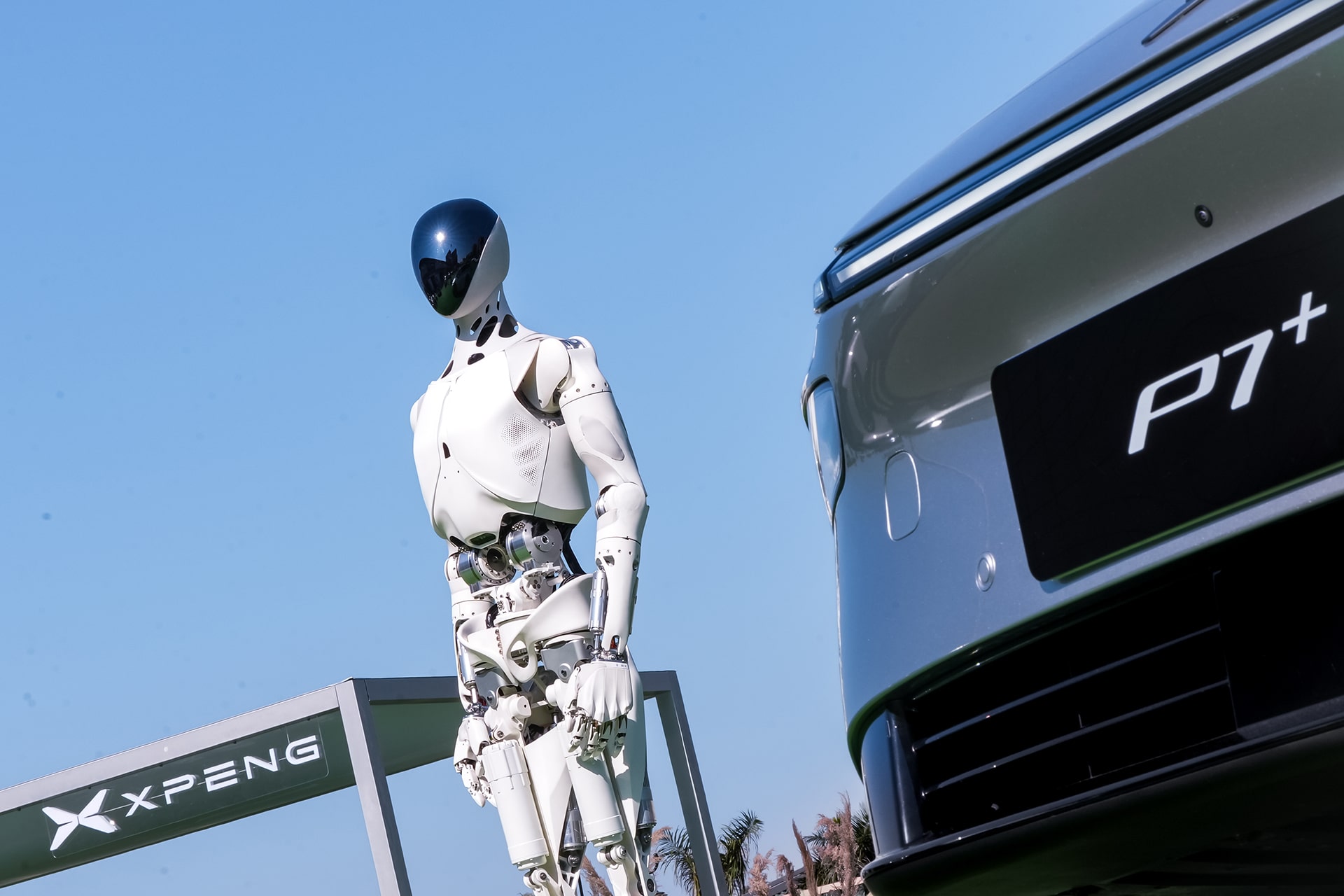
That ambition is beginning to show in the financials, albeit in early form. Full-year services and other revenue rose 65.6% to RMB 8.34 billion (USD 1.2 billion), again driven by technical R&D services, parts and accessories sales, and carbon credit trading. The segment remains smaller than vehicle revenue but is becoming large enough to influence group margins and support Xpeng’s argument that it is evolving beyond an automaker into a technology company.
On the earnings call, management highlighted three areas to support that case. The first was smart driving, where it positioned VLA 2.0 as a potential driver of showroom conversion and product mix. The second was overseas expansion, framed as a future profit center rather than simply an export channel. The third was robotics and its robotaxi venture, both longer-term bets that help explain continued spending on AI and related technologies.
The balance sheet provides room to pursue that strategy. Xpeng ended 2025 with RMB 47.66 billion (USD 6.9 billion) in cash, while full-year R&D spending rose 47% to RMB 9.49 billion (USD 1.4 billion), driven by investment in new vehicle models and technologies. That leaves the company better funded than many peers to support a strategy spanning vehicles, software, chips, and robotics.
The broader 2025 results suggest a company on firmer footing. Full-year deliveries rose 125.9% to 429,445 units, revenue increased 87.7% to RMB 76.72 billion (USD 11.1 billion), and gross margin improved to 18.9% from 14.3%. Net loss narrowed to RMB 1.14 billion (USD 165.3 million) from RMB 5.79 billion (USD 839.6 million).
What remains unresolved is how much of Xpeng’s broader platform strategy can translate into repeatable earnings in the near term. The quarter showed that its technology services can already support higher margins. It did not yet demonstrate that smart driving, overseas expansion, robotaxis, or robotics can do the same at scale. Until that changes, Xpeng’s earnings profile is likely to continue relying on its core vehicle business, even as management positions the company as something broader.
Note: RMB figures are converted to USD at rates of RMB 6.90 = USD 1 based on estimates as of March 24, 2026, unless otherwise stated. USD conversions are presented for ease of reference and may not fully match prevailing exchange rates.