
Demand for handheld smart cameras is growing, but a new entrant faces a market dominated by two brands.
According to IDC, global shipments reached 4.14 million units in the first quarter of 2026, up 33% year-on-year, with sales exceeding RMB 10 billion (USD 1.5 billion). The global market is expected to surpass 40 million units by 2030.
DJI accounts for 65% of shipments and Insta360 for 22%, giving them a combined share of nearly 90%. In the broader action camera market, their shares of sales are about 43.8% and 41.2%, respectively, or 85% combined.
Those positions give both companies a substantial advantage over newcomers.
Yet the proliferation of camera types can make choosing harder. A pocket gimbal camera offers steady footage and good image quality but can limit shooting angles. A thumb-sized camera can be mounted almost anywhere but may be less useful for frequent everyday recording. Buyers still face tradeoffs among stabilization, portability, camera placement, and frequency of use.
Hohem designed its latest product around those compromises. At IFA 2026, it unveiled its first two-in-one pocket gimbal camera, the Hohem Eyepic. A detachable camera module combines the steady footage of a handheld gimbal with the flexible placement of a wearable camera.
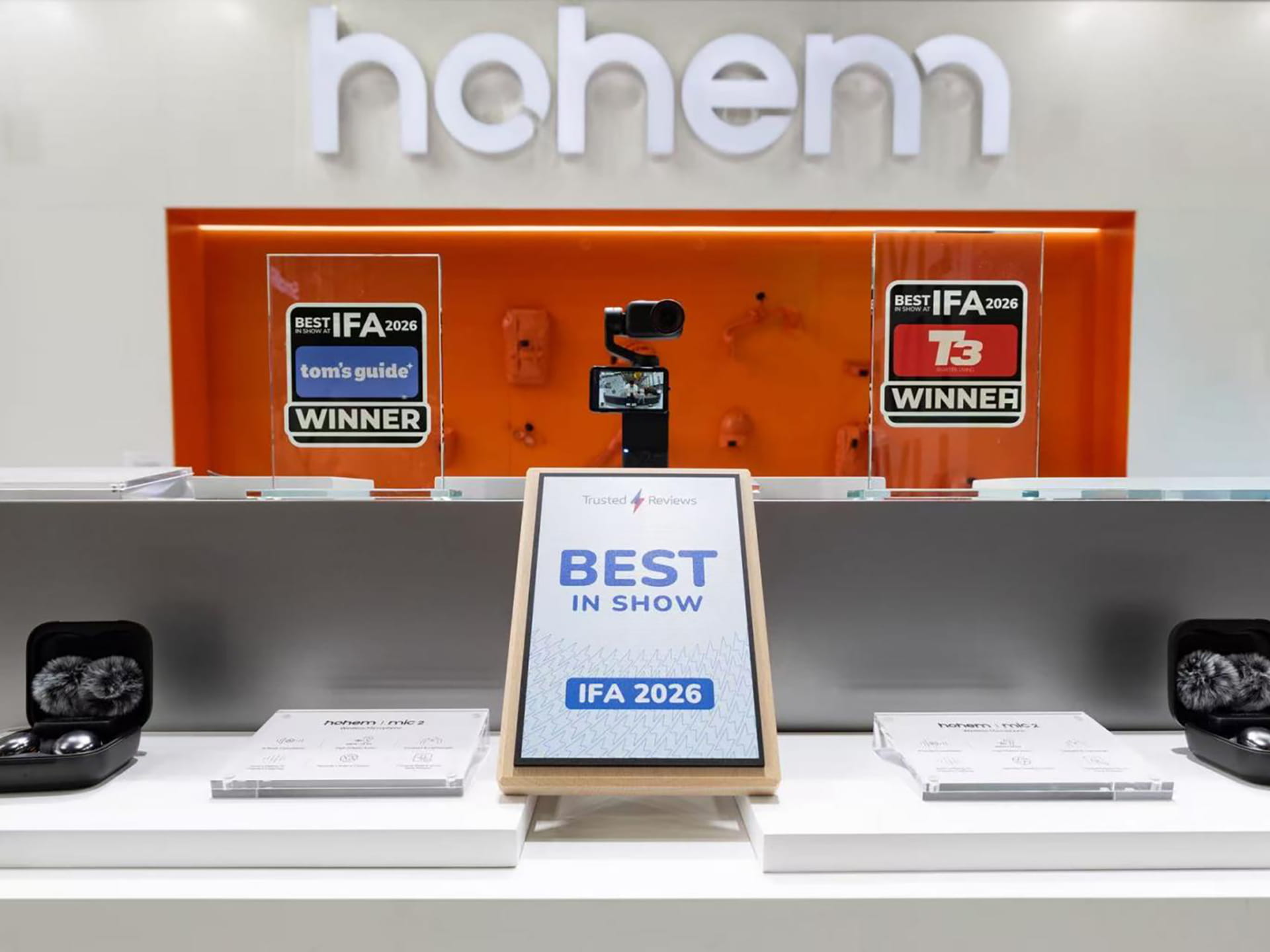
Founded 12 years ago, Hohem has released products including the T1 face-tracking smartphone gimbal, D1 foldable smartphone gimbal, and V3 smartphone gimbal with detachable controls. Its action camera stabilizers have reached a 70% share of the global market. Having sold stabilizers to more than five million users worldwide, it is now moving from imaging accessories into cameras.
The Eyepic extends that ambition beyond an adjacent product category. It asks how a company built on gimbal technology can meet everyday recording needs as further gains in hardware performance become harder to achieve.
As categories multiply, consumers find it harder to choose
Handheld smart cameras have split into increasingly specialized categories over the past several years.
Gimbal cameras use three-axis stabilization to keep footage steady while the user moves. DJI’s Pocket series defines the category, with cumulative Pocket 3 sales alone exceeding ten million units. Action cameras appeal to extreme sports enthusiasts through durability, water resistance, and impact resistance. Insta360’s X series captures a 360-degree view, letting users shoot first and frame their footage later. Wearable thumb cameras compete on weight: Insta360’s Go series weighs 35.5 grams and can attach to a hat brim or a magnetic mount, making it barely noticeable when worn.
Each category has distinct strengths suited to particular uses.
IDC sees handheld smart cameras evolving from niche extreme sports equipment into a secondary camera for mainstream vlogging and everyday recording. Their users now include recreational athletes, vloggers, and people documenting daily life.
People’s needs, however, rarely fit neatly within one category. More specialized devices can make choosing the right camera harder and a mistaken purchase more costly.
Devices prioritize different capabilities. Portability can compete with image quality, stabilization with freedom of placement, and first-person recording with creative shooting angles. Dense specification sheets and professional jargon make those trade-offs difficult for many users to assess. Following recommendations and repeatedly switching devices can leave them with several cameras gathering dust.
The tension reflects two approaches to product design.
Creators who need specialized equipment may prioritize high-resolution images, strong stabilization, or performance in particular shooting conditions. They are willing to pay for individual capabilities and use different devices for different situations. Manufacturers have responded by refining categories and pushing specific performance measures further.
Everyday users’ needs can change during a trip, a casual gathering, or an outdoor company activity. They tend to value a lightweight, portable camera that is easy to learn and ready to record. A useful setup should cover those changing needs without requiring several devices or repeated compromises. Ease of use matters as much as peak performance.
As leading manufacturers compete on image quality, stabilization, and weight, that versatility remains incompletely addressed. More hardware alone may not close the gap, which could offer a source of growth for handheld imaging companies.
That is the opportunity Hohem sees beyond competition on individual specifications.
“The opportunity we see isn’t to create yet another specialized category. On the contrary, a genuinely useful product can reduce the uncertainty and trade-offs users face when choosing among different form factors,” the Hohem team said of its view of the market.
Leading brands have already introduced consumers to these camera categories. A newcomer may therefore find more room in unmet needs than in another version of the same product with stronger specifications.
Meeting those needs may depend more on revisiting how people use a camera than on a technological breakthrough.
A detachable design combines two shooting modes
Hohem approached the design by examining the full recording process, from picking up the device to putting it down, and asking which steps could be simpler.
While other manufacturers increase sensor sizes, improve lenses, and add computing power, Hohem aims to reduce the number of devices users need. The Eyepic combines two complete shooting modes in one camera.
The Eyepic’s quick-release design pairs a magnetic attachment with a mechanical latch. It combines the stable view of a handheld gimbal camera with the flexible placement of a wearable thumb camera. The device works in both assembled and detached configurations.
When assembled, the camera attaches securely to the gimbal base through the latch and magnets. Three-axis mechanical stabilization compensates for hand movements in real time, keeping footage steady during handheld vlogging, travel recording, and filming children on the move.
Detached, the camera module works independently as a wearable thumb camera. It is water-resistant to a depth of ten meters and supports wireless video transmission over distances of up to ten meters. Users can clip it to a hat, attach it magnetically to metal, or take it underwater to capture first-person views, low-angle pet shots, fixed-position footage, and other angles that are difficult to reach with a handheld camera.
When the camera is detached, the gimbal motors lock automatically, fixing the three-axis structure in place. This makes it easier to hold the camera module in one hand and use its screen for live framing. It also prevents unnecessary motor movement and reduces power consumption while the gimbal is idle.
The assembled mode provides stabilization; the detached mode provides freedom of placement. Switching configurations lets users move between a steady primary view and more creative angles without buying separate gimbal and wearable cameras.
The design lets users change shooting modes as their needs arise. They can adjust the device to the situation in front of them, reducing the need to predict every use at the time of purchase or carry backup cameras.
The same emphasis on simplicity extends to the interface.
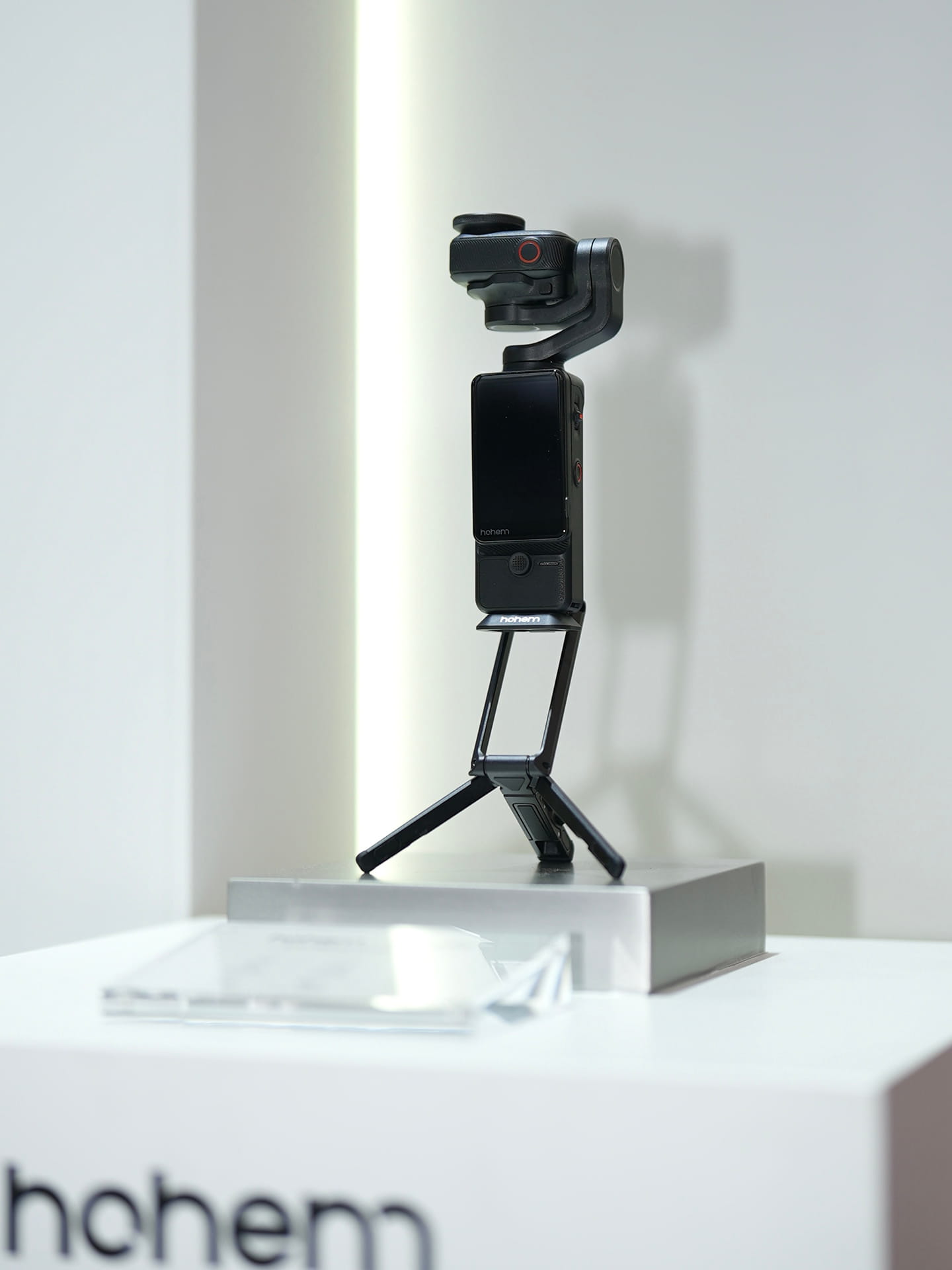
The Eyepic has a 2.51-inch screen, giving users more room to frame shots and read menus. Every icon has a text label, and the menus use a visual layout.
Hohem’s research and development team found that many beginners struggled to interpret interfaces built solely around icons. “Adding text labels to icons isn’t technically difficult, but few manufacturers are willing to do it,” a Hohem representative told Hardcore, a 36Kr publication. These refinements primarily serve nonprofessional users. In development teams focused on hardware specifications, such needs can receive less attention during product updates.
The Eyepic supports uncropped vertical 4K recording at 2160 × 3840 pixels and 60 frames per second. Hohem says it is the industry’s first gimbal camera to support portrait 4K recording at that frame rate. Its proprietary gimbal structure lets the sensor rotate vertically with the screen, using the full sensor area. This preserves pixels that would otherwise be discarded when cropping horizontal footage into a vertical frame. For social media users, the footage is ready to use without further cropping for vertical formats.
The companion app offers editing templates for different situations. Once a user selects a template, it matches footage, times cuts to the rhythm, and adds transitions. Users can export a finished video in two steps without learning timeline editing or adjusting color and audio parameters. That simplifies the process from recording to posting.
Across its hardware, interface, and software, the approach is consistent: keep the complex computation and engineering inside the device and give users simple controls.
Devoting resources to simpler operation requires product judgment in a market that often rewards visible performance gains.
During development, Hohem repeatedly asked what users were paying for and how that should guide its priorities. With specifications already exceeding many users’ needs, the team focused on how the product could serve everyday recording.
The Eyepic is its attempt to make that process more intuitive.
Hohem’s move from gimbals to cameras
As cameras have become widely accessible, recording has become easier. Choosing a device that fits everyday needs remains a separate problem.
Smartphones made it possible to carry a camera everywhere, but do not keep footage steady in every situation. Cameras improved image quality without necessarily making solo shooting easier. Specialized devices address individual uses while adding another decision for ordinary buyers.
The Eyepic reflects Hohem’s response after 12 years in mobile imaging, extending work that began well before this launch.
The origins of that response go back to an unfinished experiment seven years ago.
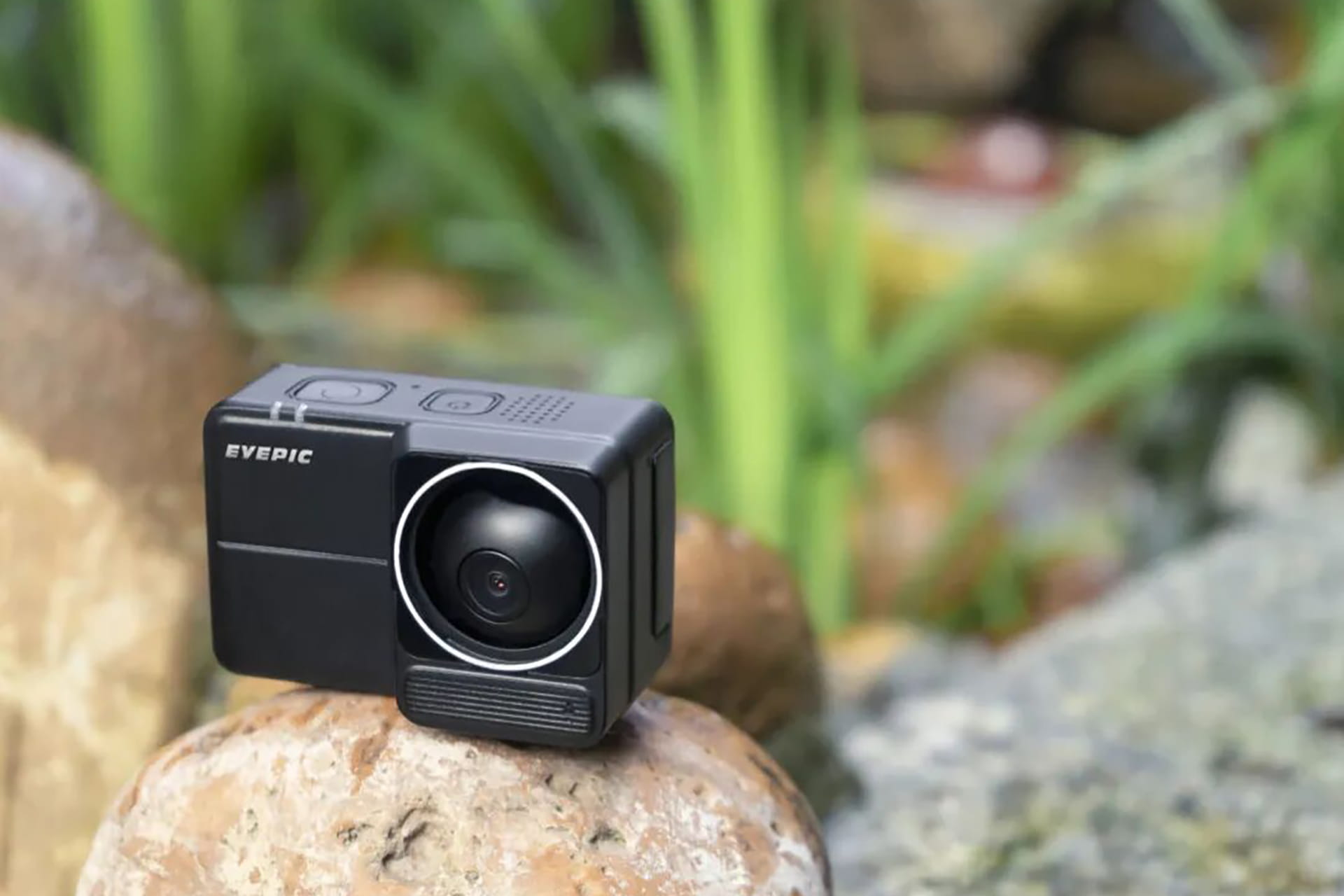
At the 2019 Hong Kong Electronics Fair, Hohem showed a prototype action camera with an integrated three-axis gimbal. It never entered mass production: the team still needed to develop its camera hardware capabilities and supply chain support. With limited resources, the startup prioritized its gimbal business.
The experiment left a question with the team: could one device combine the steady view of a gimbal camera with positions that conventional handheld cameras could not reach?
The question was put aside, but it never disappeared.
Hohem spent the following years testing ways to separate the lens from the user’s hand through its gimbal products. In 2021, it launched the V2 AI smartphone gimbal with on-device recognition and subject tracking. In 2024, the V3 smartphone gimbal with detachable controls and the M7 gimbal with a detachable monitor tested remote shooting control and live preview, respectively.
Those products earned solid reviews and sales. Together, they also demonstrated that a lens and its main control unit could be separated, controlled remotely, and monitored in real time in a system suitable for mass production.
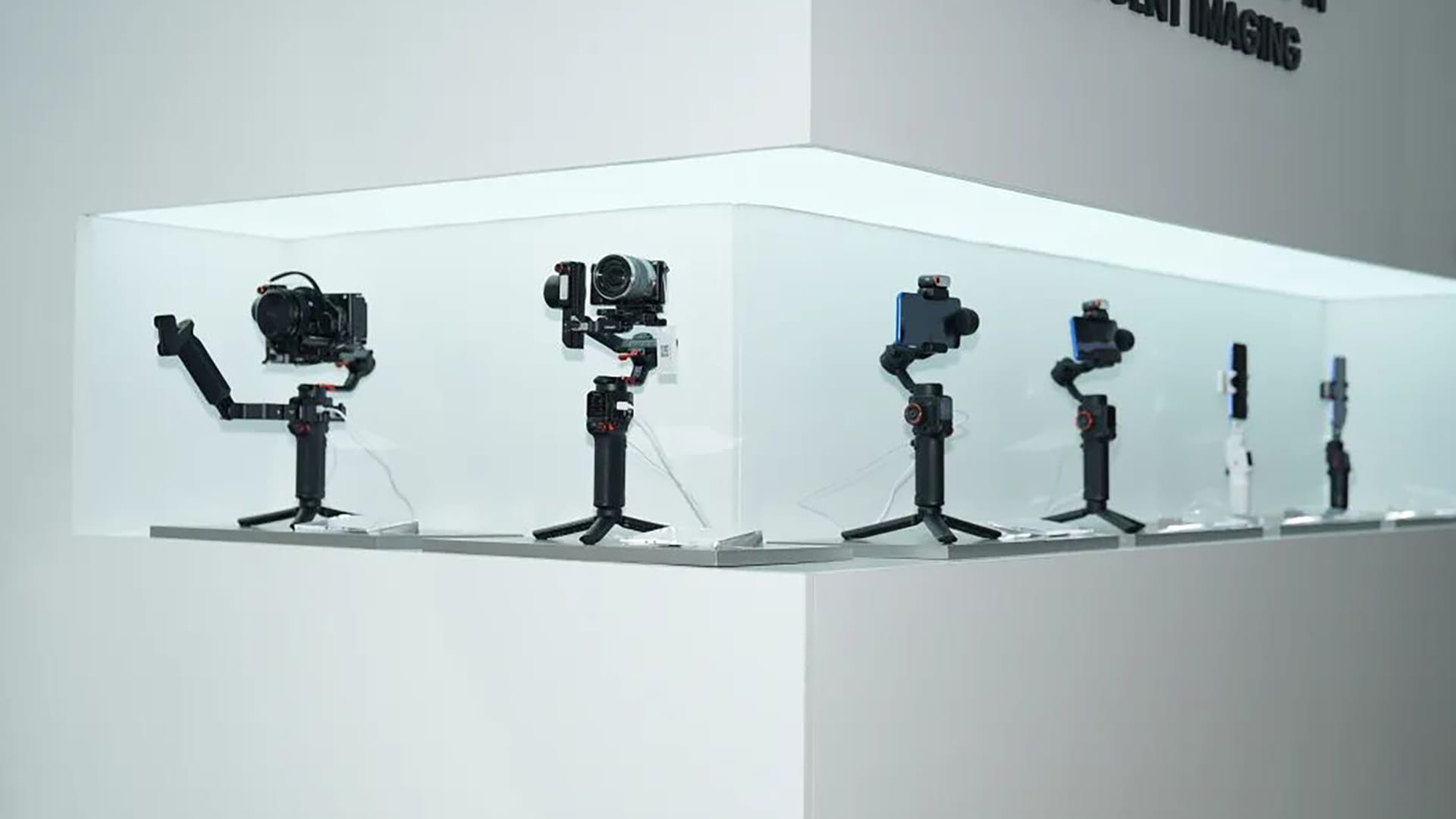
Hohem began with handheld gimbals for action cameras and became the world’s second largest smartphone stabilizer brand by shipments. Its move into the Eyepic continues the same effort to make recording simpler.
The Eyepic brings together functions tested across seven years of gimbal development: magnetic attachment, wireless video transmission, remote control, and coordination between detachable components. It integrates them into one camera system.
IDC forecasts that global handheld smart camera shipments will exceed 40 million units by 2030, representing a five-year compound annual growth rate of nearly 18%. Competition is also broadening beyond hardware specifications to include one-tap AI editing, stabilization in different situations, lightweight wearability, and accessory ecosystems.
At IFA 2026, DJI’s Osmo Pocket 4P and Insta360’s Luna Ultra continued to improve sensor specifications and optical configurations. Hohem’s pitch focuses on simpler operation and a lower barrier to entry, aimed at people who want to pick up a camera and record everyday life.
The approaches serve different needs: expanding creators’ capabilities and making casual recording more approachable.
As camera makers pursue more everyday users, ease of use may become an increasingly important point of distinction.
KrASIA features translated and adapted content that was originally published by 36Kr. This article was written by Xiao Xi for 36Kr.
Note: RMB figures are converted to USD at rates of RMB 6.72 = USD 1 based on estimates as of September 14, 2026, unless otherwise stated. USD conversions are approximate and, where appropriate, rounded for ease of reference. They may not fully match prevailing exchange rates.