
Over the past few weeks, news that the team behind Wuchang: Fallen Feathers had been disbanded, and that producer Xia Siyuan had left to start a new venture, has left many people with a sense of regret.
Developed by Leenzee Games, this Chinese soulslike action title once carried high expectations and went on to post solid results. By one estimate, after launching in 2025, the game sold around 1.2 million copies on Steam, another 300,000–400,000 on PlayStation 5, and roughly two million across all channels combined, generating more than RMB 500 million (USD 73.2 million) in revenue. By the standards of China’s single-player market, that puts it in the same league as breakout hits such as Dyson Sphere Program and Tale of Immortal.

More importantly, it pushed the pricing of Chinese single-player games further into blockbuster territory: RMB 248 (USD 36.3) on Steam in mainland China and USD 49.99 overseas. This showed that a Chinese-made single-player game could hold its ground on the global stage.
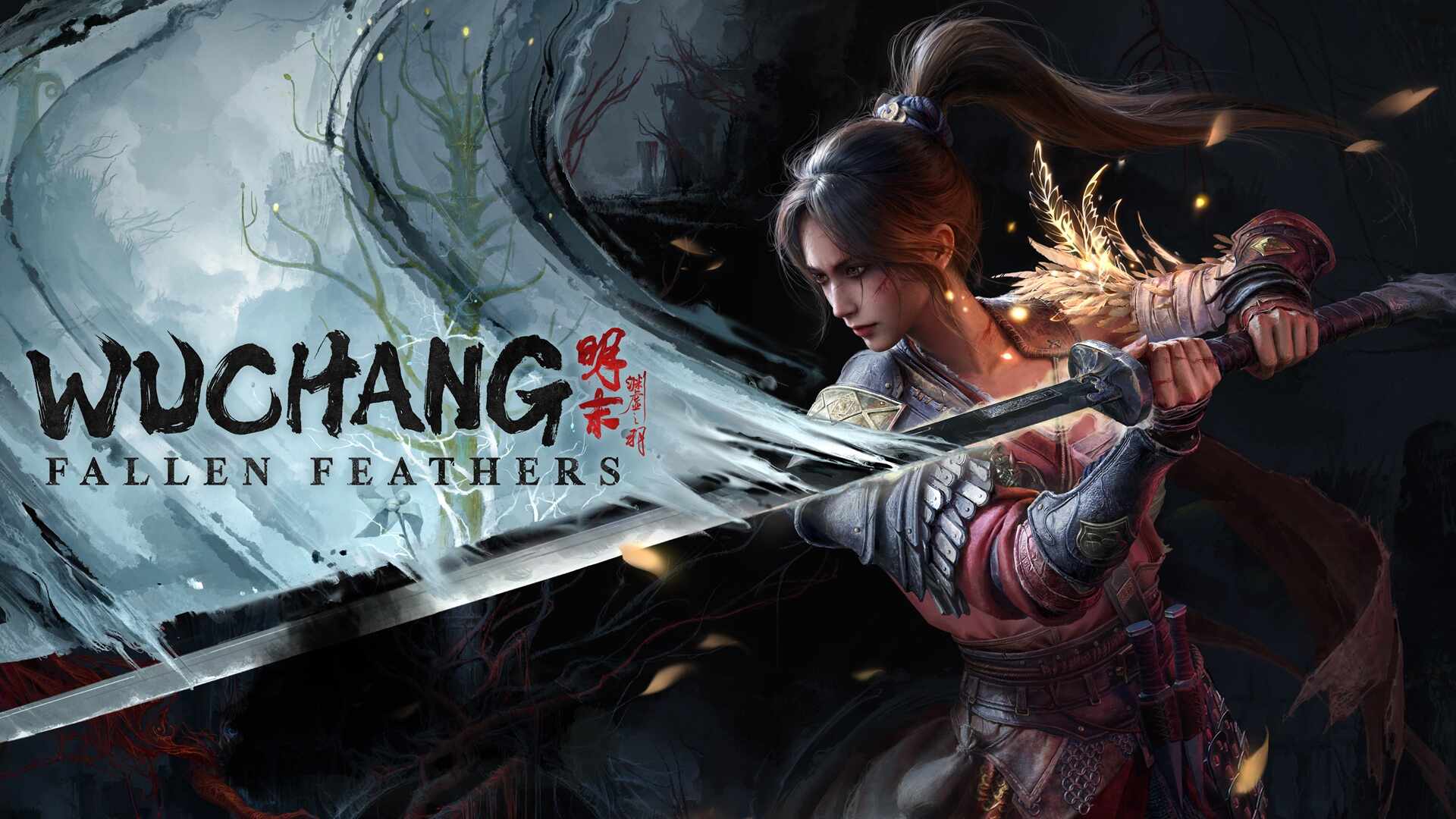
Leenzee’s story was also compelling. The studio started in virtual reality, survived for a time on outsourcing work, and eventually pushed through development on Wuchang: Fallen Feathers. At one point, it seemed to have little left except belief in the project.
Yet beneath the excitement was an awkward reality. Post-launch backlash, optimization issues, pricing missteps, and, most critically, a story direction that diverged sharply from mainstream player expectations quickly turned sentiment against the game.
Its publisher, 505 Games, still viewed the game’s performance as strong. But after revenue was split among multiple parties, the project only barely covered its development costs in its first year and failed to establish a sustainable profit cycle.
Before the game launched in 2025, 36Kr spoke in depth with several of Leenzee’s founders. Even then, the team’s confidence in Wuchang: Fallen Feathers and the hopes pinned on it were clear.
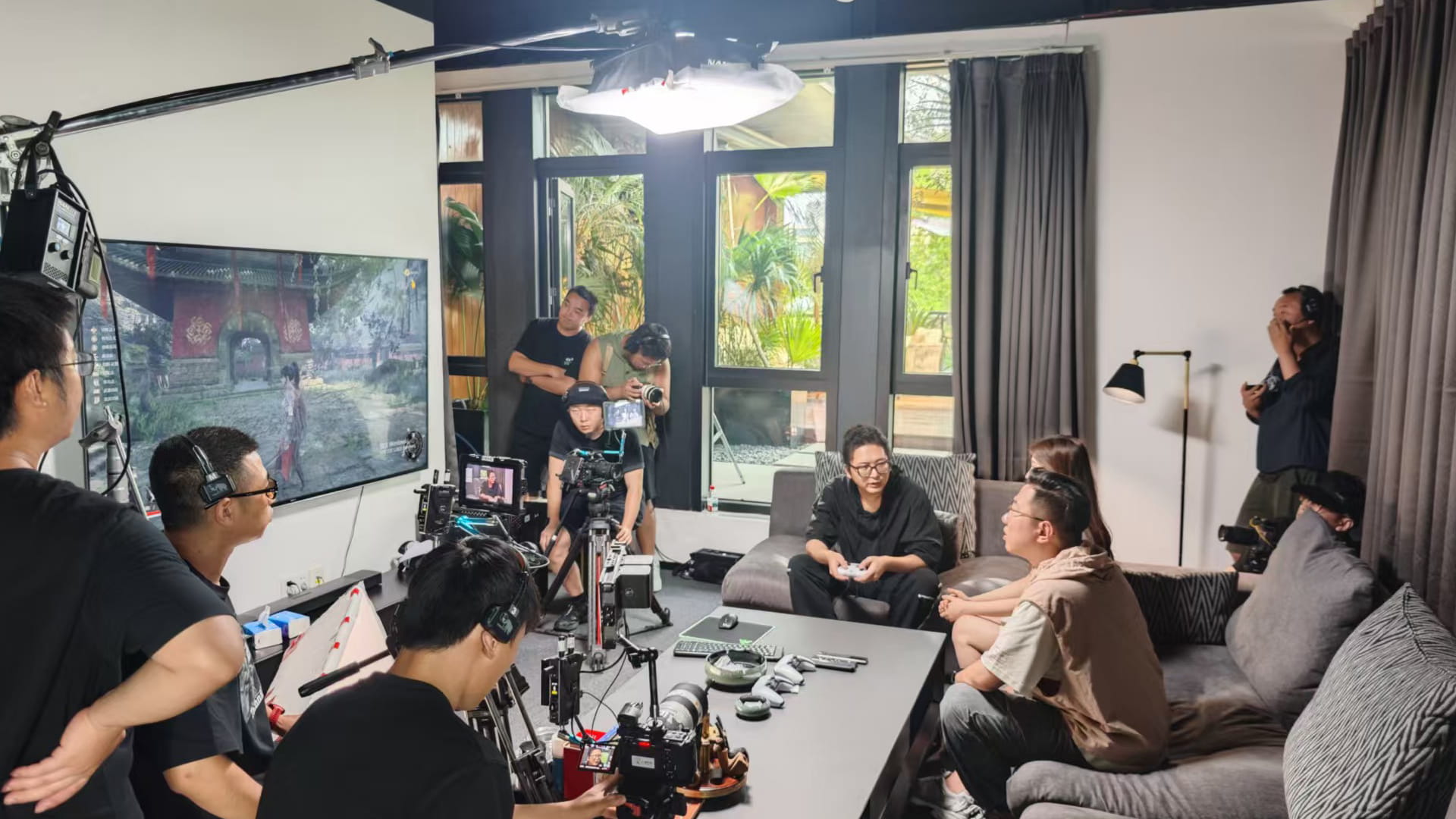
The company, founded in 2016, earned most of its early revenue from outsourcing. Its VR game AD 2047, which launched in 2021, was not enough to prove that Leenzee could build a large-scale game, much less a best-in-class single-player title. But for several of its founders, that ambition was both a dream and the reason Wuchang: Fallen Feathers endured long enough to deliver eye-catching sales.
And yet, after a chain of events, the game still arrived at a disappointing outcome.
Leenzee’s shareholders wanted the entire team shifted back to outsourcing work. The team refused and was disbanded. Producer Xia left and started over with a new studio registered with less than RMB 50,000 (USD 7,319.1) in capital. In a brief conversation, 36Kr learned that he is now focused on new work. Perhaps the past is best left behind.
Still, the sense of regret lingers. How did a game that sold around two million copies, cleared its cost hurdle, and appeared viable end up undone by a single misstep? Why did it come to this? Or, put another way, now that Chinese single-player games have come this far, what is still missing?
To answer that, it is necessary to confront a basic fact: Chinese games may no longer need to prove themselves to the world.
There is a saying, “The more someone shows off, the more they lack.” It is not entirely accurate, but it contains some truth. For a long time, emphasis on how far Chinese-made games could go implicitly placed them in a lower position, as if they were trying to prove something externally. That premise may already have shifted.
In reality, many of China’s anime-style games have established a level of dominance that is difficult to match, even in Japan, where the style originated. From the “cultural export” discussion sparked by Genshin Impact, to the overseas momentum of Wuthering Waves, to Love and Deepspace winning awards across multiple categories, including at The Game Awards (TGA), Chinese games have already made a global impact.
Tencent’s Delta Force has pushed the ceiling higher in the shooter genre, an area traditionally dominated by Western studios. Rather than simply imitating existing models, the game has developed its own approach to the extraction shooter loop.
Some argue its strongest results are limited to China. Even so, it is difficult to deny that it has found a more balanced approach to monetization and gameplay earlier than either Escape from Tarkov or ARC Raiders, and may have progressed further along that path.
At the level of individual titles, Black Myth: Wukong has demonstrated, in both technical execution and project management, that it can stand alongside top global teams. After its release in 2024, it sold more than 20 million copies in its first month, achieved media scores above 90 worldwide, and received a “Game of the Year” nomination at TGA. Beyond commercial success, it became a cultural signal that Chinese developers can produce globally competitive games.
China’s market also continues to produce smaller titles each year that attract attention. Games such as Sultan’s Game, Escape From Duckov, and the upcoming Phantom Blade Zero have each pushed Chinese single-player games forward in different ways. Based on these developments, overseas communities have even begun creating dedicated tags for “Chinese games.” On Reddit, the “ChineseGames” subreddit has grown to more than 100,000 members, with discussions focused not just on origin, but on distinct creative identity.
RELATED ARTICLE

The desire to see Chinese-made games succeed is now less about external recognition and more about conviction shaped by experience, interest, and, at times, regret among developers themselves.
So why does that conviction keep converging?
One explanation is that, even as China has achieved strong results in long-running, cross-platform titles, both the industry and players still hope for more games like Black Myth: Wukong. That expectation is, in some cases, stronger than the desire for the next Honor of Kings or Genshin Impact.
Single-player games are defined less by commodity value and more by content value. Compared with metrics such as daily active users or retention, they are more design-led and content-driven. In an era dominated by live-service models, they preserve a sense of completeness. They ask players to invest time, build emotional connections, and reach a defined conclusion, something that algorithm-driven systems do not replicate.
Another factor is that players still look to high-quality games to demonstrate that video games, as a medium shaped by advancing technology, can carry deeper meaning. If games still require cultural validation, then Chinese single-player titles are among the strongest arguments available.
Looking back at how this generation of Chinese game developers came of age reveals a clearer pattern. Many experienced both the peak and the subsequent decline of the domestic industry, then spent years working within commercial systems. To make Black Myth: Wukong, Game Science first had to build Asura. To sustain itself, S-Game had to set aside Rainblood and develop Phantom Blade.
For these developers, making a single-player game is not a question of one format being superior to another. In the first two categories, many functioned as interchangeable parts within larger systems, constrained by data-driven demands and distanced from the original impressions that games had left on their generation.
Financial factors also play a role.
In recent years, as the market has matured, the industrial model behind mobile games has stabilized. Capital has increasingly flowed into single-player projects, where the potential upside appears broader:
- Tencent has invested in multiple teams, including Game Science and S-Game.
- NetEase has begun developing Blood Message.
- Mihoyo, known internationally as Hoyoverse, appears to have moved closer to the production quality typically associated with single-player games.
- Hypergryph has also explored the space across different directions.
The shift reflects not a change in capital’s mindset, but a change in expected returns.
At the same time, China’s player base has expanded significantly. In 2015, the country had only a few million Steam users. That figure has at times exceeded 50 million, accounting for roughly half of the platform’s total. A large community of players is now willing to pay for legitimate copies.
State support has also increased. Licensing approvals have rebounded in recent years, and official attention has grown:
- In 2023, the China Audio-video and Digital Publishing Association, together with CCTV, released a documentary on the development of Chinese games.
- In 2025, the Ministry of Education approved a game art design major, formally incorporating the field into the national higher education system.
- The State Council Information Office has also called for expanding game exports and strengthening the full industry chain, from IP creation to overseas operations.
- Local governments in cities such as Beijing, Shanghai, Shenzhen, and Guangzhou have introduced their own support policies.
But was the arrival of Black Myth: Wukong just an isolated moment?
In November, a question on Zhihu asked whether 2026 would be an even stronger year for Chinese single-player games. It drew little attention and received only one reply, from the producer of The Scroll of Taiwu:
“This is inevitable. It is where the trend is headed.”
That statement may serve as both a prediction and a summary of the market’s trajectory. The success of Black Myth: Wukong was not accidental, but the result of long-term accumulation reaching a turning point. When industry participants begin describing the future as “inevitable” rather than aspirational, the direction is already shifting.
In terms of player scale, policy support, and technical capability, the foundations of a sustainable ecosystem are taking shape. One clear sign is that major companies are placing greater emphasis on developing the IP they already hold:
- CMGE has acquired global rights to Chinese Paladin in an effort to build a broader franchise.
- Wangyuan Shengtang has expanded Swords of Legends across film, games, and merchandise.
- Tencent has also begun allocating dedicated space for single-player titles at its annual events.
Over time, developing single-player games may become both commercially viable and structurally supported, rather than a high-risk pursuit driven by personal sacrifice.
This shift also points to a broader redefinition of games as an entertainment medium. When short videos chop people’s attention into 15-second units and recommendation algorithms steadily wear away the possibility of deep thought, the strong immersion and interactivity of single-player games provide a form of engagement that remains difficult to replicate elsewhere. For Chinese games, that experience is often rooted in cultural expression that is still evolving.
In 2022, Genshin Impact released its “The Divine Damsel of Devastation” chapter, a story rooted in Peking opera and fused with modern musical composition, and it sparked a wave of enthusiasm overseas. To understand Yun Jin’s lyrics, foreign players actively looked up the history of Chinese opera. On YouTube, large numbers of explainer videos appeared, breaking down operatic vocal techniques and the rhyme structure of traditional lyrics.
Gujian 3, meanwhile, centered on inheritance as its theme and elevated its focus from personal love and hate to questions of the survival of a people and the transmission of civilization, allowing countless players to feel, perhaps for the first time, the expressive mission of games as a cultural medium.
Emotions that are difficult to convey through language alone can often be communicated more effectively through interactive audiovisual design.
That is why the road ahead for Chinese games is their own. There is no ready-made template to follow, because the stories China wants to tell, the players it wants to reach, and the culture it wants to carry are all unique. The West has its fantasy epics. Japan has its samurai tales. Chinese wuxia, xianxia, mythology, history, and the small textures of contemporary urban life are still waiting for a game language of their own.
This returns to the original question: what is still missing?
Maybe what is missing has never been the ability to make good games. Maybe it is an ecosystem that allows good games to continue to live. The story of Wuchang: Fallen Feathers has already shown that a game that sells enough copies might be given the chance for continued investment in a mature overseas market. But here, after a first attempt that was deemed “not successful enough,” the team lost everything. That is the question the entire industry needs to answer: as more and more teams choose this road, can they be given a support system strong enough to sustain them?
After leaving Leenzee, producer Xia set up his own studio with just RMB 50,000 in registered capital. What he needs is not sentimental regret, but an environment in which he can once again make games with some degree of stability.
This road will have its twists. There will be failures. Teams will break apart. But this time, the people seated at the table are not just a small circle of dreamers. They are a whole generation of players and creators who lived through the rupture. They have seen the glory years, and they have seen the decline. Reality has worn them down, but the fire inside them has never gone out.
After all, victory and defeat are common in the world of warriors. A hero can always begin again.
KrASIA features translated and adapted content that was originally published by 36Kr. This article was written by Guofu (alias) for 36Kr.
Note: RMB figures are converted to USD at rates of RMB 6.83 = USD 1 based on estimates as of April 21, 2026, unless otherwise stated. USD conversions are presented for ease of reference and may not fully match prevailing exchange rates.