
Sea Limited’s fourth-quarter results capped 2025 as a year of broad-based expansion across Shopee, Monee (formerly SeaMoney), and Garena, with profitability improving alongside scale. Still, the market reaction suggested investors wanted more than strong year-on-year (YoY) growth, particularly given how much expectation has rebuilt around Sea’s ability to defend Shopee’s margins while scaling credit and sustaining Garena’s momentum.
Sea reported Q4 GAAP revenue of USD 6.85 billion, up 38.4% YoY and above the consensus estimate of USD 6.42 billion. Net income reached USD 410.9 million, up 72.9% YoY, while adjusted EBITDA rose 33.2% YoY to USD 787.1 million. Diluted earnings per share came in at USD 0.63, missing the consensus estimate of USD 0.92.
For full-year 2025, GAAP revenue increased 36.4% YoY to USD 22.94 billion, net income reached USD 1.61 billion, and adjusted EBITDA rose 75.2% YoY to USD 3.44 billion.
Investors were underwhelmed by the results. Sea’s New York-listed shares fell from USD 105.21 at market open on March 3 after the announcement to as low as USD 77.05 during the session before recovering to close at USD 87.82. The closing price still represented a decline of about 16.53% from the open and left the stock further from its 52-week high of USD 199.3 recorded last September.
The extent of the drop should also be considered in the context of escalating geopolitical tensions involving the US, Israel, and Iran, which have unsettled global markets. During the same trading session, the New York Stock Exchange (NYSE) Composite Index fell more than 400 points, or 1.77%. Investors are weighing the potential ramifications of instability in the Middle East, including developments around the Strait of Hormuz, a major global oil shipping route that media reports indicate Iran has closed amid the ongoing conflict.
Making Shopee less subsidy dependent
Shopee remained the main narrative driver, and the quarter showed Sea trying to keep growth elevated while shifting the quality of monetization.
Shopee’s gross merchandise value (GMV) rose 28.6% YoY to USD 36.7 billion, and gross orders increased 30.5% YoY to about four billion, supporting segment GAAP revenue growth of 35.8% YoY to USD 4.97 billion.
The more revealing signal was the revenue mix within that growth. Core marketplace revenue, which Sea described as mainly transaction-based fees and advertising, grew 50.2% YoY to USD 3.6 billion, while value-added services revenue, mainly logistics related, declined 7.5% YoY to USD 735 million because of higher revenue net-offs against shipping subsidies.
In practical terms, Shopee is emphasizing that monetization is increasingly coming from marketplace economics and advertising rather than from a logistics line item that can be distorted by subsidy mechanics.
During the earnings call, management sought to explain what Shopee is trying to build beyond quarterly GMV. Monthly active buyers and average monthly purchase frequency increased 15% and 10% in 2025 compared with a year earlier, respectively. Management framed these engagement gains as evidence that Shopee is not only acquiring demand but retaining it.
Logistics was also characterized as a moat that is difficult to replicate. Sea said SPX Express now processes more than 30 million parcels per day on average and described faster delivery reaching a double-digit share of order volume in large metro areas such as Bangkok and Jakarta. It added that buyers using instant and same-day delivery spent around 15% more on average after adopting those services.
Shopee’s next step, based on management’s description, is to turn delivery capability into a broader fulfillment layer that can attract and retain higher-value sellers, not just move parcels. Sea said it began rolling out fulfillment services across markets in 2025 and saw double-digit order penetration in some markets. The company also set a target to double fulfillment order penetration by the end of 2026.
That forward push sits alongside its loyalty strategy. Management said the ShopeeVIP membership program reached more than seven million subscribers at year’s end, more than doubling from the previous quarter. Members generated double-digit spending increases after joining, including in Indonesia, where the company said members spent about 30–40% more than before joining. Sea also said members contributed more than 15% of GMV in some markets during the quarter.
The company plans to launch the program in Brazil next, which Shopee described as its fastest-growing market in 2025.
That structural framing helps contextualize Sea’s guidance for Shopee in 2026: about 25% YoY GMV growth, with full-year adjusted EBITDA no lower than 2025 in absolute terms. The guidance signals that Shopee is trying to avoid buying growth through a renewed escalation of subsidies. Instead, Sea is betting that logistics efficiency, loyalty programs, and stronger monetization can support growth while protecting profit.
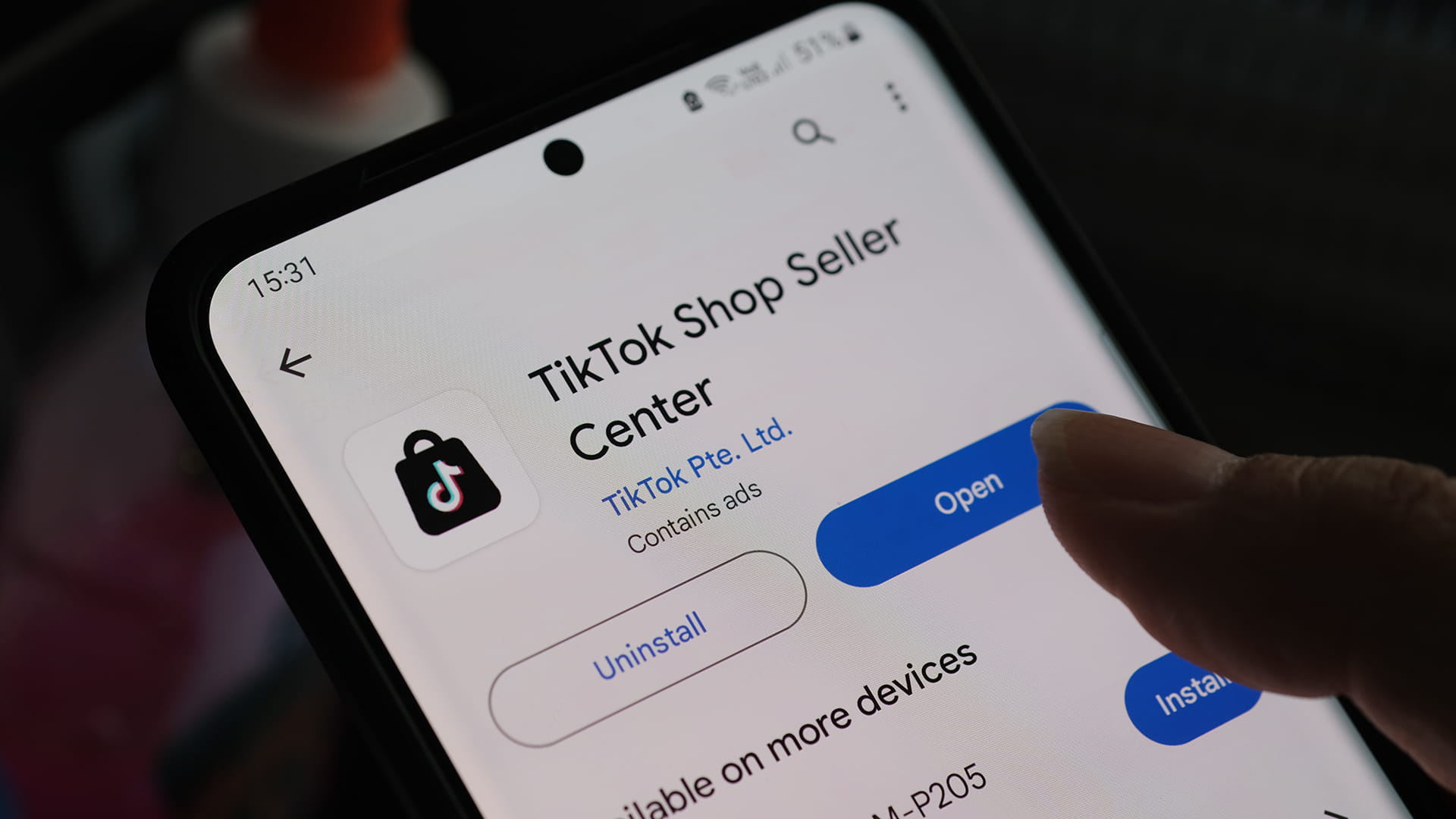
Competition provides a second layer of context. TikTok Shop’s expanding footprint across parts of Southeast Asia has increased investor sensitivity to whether Shopee can maintain growth without sacrificing profitability. Sea’s repeated emphasis on logistics, user retention, and content discovery suggests an attempt to build defenses that rely less on subsidies.

RELATED ARTICLE
Going broader and scaling faster with Monee
Monee is the segment where Sea’s growth is most directly tied to risk management. The quarter showed the company scaling credit rapidly while reporting stable headline credit metrics.
Monee’s fourth-quarter GAAP revenue rose 54.3% YoY to USD 1.13 billion, while adjusted EBITDA increased 24.7% YoY to USD 263.1 million.
Loan principal outstanding reached USD 9.2 billion as of December 31, 2025, up 80.4% YoY. This included USD 8.2 billion on-book and USD 1 billion off-book. The ratio of non-performing loans (NPLs) more than 90 days past due stood at 1.1%.
Details from the earnings call show how Sea is widening the top of the funnel rather than relying only on existing cohorts. Management said it moved beyond a whitelist model to an “all-can-apply” approach for SPayLater and cash loans, adding 5.8 million unique first-time borrowers in Q4.
Active credit users crossed 37 million, up more than 40% YoY, while average loan outstanding per user was about USD 240, up 27% YoY.
The pivot that matters most, however, is Monee’s move beyond Shopee checkout. Sea said SPayLater loans outside Shopee grew more than 300% YoY and accounted for more than 15% of its total SPayLater portfolio by the end of 2025. The company cited Malaysia as a market where off-Shopee usage was approaching 30%.
In practical terms, Monee is trying to turn Shopee distribution into a broader consumer finance franchise. That expansion increases the addressable market but also tests underwriting outside a more controlled commerce environment. For that reason, the stability of NPL metrics will remain a key point to watch in 2026.
Garena holds strong despite softer user engagement
Garena’s results highlighted the durability of a mature live-service franchise, where profitability can remain strong even as engagement metrics fluctuate.
Bookings rose 23.8% YoY to USD 672.4 million in the fourth quarter. Segment GAAP revenue increased 35.1% YoY to USD 701 million, and adjusted EBITDA rose 25.6% YoY to USD 363.8 million.
User metrics presented a more mixed picture. Quarterly active users reached 633.3 million, up 2.5% from a year earlier but down from 670.8 million in the previous quarter. The paying user ratio was 9.2%, compared with 8.2% a year earlier. Average revenue per paying user declined sequentially to USD 11.6 from USD 12.8 in the third quarter.
Management framed the results as evidence of the durability of Free Fire in terms of live operations and content cadence. Forrest Li, founder and chairman of Sea, described the franchise’s persistence during the earnings call:
“It is remarkable for a franchise of its vintage to still be growing so fast.”

The question for 2026 is whether that growth will remain supported by organic engagement or increasingly rely on higher-frequency collaborations and monetization events that could raise content costs or alter the payer mix over time.
Across its portfolio, Sea’s strategy appears consistent. It is pushing growth while attempting to improve the underlying economics:
- Shopee is scaling logistics, fulfillment, and loyalty to deepen engagement and support monetization.
- Monee is broadening access and expanding off-platform use cases while pointing to stable non-performing loan metrics as evidence that credit risk is not deteriorating.
- Garena is relying on franchise management and live operations to sustain bookings growth and profitability.
The quarter’s numbers appear to support each narrative.
The market response, however, suggests investors are focused less on whether Sea can grow and more on whether it can continue doing so without rebuilding familiar vulnerabilities: subsidy dependence at Shopee, credit cycle sensitivity at Monee, and volatility in Garena’s engagement and monetization.