
When a group of engineers left their jobs at major tech companies to start a business, companion robots were still far from a popular concept. But they believed the field would one day attract millions, or even tens of millions, of users.
In 2018, they founded Enabot in Shenzhen. Many team members were pet owners who struggled to find a satisfying pet companion robot when away from home, so Enabot decided to enter that niche.
Soon, advances in perception algorithms, multimodal interaction, and indoor navigation gave the team a clear path to bring their idea to life. In December 2019, Enabot launched its first mobile robot, the Ebo S. With a rounded, self-righting design, it could roam around the house and even roll under furniture to find hiding pets.
The product performed modestly at first, raising over RMB 2 million (USD 280,000) on overseas crowdfunding platforms, but it was not an immediate hit.
Like Nvidia’s GPUs, which found explosive new purpose decades after their invention, Enabot’s breakthrough arrived unexpectedly.
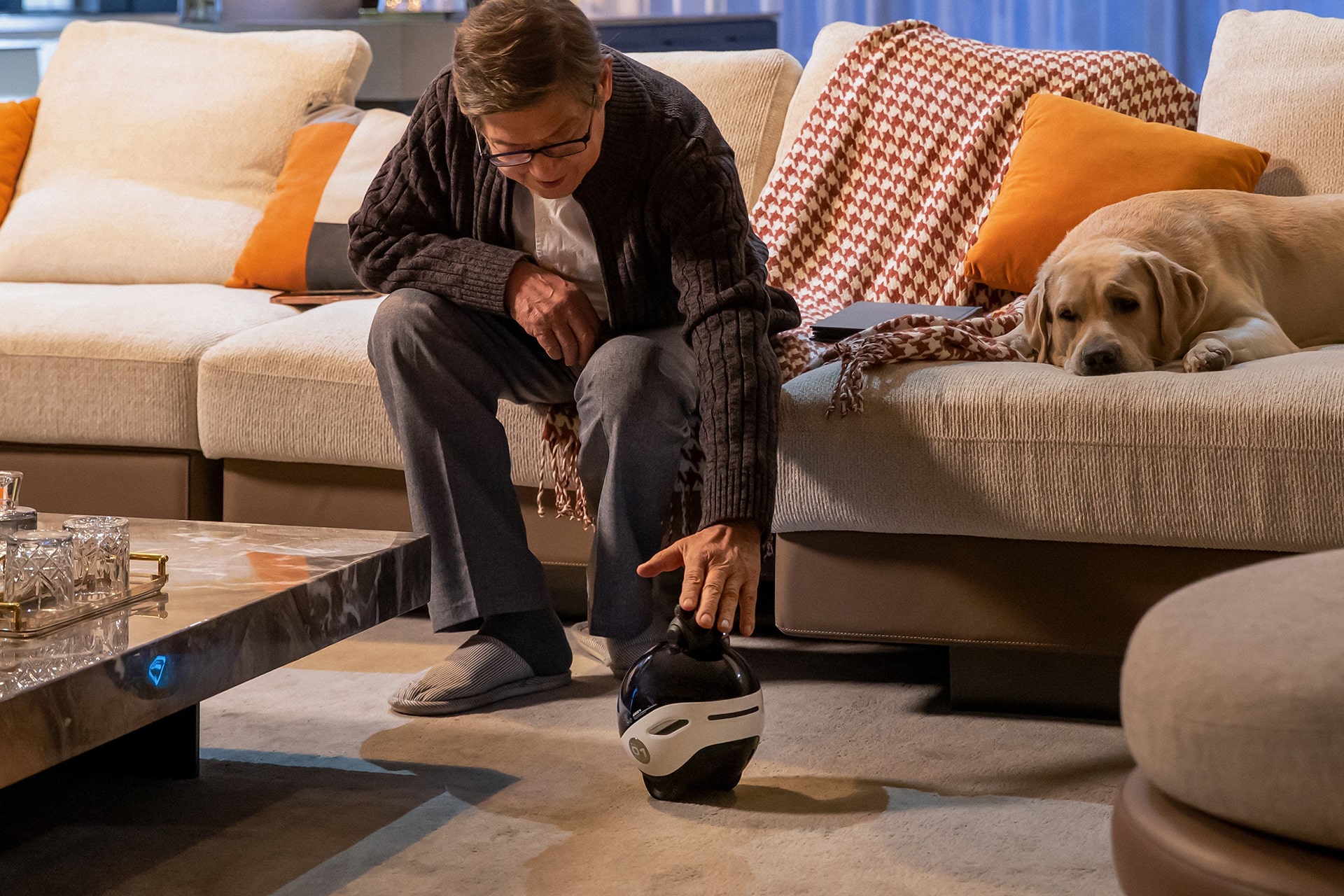
Originally designed as a companion robot for pets, the Ebo S quickly found uses beyond what its creators envisioned. Children of elderly parents used it to monitor daily activities remotely. Parents of toddlers discovered it could serve as a mobile babysitter. Couples in long-distance relationships used it to maintain a sense of presence and intimacy.
The company adapted quickly. Beyond pet companionship, Enabot began developing family-oriented robots such as the Ebo X, focusing more on companionship for children and the elderly.
By September this year, Enabot had surpassed one million users worldwide, with products sold in more than 160 countries and regions. Before reaching that milestone, it had secured multiple funding rounds from investors including HongShan, Longfor Capital, and Unity Ventures.
From pets to people
In the companion robot market, the core needs for pet and human companionship differ significantly.
According to Tong Shaonan, Enabot’s brand director, pet companionship focuses on two main functions: monitoring and interaction. Human companionship, in contrast, emphasizes emotional resonance and adaptability. These priorities shape product design, user experience, and R&D direction.
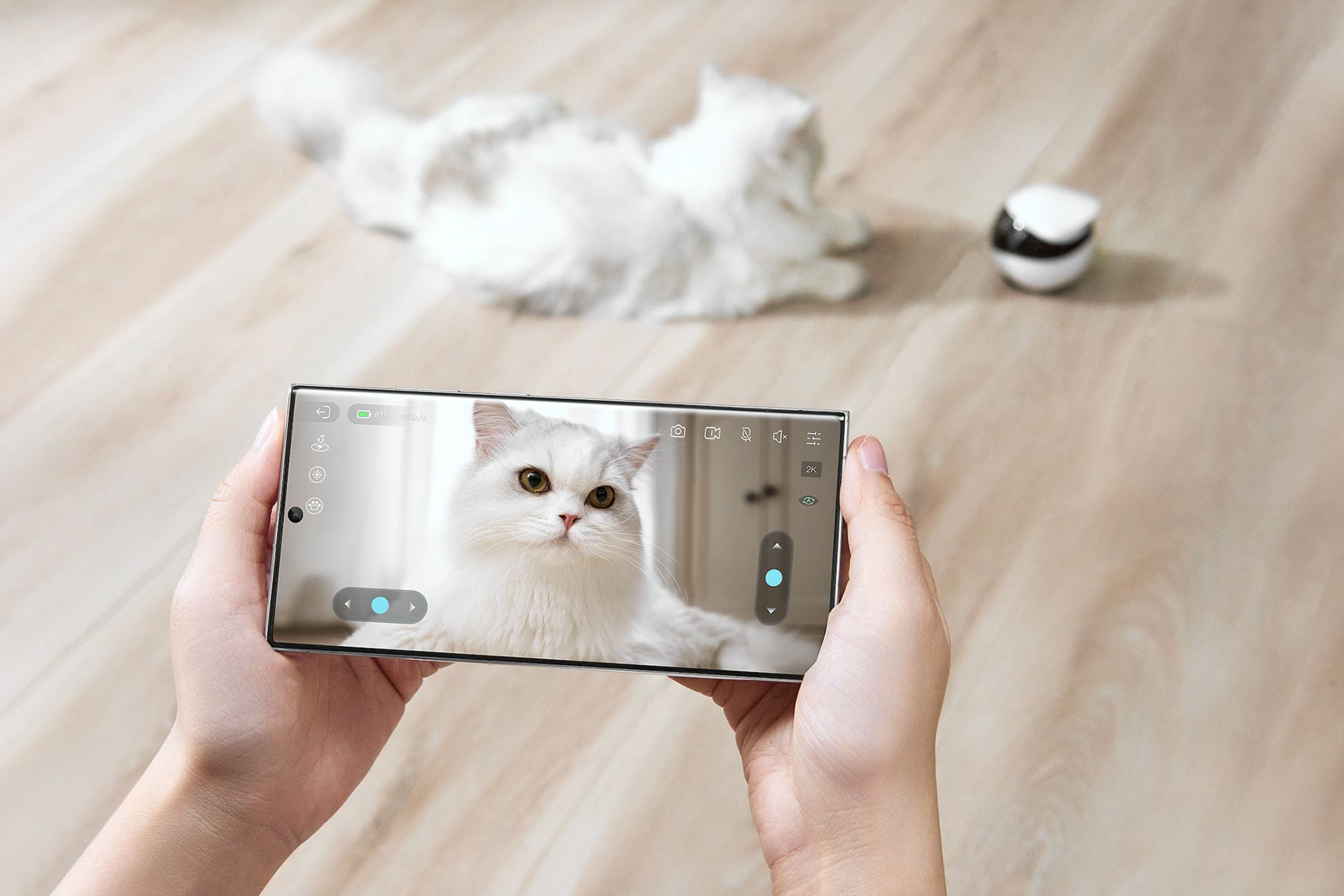
Pet companion devices once had common limitations such as fixed viewing angles and one-way interaction. Traditional surveillance cameras could show what pets were doing but could not engage them. When a pet stayed still for long periods, owners worried it might be sick, bored, or anxious. Standard cameras offered no reassurance.
Robotics offered a solution. To reduce owners’ anxiety, Enabot integrated laser pointers and teaser wands into its robots. Through a mobile app, users could remotely play with their pets in real time.
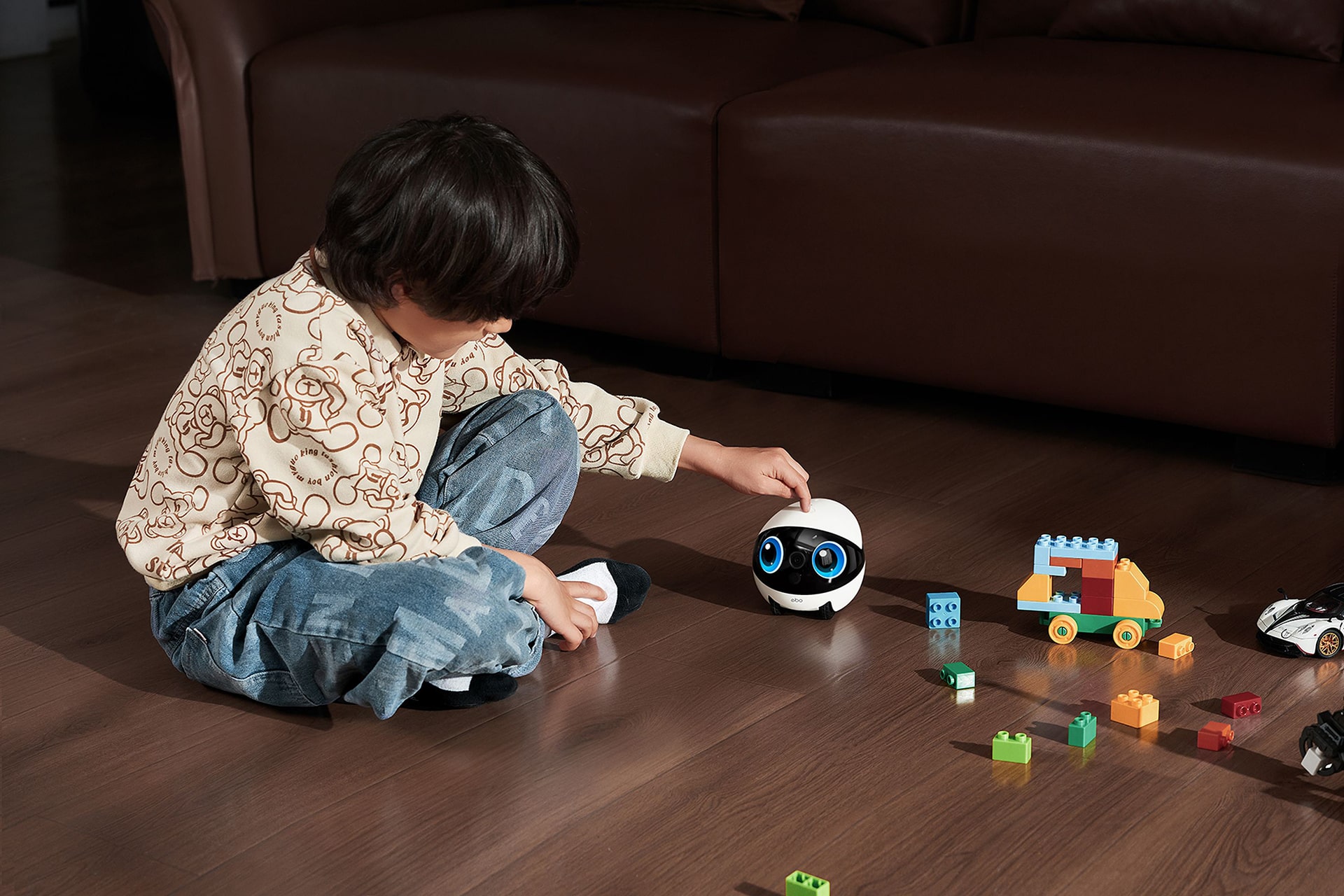
In human companionship scenarios, the design focus shifted from solving functional problems to meeting emotional needs. People seek genuine, empathetic interaction that extends beyond communication or monitoring. This requires robots with stronger emotional awareness and more natural dialogue.
“We have to build a real sense of companionship through voice, expression, and dialogue,” Tong told 36Kr. “At the same time, we need to make sure the interface is simple enough for users of all ages, since any complicated learning process disrupts emotional connection.”
Enabot’s robots blend practical and emotional functions. They can move autonomously and perceive their surroundings, handling security patrols and reminders, while also recognizing faces, delivering entertainment content, initiating video calls, and playing with pets to ease users’ anxiety.
To counter the perception of robots as surveillance devices, Enabot enhanced their conversational abilities through large model integrations. Its home companion robots now support six customizable personas and more than 20 regional dialects and accents, including those from Beijing, Henan, and Guangdong.
However, as the consumer companion robot market expands, competition is intensifying even before it matures.
For Enabot, balancing functionality, form, and cost remains crucial. The company avoids overloading products with features that it sees as unnecessary.
“If you stack AI-driven functions that disconnect from the user experience, you end up with clunky interactions, and that makes it hard for users to build emotional bonds with your brand,” Tong said.
Whether serving pets or people, Enabot’s mission has stayed consistent: to refine and deepen value in specific scenarios. This philosophy reflects a new generation of hardware companies focused on doing one thing exceptionally well rather than attempting everything at once.
Digital friends
In the post-pandemic era, the “loneliness economy” is growing faster than ever. From young professionals living alone to self-reliant seniors and overworked office employees seeking emotional relief, companion robots are emerging as a new form of connection.
As these robots reach global markets, cultural context increasingly shapes how users perceive and interact with them.
In East Asia, and particularly China, companion robots often serve as emotional bridges within families, extending beyond the role of smart devices.
This reflects regional family structures and emotional norms. Enabot’s research shows that its core users include dual-income families and those with members living apart. Their primary need is for “remote co-presence,” or a sense of emotional connection across distance.
To meet that need, Enabot added features imbued with ritual and warmth. On a family member’s birthday, users can remotely adjust the robot’s eye light to display celebratory images. Its customizable facial expressions allow playful messages or emotive animations, fitting the East Asian preference for frequent, close family interaction.
In contrast, users in Europe and the US prefer robots with humanlike empathy but lower intrusion. “Foreign users tend to want companionship that’s less intrusive,” Tong told 36Kr. “They appreciate a robot’s presence but do not want to be constantly interrupted.”
This preference reflects the Western emphasis on personal space and the independence typical of smaller family structures.
In practice, Enabot’s robots often function as discreet yet capable assistants. For security, they serve as mobile guards that monitor environmental changes and alert users to anomalies, offering an advantage over fixed cameras.
In companionship scenarios, users expect the robots to remember preferences, adapt to personal routines, and collaborate creatively, whether brainstorming story ideas or designing simple interactive games.
Western users also place high value on autonomy. When a device malfunctions, they expect it to self-diagnose and attempt repairs before sending logs to a server, reducing human intervention and safeguarding privacy through closed-loop data handling.
Ultimately, companion robots are the physical embodiment of human relationships. Across markets, they extend family bonds in some cultures and preserve personal boundaries in others. The contrast reveals a shared truth: understanding emotional reality is the foundation of meaningful connection.
KrASIA Connection features translated and adapted content that was originally published by 36Kr. This article was written by Huang Nan for 36Kr.