
Ordering a brew from any of Kenangan Coffee’s outlets in Singapore comes with an additional decision. Alongside the typical selections of milks and sugar levels is an unusual option: choosing the type of coffee bean, with varieties from Aceh, Bali, Flores and other regions of Indonesia found in rotation. It is a subtle but significant nod to the coffee chain’s home country.
It is one way that the company and Indonesian rivals like Fore Coffee, Tomoro Coffee, and Tanamera Coffee, are seeking to differentiate themselves in an increasingly crowded consumer space, as they build on domestic success that has been tempered by sluggish recent growth to venture abroad in a bid to capitalize on coffee’s booming regional popularity.
The chains leverage competitive pricing and combine classic coffee options with Indonesian signature drinks, such as latte made with Indonesian palm sugar, to attract customers. As Billy Ooi, a management professional in Singapore who drinks Kenangan’s coffee, said:
“It is cheap, and offers good discounts. In terms of taste, I find it similar to the coffee in other cafes.”
The chains’ foreign forays are the latest chapter in a rollercoaster story for such cafes in Indonesia, the world’s fifth largest producer of the commodity.
Known as Kopi Kenangan inside Indonesia, Kenangan Coffee was among the early movers. It launched in 2017 and is now Indonesia’s largest cafe chain, with more than 1,100 outlets across the country. “When I started, companies were selling coffee at IDR 40,000–50,000 (USD 1.75–2.20), which was unaffordable for most Indonesians,” CEO Edward Tirtanata told Nikkei Asia. “Also, food and beverages are highly personalized; every country has its own taste preferences. So, I wanted to create beverages that were more suitable to the Indonesian palate.”
It was soon followed by Tomoro, Fore, and Kopi Janji Jiwa, among others. They spread rapidly: Janji Jiwa now has about 900 stores while Tomoro runs 600. In comparison, Starbucks, which launched in 2002, has just over 500 outlets.
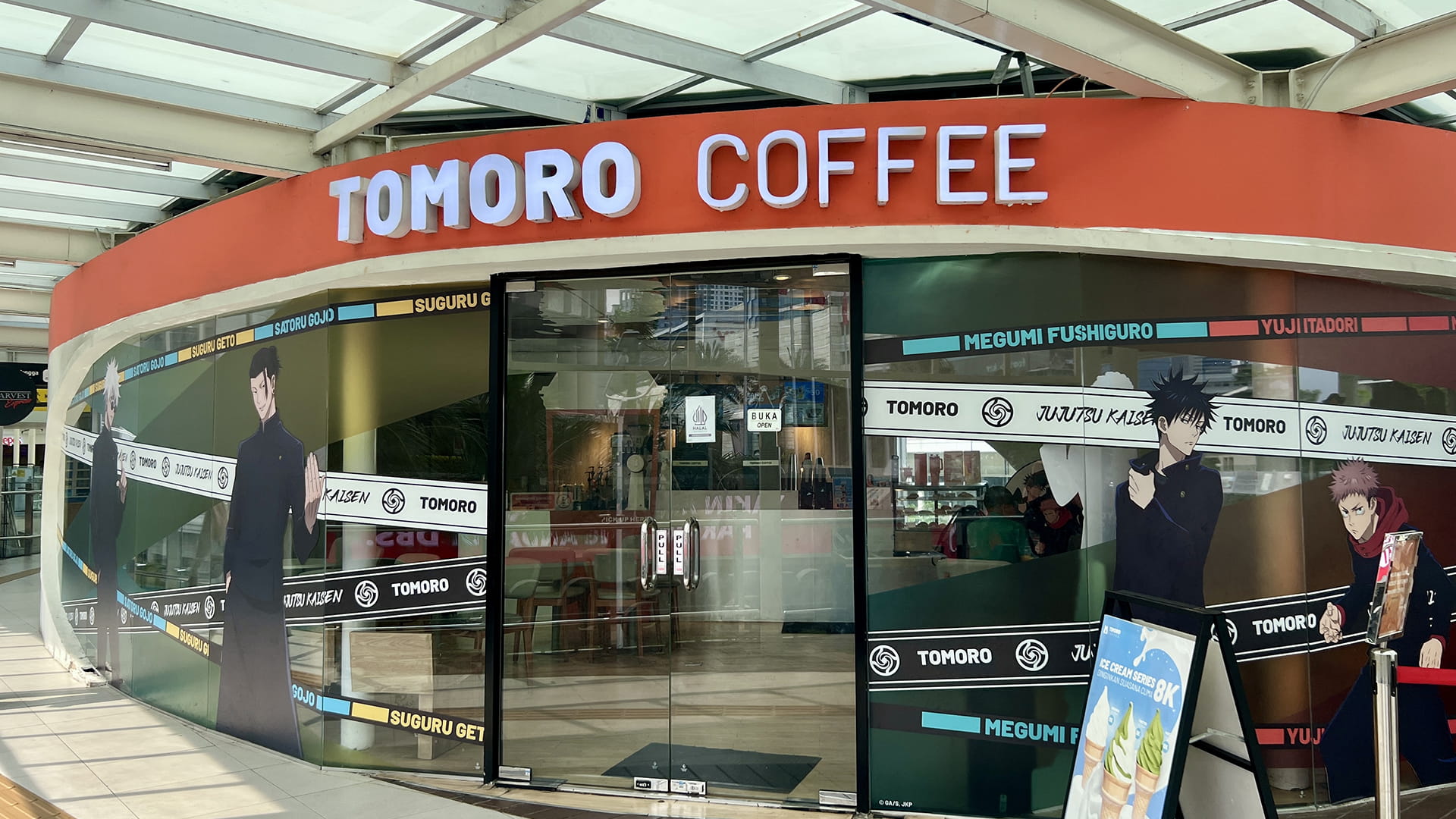
According to figures from data analytics company Euromonitor, Indonesia’s annual per capita coffee consumption is the highest in Southeast Asia, and almost on a par with large coffee markets like Australia and America. “Domestic consumption has grown faster than exports, driven by younger urban consumers who see coffee as a daily habit and social activity,” said Roshan Raj Behera, partner at Redseer Strategy Consultants. “Consumption has also been formalized, from [roadside stalls] and instant sachets to modern outlets, which offer consistency, convenience and an ‘affordable treat’ positioning.”
The growth dovetails with increased consumer interest in supporting local businesses, according to Ina Melati, a management lecturer at Gadjah Mada University. “Indonesians are becoming more aware of where their food comes from, and are choosing to buy more from local brands rather than international ones. Hence, people like to get their coffee from local cafe chains rather than international ones.”
Local chains talk up their domestic sourcing credentials. “We source our coffee from within Indonesia,” said Mohammad Fahmi Rachmattulah, director of strategic and corporate development at Fore. “We see this as an opportunity to create a sustainable business, by also contributing to local coffee production.”
Apart from local sourcing, Behera points to other strategies employed by Indonesian chains to drive growth. “Menus reflect Indonesian preferences,” he said, “with local flavors like [milky coffee with palm sugar], tea and non-coffee options, and branding uses Indonesian names and ingredients. Pricing below Starbucks appeals to value-conscious consumers, and small-footprint outlets with high density in offices and transit hubs maximize throughput.”
Nathanael Lim, Euromonitor’s Asia Pacific insight manager for beverages, said, “Local coffee brands highlight beans from specific regions, such as Toraja or Mandheling, and cater to consumers seeking unique local flavors, like Sumatra arabica which highlights citrus, spice, and floral flavors.”
They are helped by Indonesia’s long association with coffee, which was introduced to the archipelago by the Dutch East India Company in 1696. The nation mainly grows cheaper robusta beans, which are typically used to churn out instant powder, with Sumatra accounting for 70–75% of overall Indonesian coffee production.
Nearly 70% of the coffee is exported; the US was among the largest destinations until last year, but volumes have dropped sharply since the Trump administration’s “reciprocal” trade tariff of 19% took effect. However, an agreement that is expected to be signed in the coming weeks has secured special tariff exemptions for key exports like coffee and palm oil. Meanwhile, European Union destinations like Belgium and Germany have emerged as the largest customers of Indonesia’s coffee over the past year.
Despite the boom, cafe sales and growth in Indonesia lag its Southeast Asian neighbors. From 2019–2024, cafe sales in the country grew 1% annually on a constant currency basis, compared to 9% in Malaysia and 7% in Vietnam and Thailand, according to Euromonitor data. Indonesia’s cafe market is also worth much less than its neighbors. In 2024, it was about USD 560 million, compared to Thailand at USD 1.25 billion and Vietnam at USD 1.66 billion. Even tiny Singapore has a market size of about USD 290 million.
The contrast between the hype around the sector and its relatively slow growth has been reflected in the share price of Fore Kopi Indonesia, Fore’s owner and the only listed company among the coffee chains. After listing on the Indonesia Stock Exchange last April at IDR 188 (USD 0.008) per share, it jumped 34% on its first day of trading and hit IDR 800 (USD 0.035) in June. But it has since fallen back to about IDR 530 (USD 0.023).
Hence, the search beyond Indonesia for new markets.
Kenangan has been in the vanguard of the overseas expansion. The chain debuted in India and Australia in 2025, adding to its presence in Singapore, Malaysia, and the Philippines. Tomoro has outlets in Singapore, China, and the Philippines, while Fore is in Singapore.
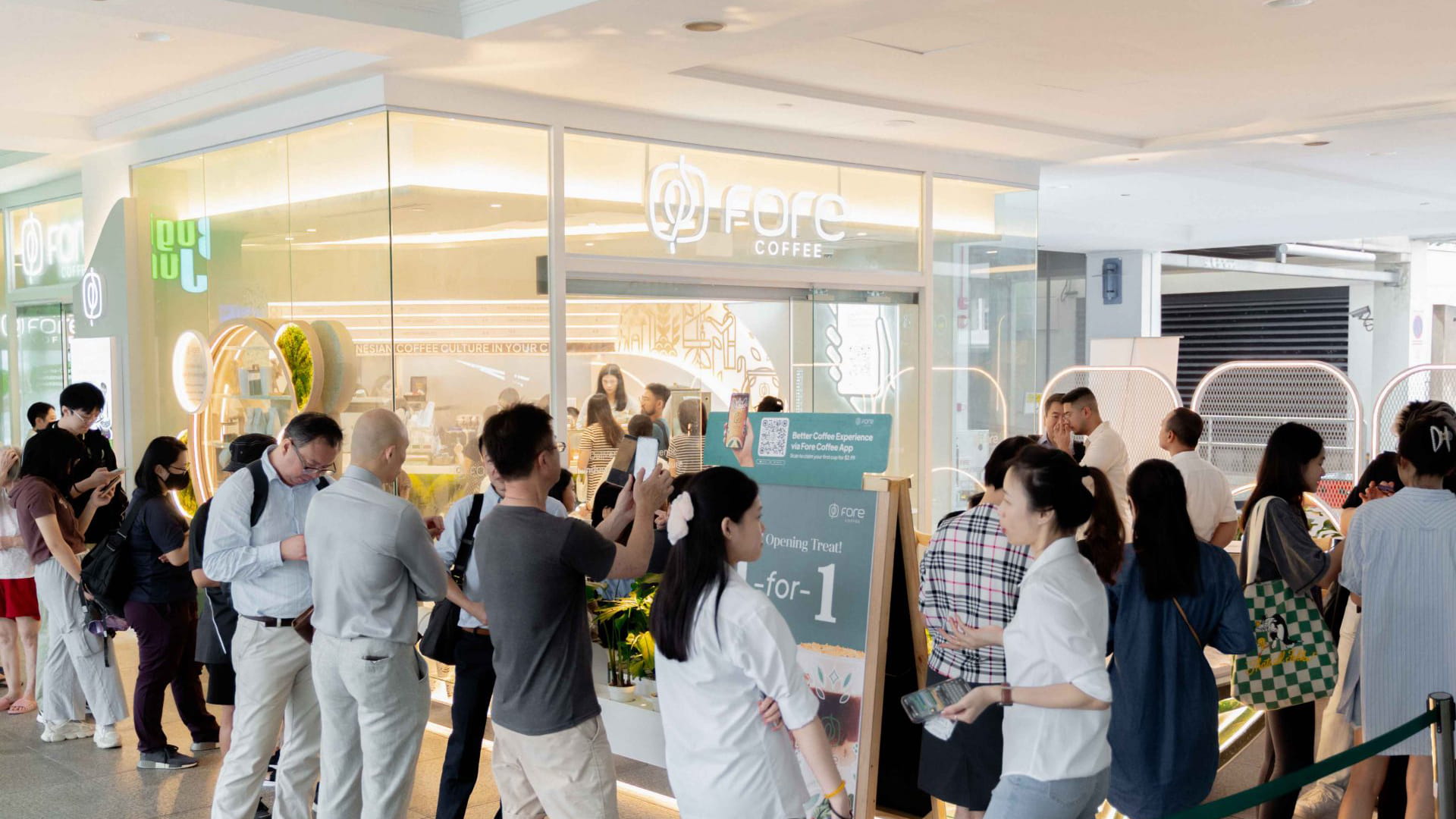
As they expand outside Indonesia, brands have to deal with different consumer preferences. “Indonesians like sweet, milk-based iced coffee at affordable price points, while Singapore leans towards espresso and specialty coffee, alongside strong, sweet traditional ‘kopitiam’ coffee,” said Behera, referring to traditional coffee shops in Malaysia and Singapore. “Balancing a recognizable signature with local preferences on dairy, sweetness, and price is a key challenge.”
Indonesian chains also have to contend with global behemoths like Starbucks and China’s Luckin Coffee, as well as country-specific brands, each with their own unique selling points. Luckin Coffee’s app-driven kiosk-based operating model has let it keep prices low as it sweeps across Singapore, while local players like Zus Coffee and Cafe Amazon are entrenched in Malaysia and Thailand, respectively, with significant store footprint and prices that are sometimes cheaper.
Kenangan Coffee’s Tirtanata is not too concerned. “We have grown quite quickly across countries, not because we are the cheapest; often local competitors are cheaper than us. However, we have localized the offering and used technology to increase sales per store,” he said, referring to the brand’s app that reels in customers with loyalty points and promotions, and modern management systems. Even in mature coffee markets like Australia, he said there is room for a “playful” brand like Kenangan, catering to Asian tastes.
Operating models also need to be tweaked. In Indonesia, most chains are mall-centric and adopt the grab-and-go store format, but Tirtanata points out that in Malaysia, stores are generally larger at 55–75 square meters, necessitating sit-down experiences. “As we branch out into shophouses, it is counterproductive to be grab-and-go,” he said, “so we need to adapt because the inventory of locations available does not always support an existing business model.”
“Indonesian coffee brands might find it difficult to be profitable, given operational inefficiency and supply chain management as they expand overseas,” cautioned Lim at Euromonitor, referring to the challenge of the high cost of rapid expansion and consistently delivering the same product in multiple foreign markets. Fore Coffee is profitable and Kenangan has said that it is profitable in Indonesia and at the group level, but Tirtanata agreed that any new international market is not usually profitable for the first two to three years.
Despite the slow domestic growth, brands believe the Indonesian cafe market is far from saturated. “We aim to launch 60–70 new Fore Coffee stores every year, with the main focus still on Indonesia, especially in tier-two and tier-three cities,” Rachmattulah said.
Tirtanata has similar plans. “We will still be Indonesia-centric since our sales per store are growing well and we have room for adding new stores. We will open about 70 stores in Malaysia next year, but also 300-odd stores in Indonesia.” He added that while the target is to open 3000 stores by 2028, he expects 70–75% of the group’s revenues to come from Indonesia even then.
Along with new stores, brands are also expanding their offerings. Fore, for example, has launched Fore Donuts, a donut chain positioned as complementing their core coffee business.
Despite the slow domestic growth, Lim is bullish on Indonesian coffee chains’ prospects. “Consumer reception has been strong due to the unique local taste and wide variety of coffee beans,” he said. “The brands are launching continuous product innovation to target young consumers, and it will drive their popularity in local and international markets.”
This article first appeared on Nikkei Asia. It has been republished here as part of 36Kr’s ongoing partnership with Nikkei.