
Doubao may be nearing the end of its free-first phase.
In May, reports that ByteDance’s chatbot Doubao would introduce a paid subscription service drew broad market attention. An updated subscription plan shown in Doubao’s listing on Apple’s app store listed four tiers: free, RMB 68 (USD 10), RMB 200 (USD 29.5), and RMB 500 (USD 73.8) per month. The annual prices were reportedly free, RMB 688 (USD 101.5), RMB 2,048 (USD 302.1), and RMB 5,088 (USD 750.6).
Doubao later said free services have always been part of its plan. On top of those services, it also intends to explore more value-added content to meet different user needs.
But according to 36Kr, the subscription plan was only an early step in Doubao’s commercialization. In the coming quarter, Doubao will continue pushing ahead with its monetization rollout. A person familiar with the matter said Doubao is expected to officially launch paid content later this month and provide updates on related features at Volcano Engine’s Force Conference, which will be held around the same time. 36Kr added that the timing may have been chosen because Doubao’s PC and mobile versions still need about a month to adapt their basic functions and billing systems.
If progress stays on track, Doubao is expected to further refine its monetizable scenarios in the third quarter by integrating e-commerce functions and using subsidies to direct traffic to Douyin Mall. It would then enter an operating phase in the fourth quarter. These moves are preparations for commercialization returns in 2027 and beyond. For that reason, Doubao will not use paid user penetration as a performance metric in 2026, according to the source cited by 36Kr.
In October 2025, Doubao completed an initial integration with Douyin E-commerce. Users could obtain product information and shopping link recommendations through conversations with Doubao. Citing an unnamed source, 36Kr said ByteDance tested Doubao’s direct advertising capabilities on a small scale at the time, but suspended broader rollout because of user experience issues. Doubao currently prioritizes answering user questions, then inserts horizontal product recommendation banners into its responses.
The source added that, since April this year, users have become more receptive to artificial intelligence-generated shopping recommendations than they were in the second half of 2025. The conversion rate for users who click product cards and finish viewing product detail pages has exceeded 3%. Meanwhile, Doubao’s user growth has slowed. According to 36Kr, that slowdown is partly intentional. Because inference compute costs remain high, ByteDance reduced promotional spending on Doubao at the start of 2026.
The usual playbook for mobile internet products is to spend heavily on user acquisition first, then monetize through merchants. For AI products, however, commercialization has become more pressing because compute costs remain high. ByteDance is no exception.
Is subscription the right model?
According to a May 27 Bloomberg report, ByteDance is considering up to USD 70 billion in capital expenditure to advance its AI development. Less than a month earlier, on May 9, SCMP reported that ByteDance had raised its AI infrastructure budget from RMB 160 billion (USD 23.6 billion) last year to RMB 200 billion (USD 29.5 billion). The continued increase in spending suggests ByteDance is putting significant resources behind AI.
The global AI arms race is still heating up, but monetization has become a practical problem for every major company in the sector.
Although ByteDance’s overseas revenue reportedly grew nearly 50% in 2025, its overall net profit fell by more than 70% because of heavy investment in AI. The company later clarified that the decline was mainly due to IFRS (international financial reporting standards). As large sums continue to flow into AI, global technology companies are being pushed to move beyond technological ambition and address commercial returns.
There are three widely discussed ways to commercialize AI: subscriptions, ad monetization, and enterprise model services. Of these, subscriptions were the first to be widely adopted.
Globally, leading AI products began exploring paid models early. After launching in November 2022, OpenAI’s ChatGPT took about two months to introduce its USD 20-per-month ChatGPT Plus subscription in February 2023. Anthropic then launched Claude Pro in September 2023, also priced at USD 20 per month. By contrast, chatbot products in China stayed free for a relatively long time and continued relying on subsidies to build user volume.
Doubao is likely among the first chatbot products in China to move toward subscriptions, and it has a large user base. According to Aicpb.com’s rankings, Doubao’s app had about 336 million monthly active users in April 2026, up 1.51% from the previous month. It ranked second globally, behind only ChatGPT.
The challenge is that Doubao’s rise into the top ranks of chatbot products has not been driven mainly by the intelligence of its model. Its growth may have more to do with ease of use. Combined with Douyin’s traffic pool, that helped Doubao win consumer mindshare, especially in lower-tier markets.
Chinese users also do not appear especially loyal to any single AI product. According to LatePost, Doubao’s average daily usage time per user is currently ten minutes. If it launches subscriptions without a stronger moat, it risks losing users if competitors catch up or achieve product breakthroughs.
Even leaving Doubao’s product position aside, subscriptions are not necessarily the best way to monetize AI.
Even in Western markets, where willingness to pay is generally stronger, revenue conversion from subscriptions remains limited. To increase its number of paying users, OpenAI launched ChatGPT Go in 2026 globally at USD 8 per month.
This increased its number of paying users from 47 million at the end of last year to 55 million in the first quarter. But according to The Information, ChatGPT’s average weekly active users in the first quarter were about 905 million. In other words, even the chatbot product with the world’s largest monthly active user base had a paid conversion rate of only 6.1% after three years of subscriptions.
The difficulty of increasing paid users stems from the dilemma of AI subscriptions.
On one hand, amid intense competition and highly similar products, no model company wants to fully cancel its free service. For most light users, the free version is enough for daily Q&A and information searches. On the other hand, tokens remain expensive. Retail users who need AI to complete more complex tasks currently have to pay as much as USD 200 per month, and in some cases more, depending on token usage. The number of people willing to pay that much over the long term is limited.
More importantly, even at those prices, AI companies may not make money. In January 2025, OpenAI CEO Sam Altman said on X that the company was losing money to maintain its ChatGPT Pro subscription service.
insane thing: we are currently losing money on openai pro subscriptions!
people use it much more than we expected.
— Sam Altman (@sama) January 6, 2025
This creates a pricing problem: if prices are too high, users may not pay; if prices are too low, companies may struggle to cover compute costs.
To generate returns, AI companies ultimately need to expand into new monetization methods. OpenAI, for example, began testing the possibility of integrating ads into ChatGPT in February.
How AI commercialization can take shape
After a long period of trial and error, AI frontrunners appear to have settled on a common commercialization path: selling model capabilities to enterprises. Companies do not need to train their own models. By connecting through APIs, they can access AI model capabilities developed by technology companies and pay based on token usage.
Compared with individual users, whose willingness to pay is limited, enterprises have stronger incentives to use AI tools to improve organizational efficiency. More importantly, under the enterprise-facing model, companies usually pay continuously based on token call volume rather than through monthly subscriptions. As noted earlier, monthly subscriptions for ordinary users often cannot cover compute costs. For model providers, enterprise demand is a more predictable business.
Anthropic’s profit growth appears to support this trend. On May 20, WSJ reported that Anthropic’s second-quarter revenue is expected to more than double to USD 10.9 billion, and it may generate USD 559 million in operating profit. At a stage when cash burn and user subsidies remain high, Anthropic is among the first large model companies approaching profitability. Its main revenue source is API calls from enterprises and startups. As of October 2025, Anthropic had more than 300,000 enterprise customers, which contributed about 80% of its total revenue.
China’s internet giants have also started positioning themselves in the enterprise market. Unlike AI startups such as Anthropic, internet giants have cloud computing capabilities. They can monetize model APIs, while the compute consumption generated by model calls may also support their cloud businesses. Packaging AI models as cloud services for external use is known as MaaS, or model-as-a-service.
In this regard, ByteDance’s Volcano Engine is growing quickly. On May 7, data released by IDC showed that, in 2025, large model call volume from Chinese enterprises on public clouds surged 16-fold from the previous year. Nearly half of those calls occurred on the Volcano Engine platform, which held a 49.5% market share and ranked first.
Alibaba has also been working to expand the market share of Model Studio, its MaaS platform, since late November 2025. According to Alibaba’s earnings report for the fourth quarter of its 2026 fiscal year, the number of customers on Model Studio increased eightfold year-on-year.
Beyond the direct revenue from enterprise customers, ByteDance is also using AI capabilities to support its core businesses.
Take Seedance 2.0, ByteDance’s multimodal model, as an example. Its video generation capabilities have further fueled a wave of creation in the short drama market. A person in the short drama industry told 36Kr that, as barriers to video creation continue to fall, many new players have entered the industry. They come from varied backgrounds, including games, collectible toys, and traditional manufacturing. At the same time, lower production costs for individual short dramas allow production companies to make more series while keeping total budgets unchanged.
The surge in creators and the drop in production costs have together increased the supply of AI-generated short dramas. At present, the main way for short dramas to gain views is still paid traffic acquisition on Douyin. A person involved in short drama paid traffic acquisition said the current peak daily ad spend for AI-generated short dramas within ByteDance’s Ocean Engine system is about RMB 120 million (USD 17.7 million).
Wang Xiaoshu, founder of Jiashu Technology, which is responsible for short drama distribution, told 36Kr that his company’s daily paid traffic spending was only several hundred thousand RMB last year, but has reached several million RMB this year, an increase of about tenfold. At the same time, short drama producers usually see 3–7% in net returns on Ocean Engine. In other words, every RMB 1 million (USD 147,523.1) in advertising spend generates about RMB 30,000–70,000 (USD 4,425.7–10,326.6) in profit.
The integration of AI into e-commerce may become ByteDance’s next area of focus. In March, Jiemian News reported that Doubao’s shopping payment feature was undergoing internal testing. The feature allows users to place product orders and complete payments inside the Doubao app without jumping to Douyin Mall.
RELATED ARTICLE
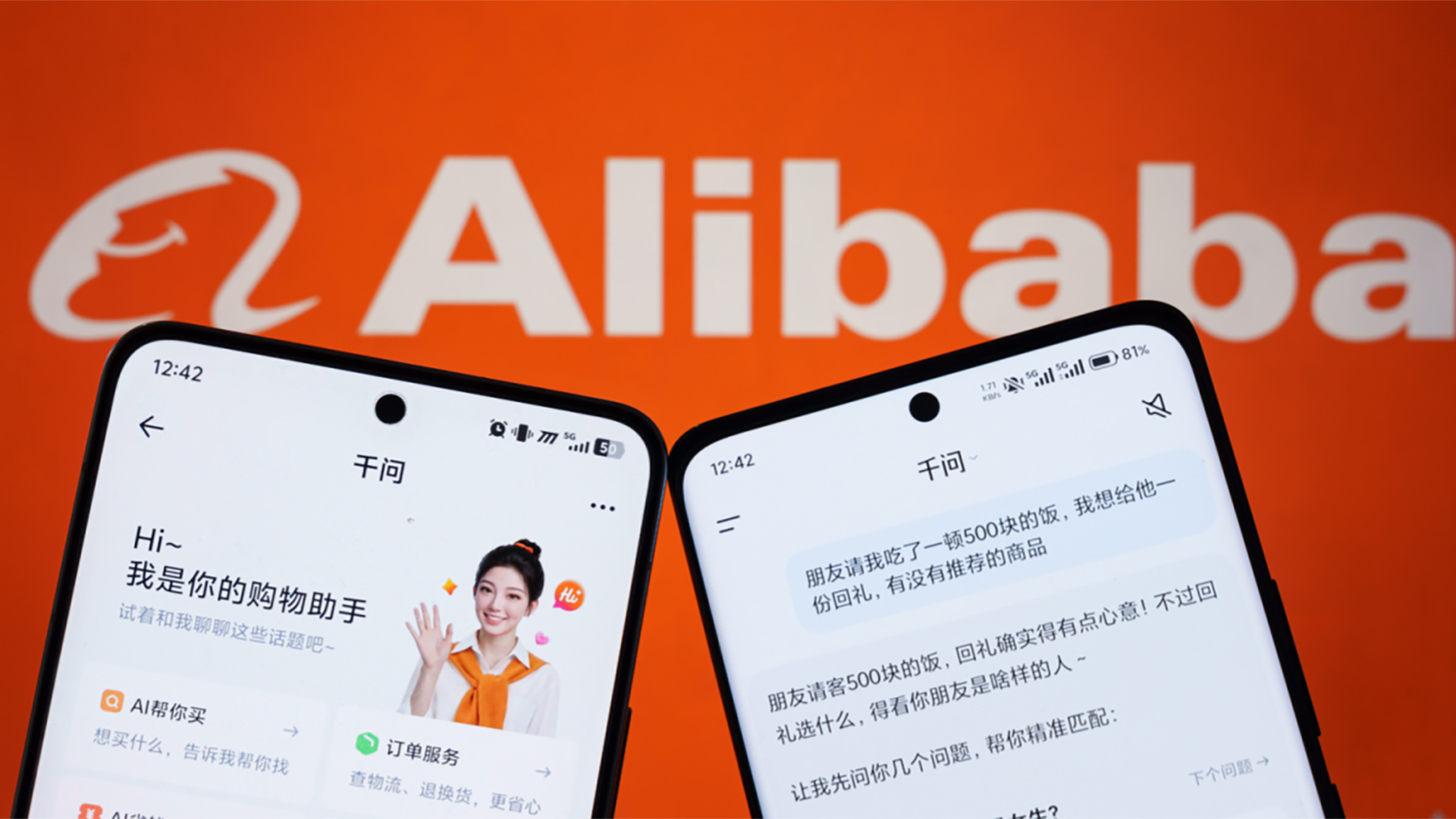
Doubao is not the first product to try to complete the AI shopping loop. On May 11, Alibaba’s Qwen officially connected to Taobao and enabled AI-driven shopping features. In September 2025, ChatGPT also launched Instant Checkout, trying to guide users to place orders and complete payments directly within the AI chat interface. But in March, OpenAI canceled the feature.
Doubao and Qwen have an advantage because they are backed by Douyin Mall and Taobao, respectively, two mature e-commerce systems. Product catalogs, merchant ecosystems, payment, and fulfillment capabilities already exist. That makes AI shopping appear more viable in theory.
Even so, AI shopping faces two questions:
- First, is AI shopping a real user need? During the Lunar New Year, Alibaba invested RMB 3 billion (USD 442.6 million) in “red packet” subsidies to encourage users to order milk tea through its Qwen app, trying to cultivate the habit of using AI to make consumption decisions. But it remains unclear whether the campaign helped develop long-term user retention. Moreover, compared with ordering food delivery, shopping is a more complex consumption scenario that often relies on comparison and deliberation.
- Second, will consumers trust product recommendations from AI? As AI search and recommendation capabilities become more important, some merchants have already started using GEO, or generative engine optimization, to influence how large models crawl and rank information. Once AI recommendations are shaped by paid placement and commercial interests, it remains to be seen whether consumers will view them as objective advice or as another advertising channel.
KrASIA features translated and adapted content that was originally published by 36Kr. This article was written by Xiao Sijia, with contributions from Zhou Xinyu, for 36Kr.
Note: RMB figures are converted to USD at rates of RMB 6.78 = USD 1 based on estimates as of June 3, 2026, unless otherwise stated. USD conversions are presented for ease of reference and may not fully match prevailing exchange rates.