
Didi’s latest earnings point to continued growth in its international business, with Latin America becoming a bigger part of that expansion.
On March 13, Didi reported fourth-quarter and full-year 2025 results. Its international business generated gross transaction value of RMB 36.6 billion (USD 5.3 billion) in the fourth quarter, up 47.1% year-on-year. Order volume rose 24.5% to 1.265 billion, and average daily orders exceeded 13 million, or about one-third of the level recorded by its China mobility business.
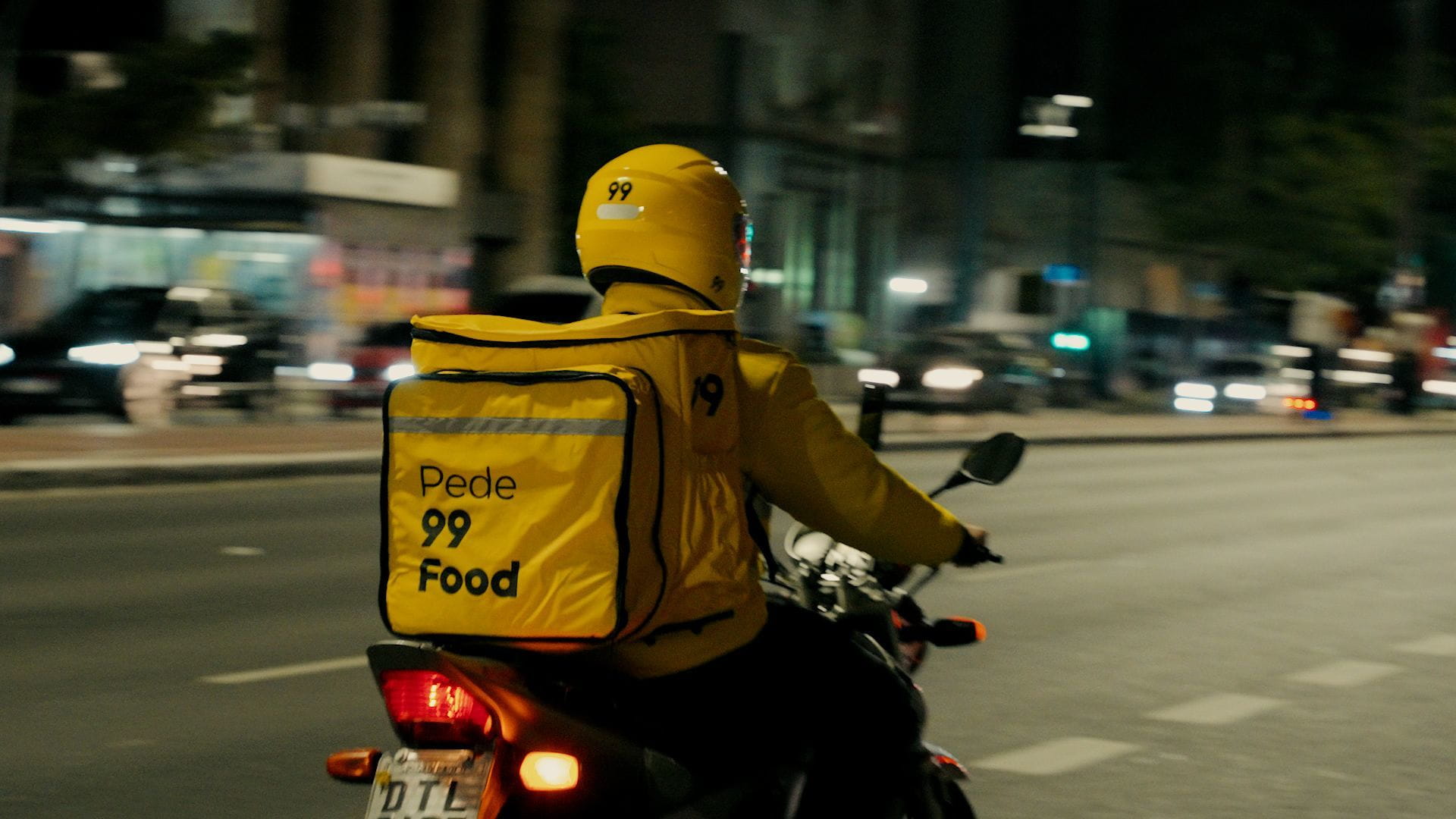
The figures follow Didi’s April 2025 relaunch of food delivery in Brazil and its broader investment in overseas markets, especially LATAM. Through its 99 platform, the company is combining mobility, food delivery, and financial services in Brazil.
For full-year 2025, Didi’s international business recorded 4.505 billion orders, up 24.7% year-on-year, with a three-year compound annual growth rate of 32%. Annual international GTV increased 28.2% to RMB 117 billion (USD 17 billion). Fourth-quarter order volume was also the highest of the year.
According to 36Kr, China International Capital Corporation said in a research note that it sees long-term value in Didi’s international business and maintained an “outperform” rating. Didi said its international mobility business has recorded positive adjusted EBITA for two consecutive years, although it remains lossmaking overall internationally.
Since expanding overseas in 2018, Didi said its international business has served more than 100 million users across 14 countries and regions, including ten in Latin America, where the population is about 660 million.
Brazil and Mexico have become central to that expansion. Both countries have populations of more than 100 million, with large shares living in major urban areas. That concentration, combined with gaps in transportation and delivery infrastructure, has helped create demand for app-based mobility, quick commerce, and online food delivery.
In Brazil, Didi said it now operates in more than 3,300 cities and towns, and that its mobility business holds about 40% market share. In Mexico, it said its services cover more than 70 cities and more than 30 million users, and that its mobility and food delivery businesses rank first by market share.
Didi has also relied on localized operations. In Brazil, it expanded through its acquisition of ride-hailing platform 99 and kept the local brand. It also retained the core team. According to 36Kr, that approach helped preserve user familiarity with the service and trust in the brand. Didi said it now has 55 million active users in Brazil, along with 1.5 million drivers and couriers.
The company has also appeared to adapt its services to local travel habits. In LATAM, motorcycles are widely used and relatively affordable. In response, 99 launched 99Moto in 2022. Didi said the service has completed more than two billion cumulative orders over the past three years. It also said the number of motorcycle drivers on the 99 platform rose 30% over the past year, while delivery orders completed by motorcycle increased 60% and mobility orders rose 40%.
Beyond mobility, Didi is expanding into package delivery, food delivery, and financial services in the region. Mexico illustrates that strategy. In 2019, the company entered the country’s food delivery market with Didi Food, building on the user and driver base it had already established in ride-hailing and competing on price. It later expanded into quick commerce for categories including medicine, alcohol, and groceries.
Brazil is now the company’s next focus for food delivery. Didi announced in April 2025 that it would relaunch the business there. One reason is market room. Food delivery penetration in Brazil is about 30%, below levels in China, where the industry is more mature. Didi also said about 60% of Brazilians still place food orders by phone, suggesting online adoption remains limited.
Didi’s existing user and driver base could help support that expansion. 99Food has launched in more than 60 Brazilian cities, including Sao Paulo, Rio de Janeiro, Salvador, Belo Horizonte, and Goiania. Didi said it expects the service to reach 100 cities by mid-2026.
Market data suggests competition is beginning to shift in some areas. According to data from Numerator’s Worldpanel, reviewed exclusively by Valor Economico, iFood’s market share in the Sao Paulo metropolitan area fell from about 64% to 52.3% between August and October 2025. Over the same period, 99Food’s market share rose to 10%, while its user penetration reached 15.9%, or about 3.1 million users.
Didi is also working with Chinese companies expanding overseas to support electric mobility in Latin America. In Brazil, 99 helped establish the Alliance for Sustainable Mobility in 2022. In July 2024, it launched 99electric-Pro, an electric mobility category that has since expanded to Sao Paulo, Brasília, Porto Alegre, Goiania, and Curitiba.
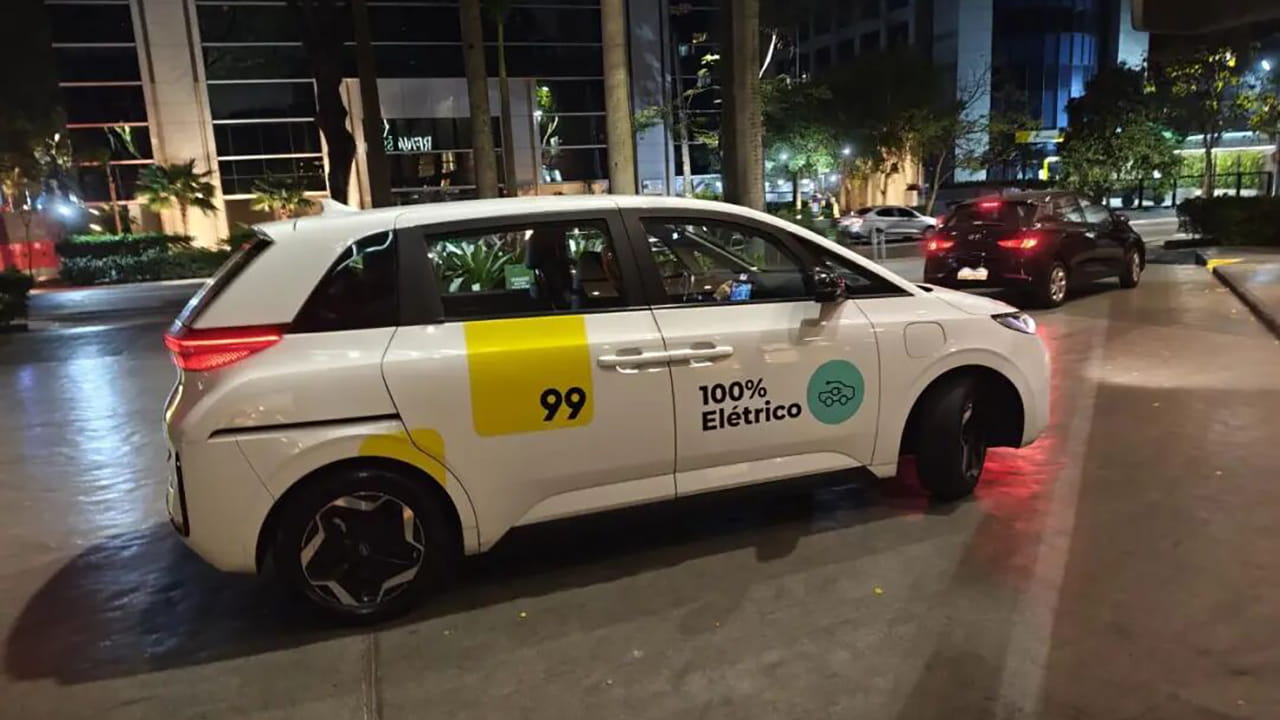
As of November 2025, Didi said the service had supported more than 27 million passenger trips and reduced carbon dioxide emissions by about 31,200 metric tons, which it said is equivalent to planting roughly 245,000 trees.
In Mexico, Didi launched a premium ride-hailing category in October 2025 with 500 electric vehicles from Chinese brands including GAC Aion and JAC Group. It said it aims to work with automakers, charging providers, financial institutions, and insurers to bring 100,000 EVs to Mexico by 2030.
KrASIA features translated and adapted content that was originally published by 36Kr. This article was written by 36Kr Caijing.
Note: RMB figures are converted to USD at rates of RMB 6.90 = USD 1 based on estimates as of March 25, 2026, unless otherwise stated. USD conversions are presented for ease of reference and may not fully match prevailing exchange rates.