
Two months after passing its listing hearing on the Hong Kong main board, Chinese-founded healthcare provider Distinct Healthcare debuted on the city’s stock exchange last week.
Over the past decade, China’s venture capital market has moved in cycles. It has swung from the frenzy of O2O, or online-to-offline services, to the surge of the sharing economy and new consumer brands, then into periods of capital contraction, and more recently into the rapid rise of artificial intelligence. Across these cycles, companies have emerged quickly, scaled aggressively, and in many cases, faded just as fast.
Offline medical services, often regarded as slow to innovate, have followed a different trajectory. From 2022–2024, Distinct recorded a CAGR (compound annual growth rate) of more than 30%. In a segment typically defined by steady but modest expansion, that pace stands out.
Distinct also diverged from many privately funded healthcare providers in China. It chose not to integrate into the public medical insurance system and did not rely on heavy marketing to drive patient traffic. Instead, it focused on aligning commercial incentives with patient interests. It avoided building its brand around a handful of high-profile senior physicians and instead recruited mid-career doctors as full-time staff. It emphasized trust and referrals over advertising.
The result is a company that combines the structural barriers of offline medical services with sustained mid- to high-speed growth. It reports that 80% of visits come from returning customers, with a membership renewal rate of 67%.

Distinct was founded in 2012 by Wang Zhiyuan, who previously worked in investment banking. After what he described as a rushed consultation lasting less than three minutes at a top-tier public hospital in China, he began considering entrepreneurship. He has said the experience highlighted what he viewed as a lack of patient-centered care in the system.
Wang describes healthcare as a rational exchange of value built on trust. He has compared Distinct to Costco, arguing that its core is not low prices or luxury service, but curation. In his view, just as Costco filters products for consumers, Distinct filters out unnecessary tests, medications, and what he characterizes as avoidable medical anxiety.
At inception, the founding team aimed to replicate the model of Mayo Clinic in China. Founded in 1864, Mayo Clinic is known for its integrated, team-based care and its stated principle that patient needs come first. Its physicians collaborate across disciplines, and the institution is widely regarded as prioritizing clinical quality over commercial returns.
Distinct summarizes its philosophy as “return to the essence of medicine.”
The company initially attempted to build a community-based general practice network, but that effort did not gain traction. It later pivoted to pediatrics as an entry point and eventually expanded into a multi-specialty model that includes dentistry, ophthalmology, dermatology, medical aesthetics, physical exams, sports rehabilitation, and chronic disease management.
More than a decade later, much of the founding team remains in leadership roles. Distinct says it employs more than 400 full-time doctors, many recruited from top-tier public hospitals in China, commonly referred to as 3A hospitals. More than 90% joined through referrals, according to the company.
Financially, Distinct reports that drug revenue accounts for less than 10% of total revenue, while marketing expenses represent about 1%. In China’s private healthcare sector, where some providers rely on high-margin drug sales and customer acquisition campaigns, those ratios are uncommon.
36Kr spoke with Wang in what it described as the first time Distinct has publicly outlined its guiding philosophy and business model.
The following transcript has been edited and consolidated for brevity and clarity.
36Kr: Medical services are not considered an attractive field in the secondary market today. During your roadshow, what was your pitch to investors?
Wang Zhiyuan (WZ): It’s true that most investors would rather hear stories about AI or embodied intelligence. In many people’s view, medical services are heavy and slow. But I see the value differently. It is a business with stable beta and strong alpha potential.
If I had to summarize the pitch in one sentence, it would be this: Distinct aims to become the Costco of healthcare services.
36Kr: How should that be understood? Costco’s strategy revolves around low margins and low prices.
WZ: That’s a common misunderstanding. Costco’s core is not simply low prices. It is curation and trust. It filters out mediocre or uncertain products so customers can shop with confidence.
We apply the same rationale. We filter out services that are not evidence-based, as well as unnecessary tests and medications. We keep drug revenue below 10% and do not profit from markups. Instead, we build long-term trust through high-frequency, high-quality health services.
36Kr: So the core of your business model is trust?
WZ: Exactly. We have a clear growth flywheel. We recruit doctors who share our philosophy, provide them with a dignified and focused clinical environment, and build word of mouth. That reputation drives repeat visits, lowers customer acquisition costs, and strengthens our ability to recruit talent, expand locations, and optimize operations.
Our marketing expenses account for about 1% of revenue, which is uncommon in private healthcare. We do not rely on walk-ins. We rely on referrals from existing customers.
36Kr: Given your highly educated founding team and your background at Peking University, there is confidence in relying on word of mouth rather than marketing. You must have felt anxious about growth over the years.
WZ: Healthcare has its own logic. If you study respected medical institutions globally, you will find that they all grew step by step through reputation.
Over nearly 14 years, one of our most important lessons has been to approach healthcare with reverence. We often say internally: return to the essence of medicine. Do what aligns with the nature of healthcare. Avoid what does not.
Of course, we experience growth anxiety. But solving it through reputation rather than marketing was not our invention. It was simply the path we chose from the beginning. Over time, we validated that it is the most suitable, sustainable, and lucrative path for us. That strengthened our resolve.
36Kr: How did investors respond during the roadshow?
WZ: Medical services are not a popular concept, but many institutions can look beyond trends and see what differentiates us.
Few private healthcare service providers have successfully gone public. Before Starbucks or Haidilao went public, few believed coffee shops or hotpot chains could scale.
We do not treat severe or critical illnesses. We focus on health management. Most of our clinics are about 2,000 square meters today. Under our current positioning, we plan to upgrade most of them to around 5,000 square meters over the next two years.
36Kr: What is driving that expansion: capability, capital, or demand?
WZ: It is similar to Costco. We offer a comprehensive range of services, including dentistry, medical aesthetics, ophthalmology, pediatrics, physical exams, and sports rehabilitation. But we curate carefully. Patients can address multiple needs in one visit. That “one-stop” experience differentiates us.
36Kr: Can medical care really be “one-stop” like shopping?
WZ: A family can come together. The child sees an ophthalmologist, the mother consults dermatology, and the father visits general practice. In business terms, that is cross-referral.
Expanding a clinic to 5,000 square meters requires an additional RMB 15 million (USD 2.1 million). Although the upfront investment increases, operating cash flow can recover that investment within 12–24 months.
We have observed that annual health spending per household at Distinct increases over time. That suggests long-term trust and customer retention. Increasingly, families choose us.
36Kr: How do you decide which specialties to curate?
WZ: Everything originated from pediatrics. We launched pediatrics in 2014, and at one point it accounted for 90% of revenue. When families build trust through their children, their needs quickly expand.
In 2018, we formally shifted to a multi-specialty model. Pediatrics is often a family’s first meaningful encounter with medical services. Once trust is established, needs extend naturally: fluoride treatments for children’s teeth, eye exams, dermatology, and general physical exams for parents.
At 5,000 square meters, we are gradually adding mental health, comprehensive checkups, chronic disease management, and sports rehabilitation. Each step is based on analysis of user demand, not impulse.
36Kr: Distinct now has more than 400 full-time doctors, many from 3A-graded hospitals. They are often seen as difficult to manage, with strong professional identities. How did you bring them together?
WZ: Again, through reputation. More than 90% of our doctors join through referrals.
For doctors, changing jobs is a major life decision, especially when moving from public to private practice. Their career path and habits shift. They rigorously assess a new environment, and that assessment depends heavily on observing those already working here. Without prior word of mouth, it would be difficult to attract this group.
36Kr: Many private institutions prefer to hire senior, high-profile experts. But your roster shows that most doctors are relatively young.
WZ: That’s correct. We primarily recruit mid-career doctors between 35 and 45 years old, and we require full-time commitment.
36Kr: Is that a way to control costs and improve management efficiency?
WZ: If our goal were to control costs, hiring part-time doctors or lowering standards might be easier. But that would not be wise.
Our recruitment profile aligns with our philosophy, values, business model, and customer positioning. We look for doctors who practice evidence-based medicine, who are willing and able to care for patients, who have a holistic mindset, strong intrinsic motivation to learn, and a willingness to commit fully. We also value doctors who communicate with patients as equals.
36Kr: How do you verify those qualities in recruitment? Is there an operational way to assess a doctor’s ability?
WZ: We break a doctor’s capabilities into three dimensions: intrinsic motivation, empathy, and clinical skill.
Clinical standards and techniques are relatively straightforward to train. Doctors from 3A teaching hospitals usually have solid foundations. But intrinsic motivation and empathy are much harder to cultivate and, in some cases, impossible.
Operationally, we use a systematic evaluation process.
First, standardized patient assessments. During interviews, we simulate consultations to evaluate not only whether the doctor prescribes correctly, but also how he or she responds to anxiety and explains conditions.
Second, shadowing in real clinical settings. We observe whether candidates derive fulfillment from serving patients.
Recently, we introduced AI-powered tools to record consultation dialogues. AI analyzes communication quality and provides suggestions. Care is no longer only a feeling. It becomes a behavior that can be continuously improved through quality management.
36Kr: Care can bring fulfillment. But as a CEO, can it be measured objectively? What are your doctors’ KPIs?
WZ: That question reflects a common attempt to industrialize something perceived as emotional. Many believe care is intangible or incompatible with commercialization. But if something cannot be quantified, it cannot be managed.
We do not assign revenue-based KPIs to doctors. That can lead to overprescribing, unnecessary testing, or off-label treatments, which evidence-based medicine discourages.
So how do we evaluate doctors? Primarily through medical quality and customer experience.
36Kr: Can you elaborate?
WZ: We use NPS (net promoter score) as a baseline measure of user feedback. More revealing is the revisit rate. If the industry norm for a condition is a 70% revisit rate and we record only 30%, even without complaints, the data may signal an issue, perhaps with pricing or communication.
Our key mechanism is peer review. With patient privacy protected, medical records and treatment plans are randomly audited at a set ratio. If a doctor deviates from medical principles or fails to demonstrate appropriate care, he or she faces inquiries from the quality control team. For professionals with strong reputations, dignity and peer judgment often matter more than revenue metrics.
We also apply the iceberg theory to safety management. To reduce the 10% of major incidents above water, we must rigorously control the 90% of minor risks below, such as expired medication or slipping hazards. We set our highest-level safety incident rate below five per million.
36Kr: As CEO, what role do you play in a medical institution?
WZ: I often say that I do not manage doctors. I empower them.
Doctors should focus on the consultation room. The administrative team supports them. Doctors are not trained to negotiate rent, bargain with suppliers, or communicate with regulators. We handle those responsibilities.
I design the management architecture. The goal is to allow doctors to practice as focused professionals. That specialization underpins our 2.5% turnover rate.
36Kr: In private healthcare, not integrating into public medical insurance is almost equivalent to giving up a large traffic pool. Many institutions rely on insurance traffic to survive. Why did Distinct refuse it from the beginning in Shenzhen?
WZ: I look at macro trends. The reason is straightforward: contributors to public insurance are working adults, and China’s working population has peaked and begun to decline. Meanwhile, the population is aging and medical demand is rising. That creates a structural gap.
Once integrated into insurance, an institution must follow its rules, which constrain pricing and service design. From the start, we wanted to differentiate ourselves. Choosing self-pay forced us to identify services not covered by insurance, but with clear demand and willingness to pay a premium.
36Kr: How do you view your relationship with public hospitals?
WZ: I see it as complementary.
Public hospitals are efficient safeguard systems. In cases of severe illness, major surgery, or emergency care, they serve as the anchor. That is not where we compete.
We focus on health management and quality-of-life services outside life-and-death scenarios, including chronic disease management, child development, dentistry, and ophthalmology. These are areas where public systems may struggle to consistently deliver high-quality service.
36Kr: High-end private healthcare is often associated with excessive competition. What is your view?
WZ: This is a critical boundary. Many equate care with hotel-style service, but those are different dimensions.
We avoid inefficient overpackaging. Our model emphasizes efficiency and value. If our cost structure included excessive luxury decoration or marketing, we would have to raise prices and pass those costs on to users.
We compete on professional transparency and operational efficiency.
First, care must return to the essence of medicine. It is not about constant smiling, but about spending 20–30 minutes listening and offering evidence-based recommendations free from commercial distortion.
Second, differentiated competition. Large high-end private hospitals must invest heavily in orthopedics, cardiology, and oncology. Those services are low-frequency and high-cost. We focus on high-frequency health consumption in pediatrics, dentistry, ophthalmology, dermatology, physical exams, and mental health.
36Kr: In the current economic climate, could refusing public insurance become a burden?
WZ: Cost itself is a barrier. Once users become accustomed to a conflict-free model, their likelihood of churn declines.
Healthcare cannot be operated aggressively. If you have only RMB 100 million (USD 14 million) on the books and scale traffic recklessly, that might work in consumer goods. In healthcare, it would be irresponsible.
Healthcare institutions should be run like financial institutions or insurance companies, prudently. Many commitments span years. Orthodontic treatment lasts two years. If a company collapses, what happens to patients and doctors?
36Kr: Is prudence also your mindset toward capital? I understand you have a mechanism that requires 80% shareholder consensus for resolutions.
WZ: It prevents the company from being driven by short-term demands. Unless 80% of shareholders agree, individual investors cannot demand share repurchases or force strategic shifts. This structure allows us to maintain a long-term rhythm, even in weak capital markets.
36Kr: How should we interpret your acquisition of a children’s hospital in Wuhan?
WZ: The acquisition was not for scale, but for users and integration capability. The hospital had more than 90,000 pediatric users. That was the key asset.
In the future, acquiring high-quality user bases and integrating single-specialty users into multi-specialty services will be important. We are willing to spend two years integrating one institution financially, operationally, and culturally. I prefer slow integration to building on unstable foundations.
36Kr: Is your prudence essentially insurance for a larger standardized healthcare system?
WZ: You could describe it that way. In healthcare, longevity matters more than speed. If the logic is sound, time functions like compound interest.
36Kr: After the pandemic, have you observed changes in user psychology?
WZ: The pandemic increased public understanding of health topics. People now discuss immunity and respiratory systems more fluently. They are accustomed to online consultations and self-testing. That creates a foundation for health subscription services.
We are experimenting with O2O models, guiding users from online engagement to offline delivery rather than waiting for illness to occur. Long-acting lipid-lowering injections, desensitization therapy, and weight management are examples of long-cycle, quality-of-life services. Through digital systems and chat groups, an initial visit can evolve into an ongoing healthcare subscription.
36Kr: Does AI present new opportunities?
WZ: With well-designed prompts, AI’s diagnostic capabilities can surpass those of many doctors. But doctors will not disappear. AI excels at specific tasks, not entire professions.
Doctors may become pre- and post-service interpreters for AI systems. AI can provide diagnostic suggestions and documentation. Doctors interpret results, alleviate anxiety, and deliver care that algorithms cannot replicate. Ideally, AI should free doctors’ time for patients.
36Kr: What progress have you made in AI?
WZ: We are addressing issues of memory and reliability. Large models can generate inaccurate outputs. If we organize each user’s historical medical data into a structured personal health memory, AI recommendations become more personalized and precise.
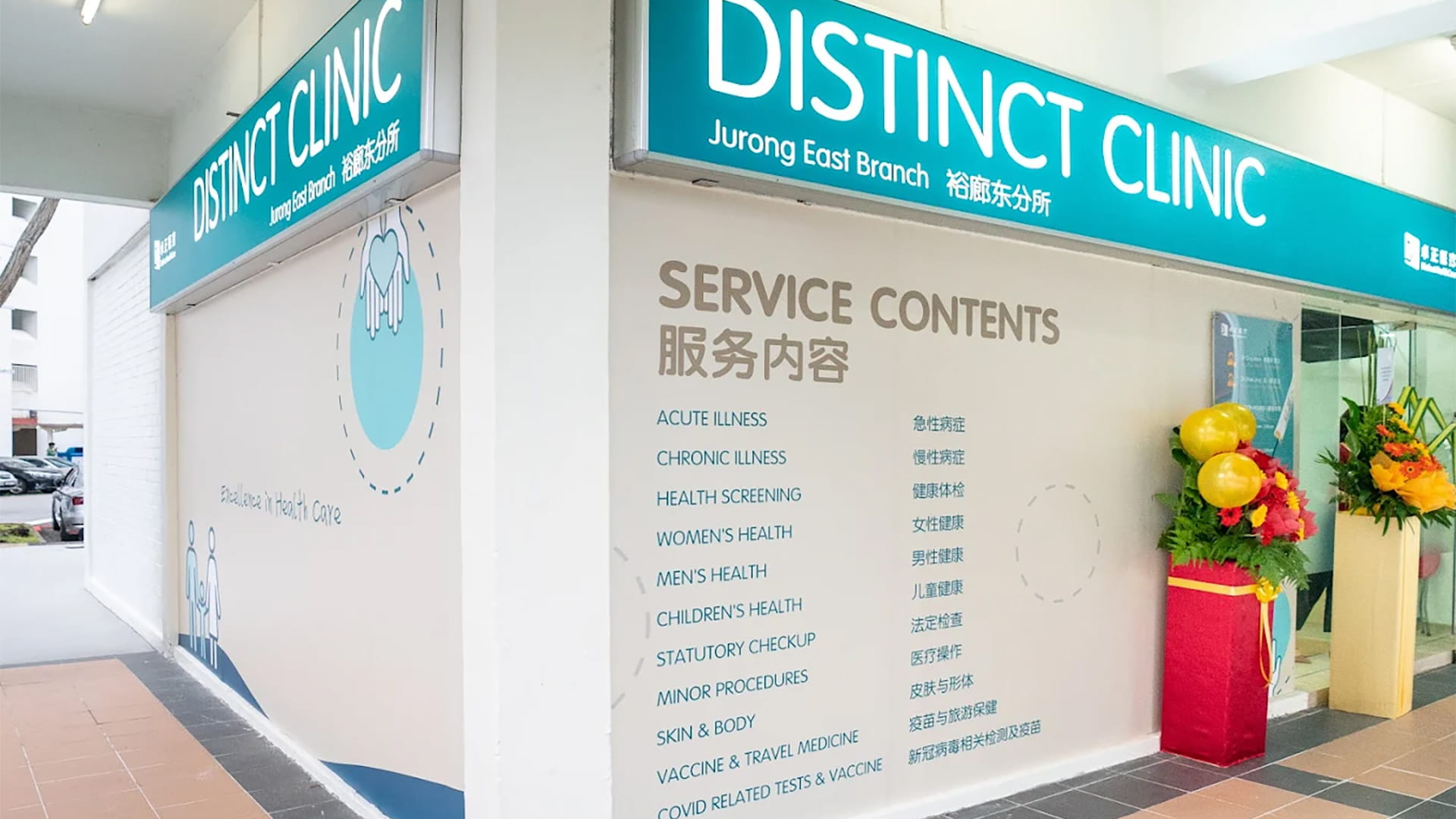
36Kr: Beyond China, you have expanded to Singapore and Malaysia. What’s the strategy?
WZ: It is exploratory globalization, executed at relatively low cost. We focus on two groups.
First, foreigners coming to China. The composition is changing, with fewer Westerners and more individuals from Saudi Arabia and Southeast Asia. They have medical needs, and our overseas presence helps channel them.
Second, Chinese nationals going abroad. Many work overseas while their families remain in China. They often struggle to navigate foreign healthcare systems. We provide assistance and build trust overseas, which can convert into domestic membership.
36Kr: Looking back at your 2012 ambition to build China’s version of Mayo Clinic, how do you evaluate Distinct today?
WZ: Over 13 years, I have become more pragmatic. Distinct must first be an enterprise that creates health value for users and returns for shareholders.
We believe we have validated that a Costco-style model can work in health services. Our next goal is one million members and RMB 10 billion (USD 1.4 billion) in annual revenue. Within ten years, we aim to serve one million Chinese families, so they can trust Distinct’s recommendations.
36Kr: What kind of entrepreneur are you?
WZ: One who strives to be responsible to users, shareholders, and employees.
KrASIA Connection features translated and adapted content that was originally published by 36Kr. This article was written by Chen Zhiyan for 36Kr.