
The Bilibili World (BW) convention had a more visible international presence this year.
The overseas creative teams behind Assassin’s Creed Black Flag Resynced and Kingdom Come: Deliverance II appeared in person, giving the event several high-profile moments. That did not mean BW had suddenly shifted into a more premium position. Rather, Chinese players’ growing activity in overseas games over the past two years has given exhibitors more reason to bring their international teams to China.
Shooters also formed a dense cluster at this year’s BW.
Ubisoft placed Tom Clancy’s Rainbow Six Siege and Assassin’s Creed Black Flag Resynced in neighboring booths, while Tencent’s Delta Force retained a prime position as a leading extraction shooter. The game’s gross player spending and player activity in the first half of the year suggested that the category has built a sizable audience base in China. It was thus unsurprising to see shooters occupy a large section of the exhibition floor.
Anime-style and character development games continued to take up substantial space at BW.
Manjuu Games’ Azur Promilia maintained its strategy of delivering high production values as a midsize studio. The booth design and the length of its demo lines suggested that players had responded to its compact but polished positioning.
Tencent’s Animula Nook took a different route. The game combines casual character development with user-generated content, emphasizing accessible progression and social sharing. Compared with Azur Promilia’s production-heavy approach, Animula Nook appeared to draw more directly on Tencent’s experience in social networking.
Bringer was another notable title at BW. Developed by YHKT Entertainment, which is controlled by Tencent, the game attracted significant media coverage and reviews. It is also the first major game project from the studio behind Chinese animated productions such as Ling Cage.
Bringer is a long-form, narrative-driven fantasy action role-playing game under simultaneous development for PC, console, and mobile platforms. A large-scale beta test is expected to begin in the second half of 2026.
A playable build was available at BW. Automaton gave the game positive marks in its hands-on report, citing its camerawork during key boss battle moments and its musical accompaniment, which includes vocal tracks.
In combat, Bringer uses a structure familiar to many Chinese anime-style games, including character switching, dodging, skills, and ultimate abilities. YHKT’s core expertise, however, has traditionally been animation. The game’s main point of differentiation is the experience created by integrating animation and combat.
The Vsinger booth was also worth noting. As Bilibili’s own virtual idol IP, its presence at BW was expected. This year, however, the booth occupied a more prominent location and featured deeper product tie-ins than in previous years, suggesting that Bilibili is using BW to connect different parts of its platform-based IP ecosystem.
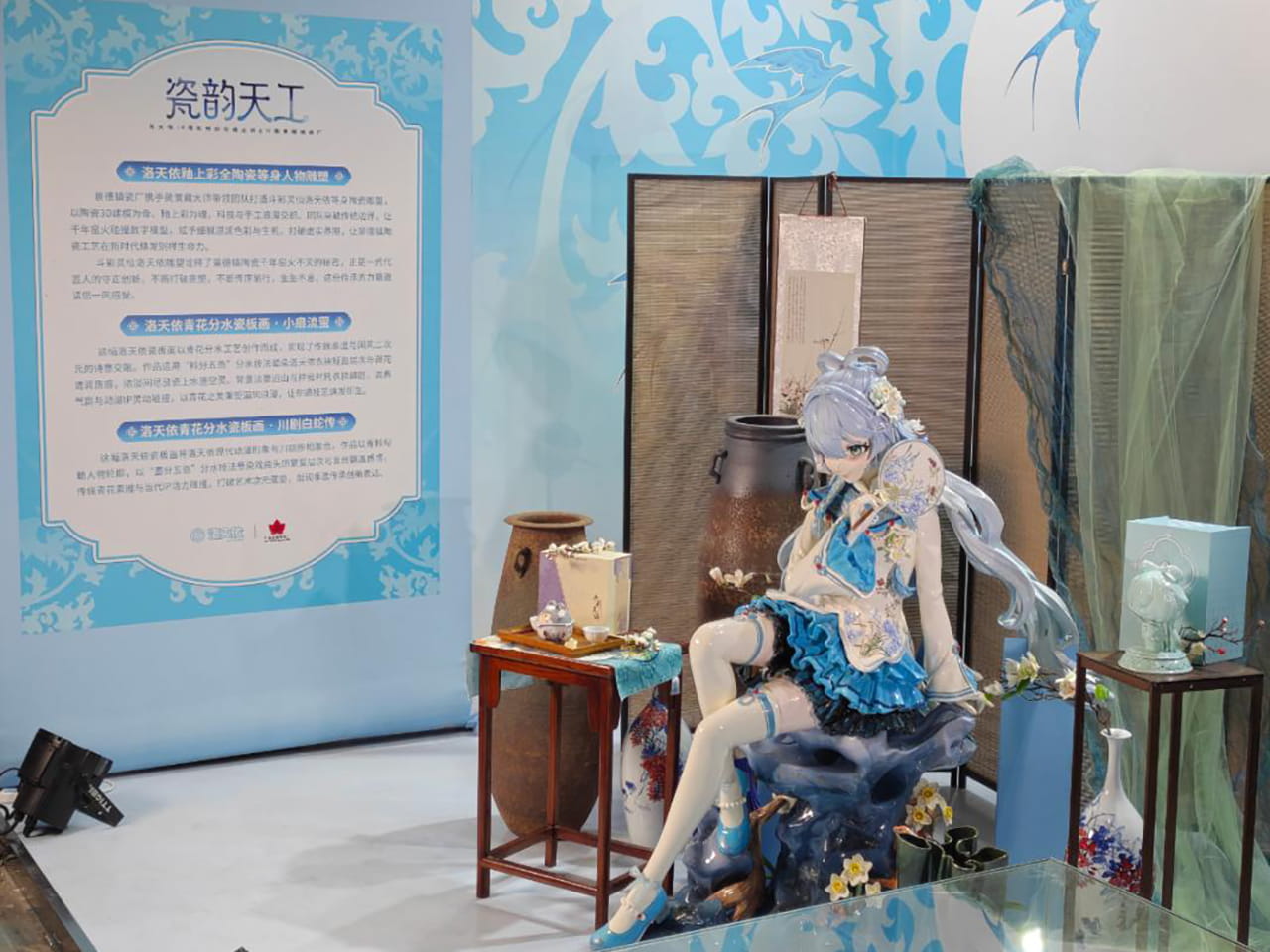
Other genres also had a stronger presence this year.
The Palworld co-op booth adopted a relaxed, hands-on approach. FunPlus presented Aniimo as a lighter take on open-world creature collecting, while Happy Elements’ Silver Palace continued to pursue greater content depth in the anime-style modern fantasy category.
The part of Bilibili’s gaming business most worth highlighting at this year’s BW was not any single proprietary product. It was the company’s approach to supporting indie games.
More than 80 indie games were available to play at this year’s event, a record for BW. A substantial share came through publishing channels supported by Bilibili.
The clearest example was the Game First Look area in Hall 4. Bilibili has turned indie game support from a collection of sporadic, project-by-project partnerships into a recurring branded program backed by sustained investment.
Among publishers, the 2P Games exhibition area covered indie games, overseas publishing, anime-style titles, and several other categories.
Destiny of Immortal was among the more immediately accessible titles for Chinese players, combining narrative choices, cultivation builds, and map exploration within a single system. Sultan’s Game offered both a playable demo and merchandise sales.
Other exhibitors included Cohen 1939, My Fairy Princess, Immortal Wayfarer, It Takes Paws, Safeguard Saga, and MeowCraft. These games leaned more toward daily life themes and lighter, more accessible gameplay.
For indie games, the value of a large exhibition such as BW often extends beyond exposure. It gives target players a chance to sit down with a game and experience its systems, writing, visual identity, and gameplay rhythm firsthand.
Bilibili’s approach to indie game support this year appeared to be a natural extension of a content platform moving deeper into games.
Bilibili already has a large population of creators who cover indie games, along with an active community that discusses them. Moving into publishing, support programs, and recurring editorial initiatives is a logical next step.
This model, in which a content platform becomes a game publisher, would be difficult for other major companies to replicate.
Bilibili also has two representative products that merit separate discussion. They reflect two distinct, though not entirely unrelated, product strategies. One is a breakout indie game made by a small team. The other is a long-term, premium project built around IP that has grown on Bilibili’s own platform.
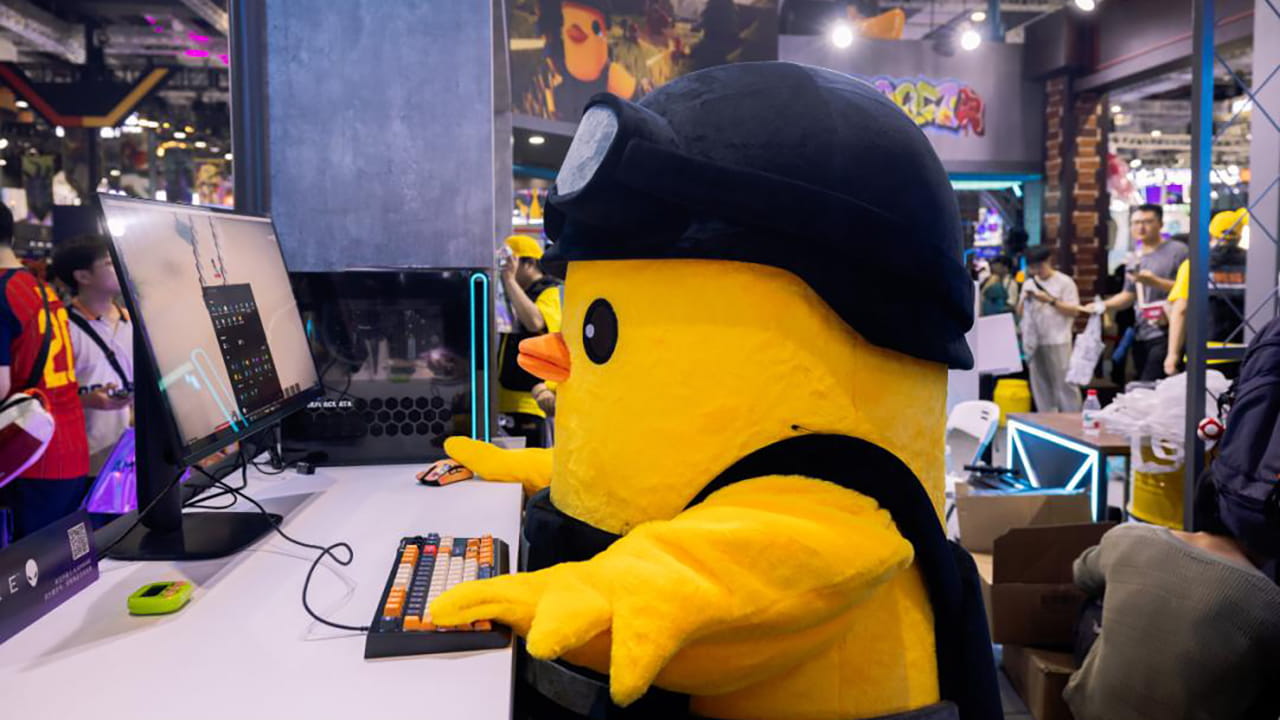
Escape from Duckov was the best example of a breakout at this year’s BW.
Published by Bilibili and developed by the five-person Team Soda, the game topped Steam’s bestsellers chart in the China region on the day of its October 16, 2025, release. It also reached second place on Steam’s global bestsellers chart.
Within six days, it had sold more than 520,000 copies and generated more than USD 6.1 million in revenue.
Six months later, worldwide sales had exceeded three million copies. The game had a 96% positive review score on Steam, earning an “overwhelmingly positive” rating. Its peak concurrent player count on Steam alone surpassed 300,000, setting a record for a Chinese indie single-player game.
At this year’s BW, Escape from Duckov had already received its summer special update, which added an island-themed challenge map. Meiqiu, an NPC (non-playable character) whom players first encountered in a winter-themed challenge, could also be recruited again in the new challenge.
The five-person team generated more than RMB 170 million (USD 25.1 million) in revenue from a game priced at RMB 58 (USD 8.6). That figure would not be trivial in the annual reports of many publicly traded companies.
Bilibili’s publishing effort did not appear to rely on a large advertising budget, celebrity endorsements, or steep discounts. Instead, it leaned on creativity, community, and word of mouth among players.
That marks one of the more significant shifts in Bilibili’s approach to gaming over the past two years.
The Three Kingdoms: The Ravages of Time represents Bilibili’s in-house development and publishing strategy.
The game is adapted from “The Ravages of Time,” a comic by Hong Kong artist Chan Mou. The series began publication in 2001 and has been serialized for 25 years, with more than 80 volumes released. It is described as the world’s longest-running comic based on the Three Kingdoms period.
The first and second seasons of the animated adaptation were co-produced by Bilibili and iDreamSky, produced by LX Animation Studio, and directed by Fu Haiqing. Created with Unreal Engine 5, the series premiered in 2023 and has accumulated more than 200 million views on Bilibili. It has a rating of 8.7 on Douban.
Bilibili is developing and publishing the game itself, while the animated series also streams on its platform. This chain, in which an IP grows on the company’s own platform and is then adapted into a game by its own team, is a combination of resources that other companies would struggle to reproduce.
At BW, The Three Kingdoms: The Ravages of Time made its worldwide public hands-on debut. Its first closed beta test is scheduled to begin July 30.
The game follows two protagonists, Sima Yi and Liaoyuan Huo, as it recreates the source material’s dark vision of the Three Kingdoms, a world shaped by rival warlords and competing strategists.
Its art direction combines a dark Chinese aesthetic with comic-style framing. Ultimate attacks, the user interface, and health bars all use thick outlines, halftone textures, and onomatopoeic visual effects to create what the developers describe as an “immersive battlefield on paper.”
Its main gameplay differentiator is reportedly its strategy and tactics system.
Strategists including Sima Yi, Zhou Yu, Jia Xu, and Xu Lin each have a signature tactic. The system shifts the focus away from the stat-driven clashes common in conventional tactical games and turns the source material’s strategy-centered ethos into a playable mechanic.
Taken as a whole, Bilibili did not make a dramatic gaming move at this year’s BW compared with last year. But its gaming business appeared to be advancing across multiple fronts, and that breadth may be the most distinctive development in Bilibili’s gaming strategy over the past year.
KrASIA features translated and adapted content that was originally published by 36Kr. This article was written by Liu Shiwu for 36Kr.
Note: RMB figures are converted to USD at rates of RMB 6.78 = USD 1 based on estimates as of July 23, 2026, unless otherwise stated. USD conversions are presented for ease of reference and may not fully match prevailing exchange rates.