
Even on weekdays, crowds line up outside Songmont’s flagship store in Shanghai’s Huangpu district. At times, the queue stretches to the neighboring storefront. Many passersby can’t help but wonder: how did this brand become so popular?
The surge in foot traffic has persisted since the start of the year, and Songmont has become increasingly visible in the public eye. In September, LVMH chairman Bernard Arnault visited the brand’s Taikoo Li Qiantan store in Shanghai and bought two handbags. In October, Songmont mounted an exhibition in Paris, marking its second consecutive appearance at Paris Fashion Week.
During this year’s Singles’ Day shopping festival, it once again topped Tmall’s sales chart in the bags and accessories category. Most recently, it launched its first fragrance line, further expanding its product universe.
An investor told 36Kr that many entrepreneurs she meets are fans of the brand. “When they shoot product campaigns, they often use a Songmont bag as a prop,” she said. “They admire the products and the branding, but even more, they like that it’s also a startup.”
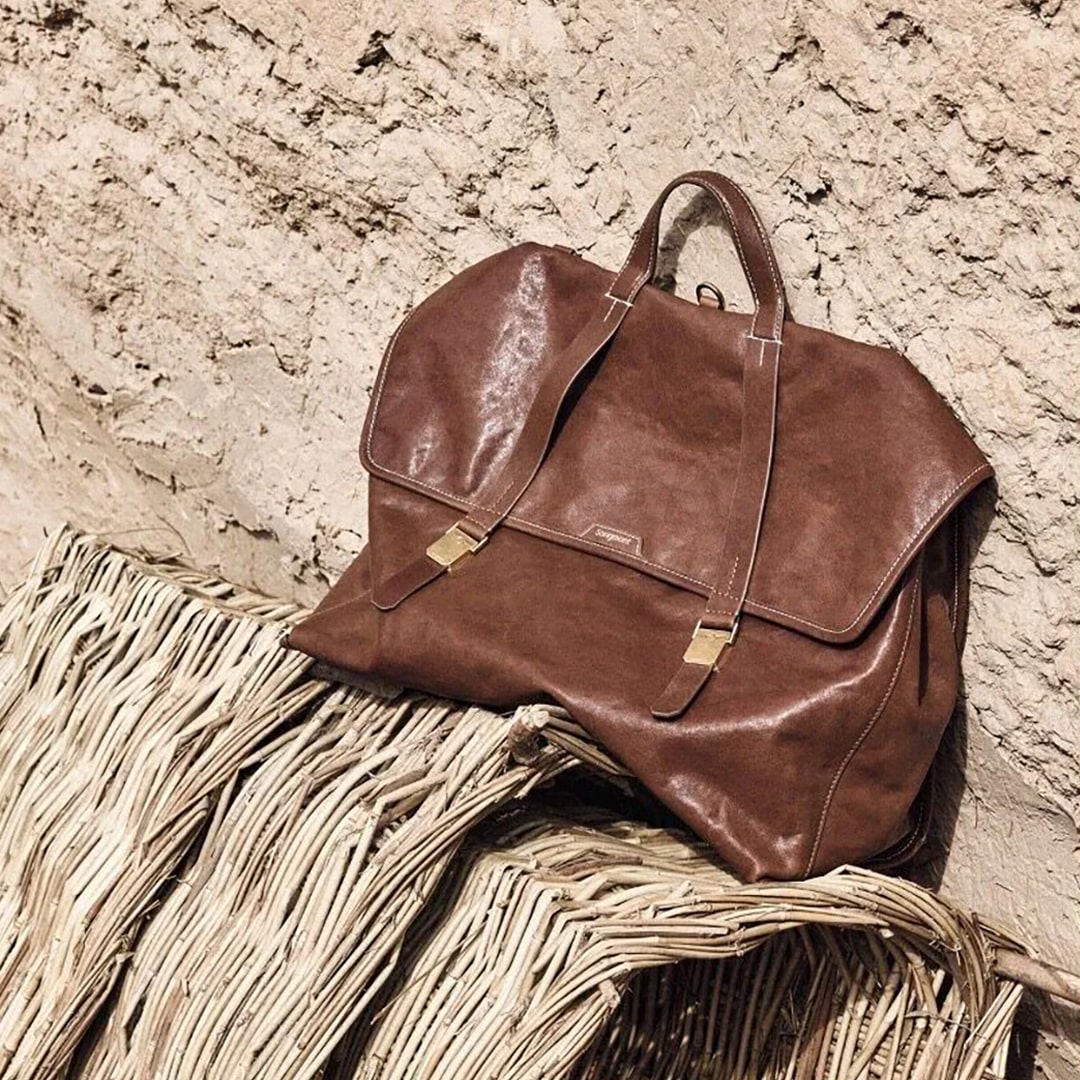
Founded in 2013, Songmont now stands alongside brands like Pop Mart and Laopu Gold as part of a new wave of Chinese consumer labels. No longer framed simply as alternatives to Western names, these companies are building influence at home and abroad.
According to Bloomberg, citing data from BigOne Lab, Songmont’s online bag sales in China grew about 90% in the first three quarters of this year, while Gucci and Michael Kors fell about 50% and 40%, respectively. Overseas curiosity is also rising: questions about the brand are increasingly appearing on Reddit, with many users trying to decode the Songmont buzz.
Though Songmont spent years growing quietly, the brand is now entering an acceleration phase powered by both organic momentum and external attention. Yet founder Fu Song prefers to keep expectations grounded. “There has always been momentum, and there’ll be more in 2025,” she said. “But overall, we want to stay slow, to keep our rhythm.”
Fu often references the racing documentary Formula 1: Drive to Survive as a source of inspiration. “Every entrepreneur has to learn to tune out the noise,” she said. “Focus on what aligns with your values, and make products that feel like works of art.”
Being seen by the world
One thing about Songmont that has remained steady is its brand identity, firmly rooted in Shanxi. Fu emphasizes that the culture of the Central Plains is the foundation of the brand, and that identity runs through its products and retail spaces.
Many of Songmont’s signature designs draw from Eastern aesthetics. The “Drippy” collection borrows the upturned rooflines of Nanchan Temple. The “Yore” collection references Tibetan iconography of the tigers near the Yellow River’s origin. The “Gather” line takes inspiration from camel caravans crossing the Hexi Corridor.
Songmont’s stores also echo the natural textures of rock, mountains, riverbeds, and earth. When the brand opened a pop-up in Bangkok in July, it drew from the incense culture of the Central Plains, transforming the space into a shimmering “incense forest” made of gold metalwork and sheer drapery. Its interpretation of Eastern aesthetics has become so distinct that it now functions as an invisible moat.
That identity has helped Songmont cultivate a loyal following, and Arnault’s unexpected visit gave the brand another jolt of online visibility. Bloomberg noted that China’s USD 49 billion luxury market is undergoing a fast shift: spending on Western luxury labels has stagnated, while demand for local brands continues to climb. These rising players, the outlet wrote, are “redrawing the map of one of the world’s top luxury markets and forcing global players to take note.”
Over the past two years, five Chinese brands—Songmont, Laopu Gold, Mao Geping, To Summer, and Icicle—have all grown faster online than their international competitors.
Customer motivations vary. Some appreciate Songmont’s blend of form and function, producing bags suited for daily commuting and travel as they are “spacious, versatile, and photogenic.” Others told 36Kr they like that its prices feel “fair,” without the “logo tax” associated with foreign luxury.
A Shanghai finance professional named Xixi has bought three pieces since discovering the brand: a medium Yore bag, a tote with earlike straps, and a casual shoulder bag, plus accessories. “The leather and design feel balanced—understated yet tasteful,” she said. “I carry them more often than my luxury bags now.”
Songmont’s rise has also lifted other Chinese handbag labels, particularly ones rooted in Eastern design idioms. In 2013, very few local bag brands sold products priced above RMB 1,000 (USD 140). Anything above RMB 500 (USD 70) was considered expensive, and many brands used pseudo-international names ending in “in Paris” or “in New York.”
When Songmont joined Tmall in 2018, Fu could count her direct competitors on one hand. Seven years later, that number has grown to around 300.
Her long-term goal, she said, is to help break biases against domestic brands and detach handbags from outdated notions of social status.
Songmont also differentiated itself technically. While many Chinese bag makers relied on “split leather,” a composite of suede fiber and synthetic coating, Songmont uses imported A-grade full-grain leather. Its hobo bags use a self-developed leather that remains light, structured, and slightly weathered.
The hardware employs vacuum-plated stainless steel for durability and jewelry-grade precision. “We encourage designers to create detailed pieces that carry a touch of pride,” Fu said.
It’s easy to call Songmont a “post-consumerist” brand, for its rise mirrors a broader shift away from logo worship and toward practicality, authenticity, and cultural resonance. Yet even within emerging hierarchies of taste, Songmont rarely sits low. Its craftsmanship and storytelling, rooted in a calm, grounded interpretation of Central Plains aesthetics, continue to give it credibility in the luxury realm.
A shared cultural language
Within the industry, Songmont is also known for its ability to choose strong collaborators and create resonant content.
Its in-house podcast has around 95,000 subscribers on Xiaoyuzhou. Guests have included Li Na, Wen Qi, Jiang Qiming, Wang Yitong, and filmmaker Jia Zhangke, each interviewed by journalist Zhou Yijun. Some short films and commercials co-created with these guests have gone viral.

Unlike typical celebrity interviews, these conversations revolve around deeper human stories. Though seemingly unrelated to handbags, the series has created an emotional connection with audiences.
In May 2024, tennis legend Li Na became Songmont’s brand friend. Ten years after her retirement, she remains known for her candor and strong will. “When I worked at Google, I noticed many Chinese professionals were wise and hardworking but often hesitant to say what they truly wanted,” Fu said. “I wanted to express this idea of honest ambition. Li Na naturally came to mind. She’s a guiding light.”
Writer Jiang Fangzhou and Li Na became the first two guests on Songmont’s podcast, marking a turning point that signaled the brand was ready to step onto a larger cultural stage.
“We often don’t dare to say what we want, or what we fear,” Fu said. “I hope our brand’s expression gives people something to hold onto, making them feel stronger rather than more anxious.”
For collaborations, she added, the relationship must be mutual.
“We don’t want celebrity deals where the brand simply borrows exposure. Nor should a brand gamble big money for one burst of fame. Our content comes from what we genuinely want to express at that moment. If one day we have nothing to say, we’ll stop.”
For its tenth anniversary, the team returned to Shanxi to shoot a campaign and revisit ancient wooden structures like Nanchan Temple. “On that trip, we again felt how the Yellow River, the wind and sand, and the texture of rammed-earth walls shape this region’s landscape and humanity,” Fu said. “That sense of time, that’s our brand’s bloodline.”
Today, consumers instinctively associate Songmont with words like natural, calm, unhurried, and steady. Through storytelling and content, the brand has carved out a rare path for Chinese labels: one anchored in emotional resonance and cultural identity.
RELATED ARTICLE

Mapping new territory
Beyond handbags, Songmont is broadening its product ecosystem. It now operates three official online stores covering bags, apparel, and fragrance.
In November, it launched a fragrance line created in collaboration with independent perfumer Yili Olfactory Art. Priced at RMB 1,280 (USD 180) for 30 milliliters, the perfume uses 25% agarwood essence and is pitched as a subtle, effortless scent, consistent with the brand’s emphasis on natural ease.
An investor familiar with niche fragrance brands described the collaboration as refreshing. Many young Chinese perfume labels, he said, rely heavily on the four major global fragrance houses; send them a brief, and they might simply pull an existing formula from storage. Yili, by contrast, has earned a strong reputation in China’s scent community, with bottles typically retailing around RMB 2,000 (USD 280). Earlier this year, the studio also co-developed the “Snake” perfume with Documents.
Fu sees fragrance as part of a broader sensory strategy. “A brand needs to engage all five senses to create an immersive experience, and smell is crucial,” she said.
In 2024, Songmont also debuted its apparel line. At exhibitions, many guests wore pieces that appeared casual yet deliberate, often featuring washed finishes, hand-rubbed dyes, frayed edges, or hand-woven details. “They carry a rough, natural beauty—a kind of wild vitality,” Fu said.
Though apparel and fragrance remain smaller in scale than handbags, these expansions reflect a clear direction: building a complete sensory and aesthetic ecosystem grounded in a unified brand ethos.
“Be humble, be slow”
Songmont’s expansion over the past few years has been visible but measured. Between 2022–2024, it rose from fifth to third, and then to first place on Tmall’s Singles’ Day bags and accessories chart, before retaining the top spot again this year. Offline, it has opened 18 stores, mostly in high-end malls such as Taikoo Li, IFS, and Deji Plaza, along with a location in Bangkok. Overseas, it has launched an independent site and continued its Paris Fashion Week appearances.
Yet the growth, Fu stressed, is not as aggressive as it may seem. “Each year’s increase fits within our expectations,” she said. “Building a brand is like being a person, and you don’t want to fatten yourself up too fast.”
Even now, amid what many describe as its breakout moment, the company mantra remains the same: “be humble, be slow.”
“Being noticed feels like a gradual accumulation,” Fu said. “By the time opportunities appear in front of you, they have usually been forming quietly for a long time.”
Looking back, many factors help explain the rise of brands like Songmont: cultural confidence, a maturing consumer mindset, and a renewed appetite for domestic identity.
But ultimately, the fundamentals still matter most. As one venture capital partner told 36Kr, luxury pricing relies on either meticulous craftsmanship or powerful storytelling, and ideally both. Even Hermes, he noted, uses technique as a form of narrative. For a brand like Songmont, the principle is the same: within a reasonable price range, excellence in craft and storytelling is what counts.
That same investor offered a final thought:
“To create extreme content that people genuinely agree on takes time. Real consensus doesn’t form overnight, it has to settle.”
Whether Songmont will build that lasting consensus is a question that, fittingly, will take time to answer.
KrASIA Connection features translated and adapted content that was originally published by 36Kr. This article was written by Ren Cairu for 36Kr.