
From March 2–5, the Mobile World Congress (MWC) took place in Barcelona, Spain, drawing more than 2,900 exhibitors from 219 countries and regions.
More than 350 Chinese companies attended this year’s event, a significant increase from last year. Chinese firms were among the most visible participants at the show. At the main entrances, along exhibition corridors, and even at Barcelona’s airport, banners from Chinese technology companies were difficult to miss.
This year’s central theme was “The IQ Era,” signaling a new phase in smart technologies. Artificial intelligence dominated discussions across the exhibition halls.
Walking through the event’s seven halls revealed a clear pattern. AI capabilities are moving rapidly toward the device edge. Smartphones, PCs, and a wide range of wearable devices are integrating increasingly sophisticated AI functions. At the same time, the infrastructure supporting these applications is evolving quickly. Technologies such as 6G, once largely theoretical, are beginning to move toward early pre-commercial development.
36Kr traveled to Barcelona to survey the exhibition floor. After several days on-site, the team identified a selection of technologies and products that reflect the latest trends.
Xiaomi concept car brings gaming supercars into reality
At Xiaomi’s booth, the Vision Gran Turismo (VGT) concept car drew large crowds throughout the event. Xiaomi is the first Chinese carmaking brand invited to participate in the VGT program.
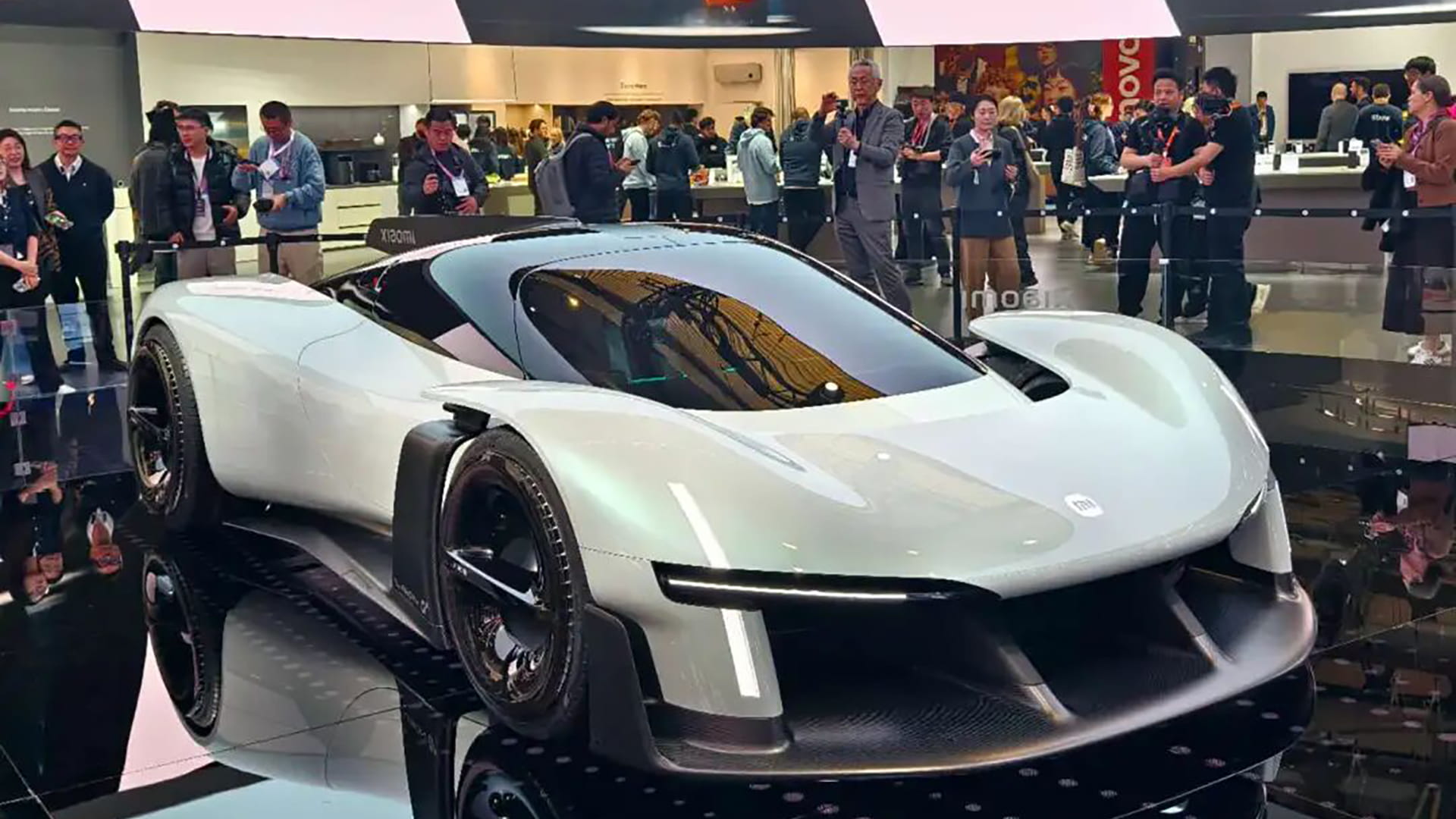
Lu Weibing, a partner at Xiaomi, told 36Kr that the concept vehicle was not built purely for imagination. “It is grounded in real engineering principles and must comply with physical constraints such as aerodynamics,” Lu said.
The car’s design philosophy is summarized as “shaped by the wind.” Rather than relying on external aerodynamic components, the vehicle’s body is engineered to maximize aerodynamic performance.
The concept car is built on Xiaomi’s self-developed 900-volt silicon carbide platform, supporting nearly 1,900 horsepower.
In traditional racing cars, drivers interpret the vehicle’s behavior through physical feedback. In Xiaomi’s concept car, the relationship shifts in the opposite direction.
The vehicle integrates the Xiaomi Pulse intelligent assistant and the HyperVision display system, an interface redesigned for Xiaomi’s Hyper OS that adapts dynamically based on driving conditions, such as track or road mode. The system also connects with Xiaomi’s broader ecosystem of devices.
Vision Gran Turismo, or VGT, is a project initiated by Sony’s racing game Gran Turismo, inviting global automakers to design futuristic supercars for the game’s virtual world.
Honor’s robot phone adds a gimbal camera inside a smartphone
One of the most discussed products at Honor’s booth was the “Robot Phone,” which departs from the conventional smartphone design by integrating a mini camera module with a gimbal system directly into the device.

Spatial constraints had to be overcome to achieve this. The device must accommodate the gimbal within the limited space of the smartphone’s rear panel, meaning the internal motor must deliver both high strength and extremely low weight.
To address this, Honor said it adapted high-performance materials used in its foldable smartphones for the core motor components. It also used simulation technology to optimize the structure of each part.
The gimbal system offers four degrees of freedom, enabling the camera to rotate like a human neck, following subjects and adjusting angles dynamically.
The camera offers 200-megapixel resolution with advanced stabilization. Honor also partnered with the German imaging company ARRI to enhance color science and cinematic image quality.
The phone is not designed solely as a camera device. Powered by Honor’s AI model, the camera can reportedly perceive environmental context and adjust its posture accordingly, giving the device behavior that resembles an emotionally responsive companion.
Lenovo AI Workmate acts as a workplace companion
Lenovo showcased a wide range of AI-native hardware at MWC, but the AI Workmate concept device drew particular attention.
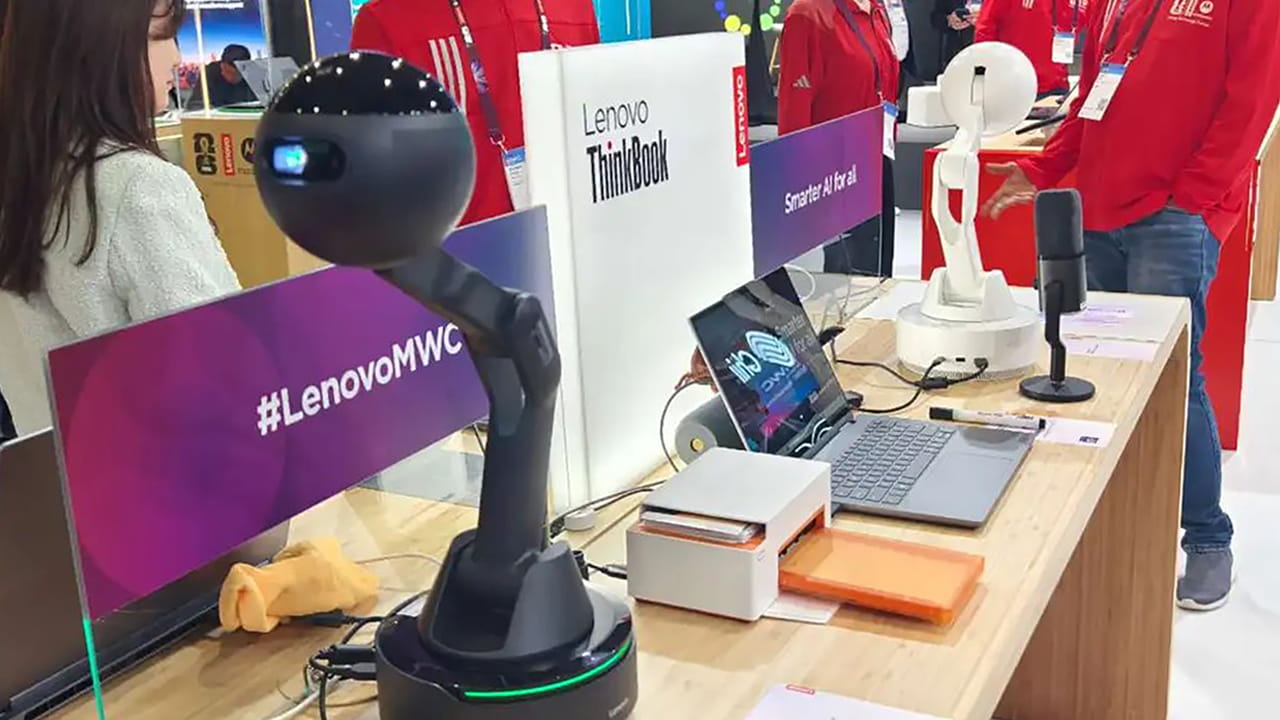
The device functions as a persistent workplace assistant that understands what a user is doing in real time. During meetings, it can capture key points and compile task lists. While reading documents, it highlights critical information. When building presentations, it organizes scattered materials into structured outlines.
One of its more distinctive capabilities is the ability to project information beyond the screen. Meeting notes, task lists, and data comparisons can be projected onto desks or walls, creating a physical digital dashboard.
According to Lenovo staff at the booth, the concept explores a hybrid workflow. Actions performed in the physical world, such as signing documents or making handwritten annotations, can be automatically digitized without scanning or manual uploading.
The device also works alongside PCs and other endpoints. While the computer handles primary tasks, AI Workmate operates as a secondary workspace that continuously provides context, reminders, and organizational assistance.
Huawei pushes U6GHz solutions as groundwork for 6G
The U6GHz spectrum band is considered an important resource for expanding mobile networks over the next decade.
During MWC, Huawei unveiled a series of products and solutions built around U6GHz as part of its longer-term 6G roadmap.
Among them is a new AAU product series that integrates 256 transmit-receive units into a single antenna array. Traditional antennas often contain only a few dozen such units.

Huawei also incorporated a hybrid digital-analog beamforming algorithm, allowing the 256 micro transmitters to function collectively as a focused signal beam.
This dense combination of antenna units and algorithms addresses one of U6GHz’s key limitations, high signal loss. Huawei said the approach enables propagation distances comparable to the C-band spectrum, around 3.5 GHz, currently used for mainstream 5G networks.
Because many future AI applications will operate indoors, Huawei also introduced U6GHz small-cell stations designed to improve indoor coverage.
Transsion experiments with modular smartphones
Transsion introduced a modular smartphone concept under its Tecno brand that allows nearly every component to be detached.

Using magnetic connectors, users can remove modules including the wireless communication unit, microphone module, two 3,000 milliampere-hour battery packs, and the entire camera system. What remains is a base phone only 4.9 millimeters thick, thinner than the rumored iPhone 17 Air.
The modular design also creates new usage scenarios. For example, detachable microphone or camera modules can be clipped to clothing and used as a lavalier microphone or action camera.
According to a staff member at the booth, the concept aims to address a common reason people replace smartphones.
Many consumers upgrade because of a single limitation, such as battery life or camera performance. A modular system would allow users to replace specific components rather than the entire device, potentially reducing long-term costs and electronic waste.
Meta’s AI glasses gain color displays and gesture controls
Meta’s exhibition space was located outdoors between halls three and five, yet it still attracted long queues. Visitors typically waited at least five minutes to try the devices.
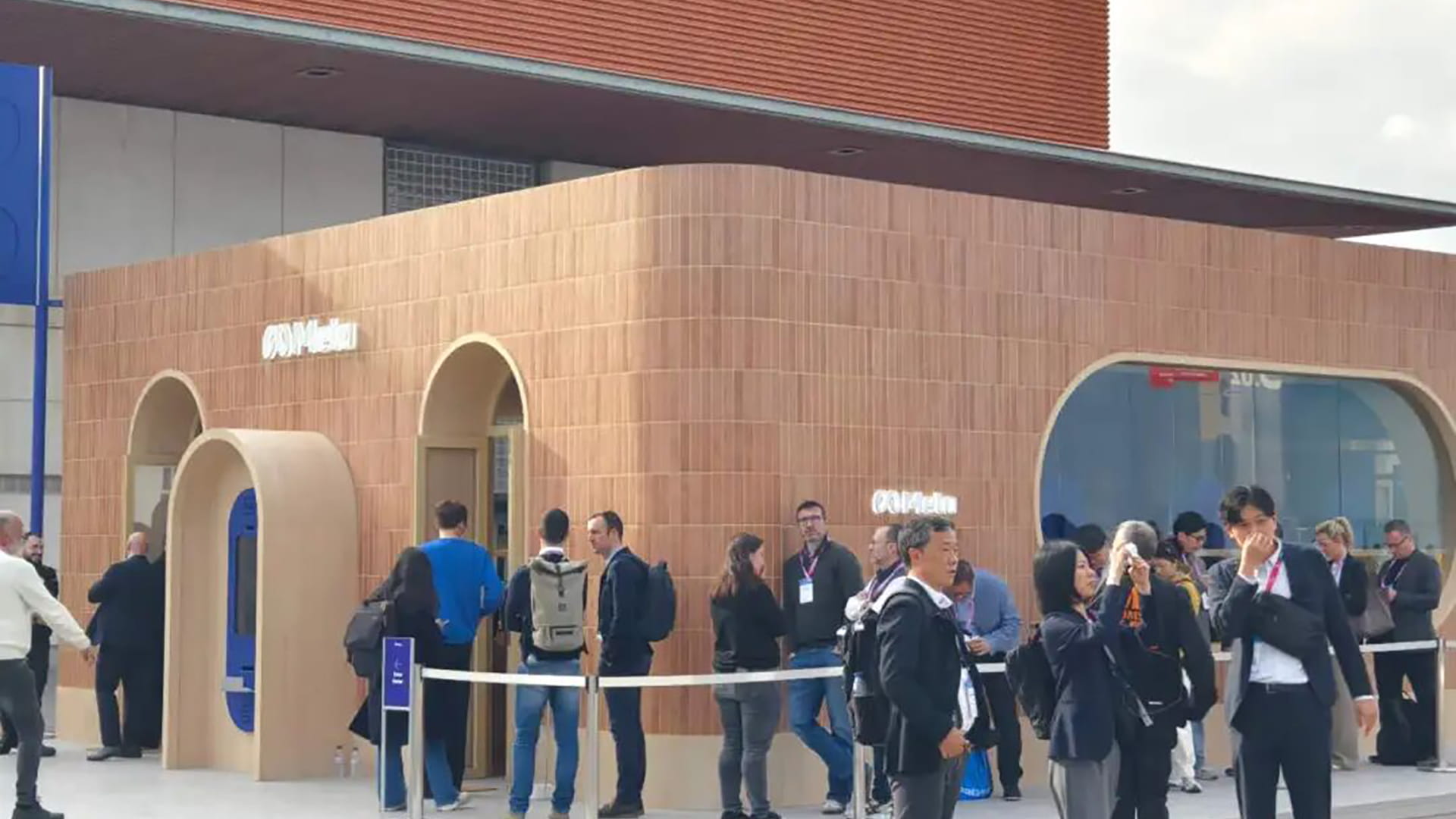
The company showcased the Meta Ray-Ban Display, first introduced at the Meta Connect event several months earlier.
This is Meta’s first AI glasses product with an integrated display. Although it uses a single-eye display with a limited field of view, it can render full-color visuals rather than the monochrome green displays common in earlier smart glasses.
Even in bright outdoor conditions, the display remains clearly visible.
Powered by Llama 3, users can say, “Hey Meta, look and tell me…” and the glasses analyze what the camera sees, offering real-time explanations or translations.
Another highlight is the Meta Neural Band, an electromyography wristband designed to work with the glasses.
Instead of swiping on the frame, users can control the device through subtle hand gestures detected via muscle signals. These gestures can be performed even while the user’s hand remains inside a pocket.
Examples include pinching, swiping, tapping, or touching the thumb against the index finger. An “OK” gesture can also be rotated to adjust volume.
iFlytek’s AI glasses can read lips in noisy environments
At MWC, iFlytek unveiled its first AI glasses, aimed at translation use cases.
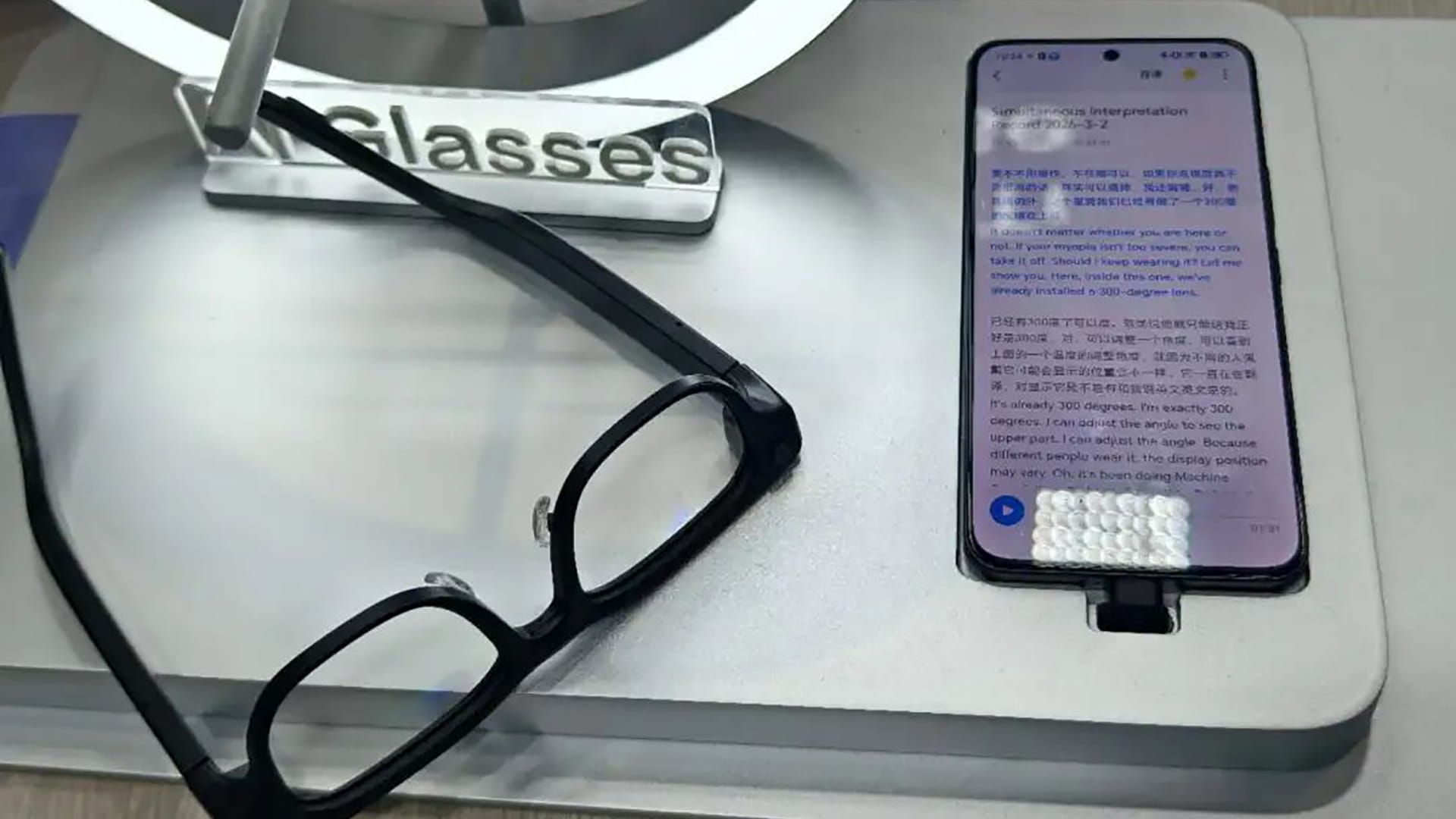
The device’s most distinctive capability is a multimodal noise reduction system designed for lip reading in environments with heavy background noise, such as trade shows or cocktail receptions.
The system captures lip movements through a camera while simultaneously collecting the wearer’s voice through a bone conduction microphone.
By combining video and audio inputs, the glasses can isolate the target speaker even in crowded environments. According to the company, the approach improves speech recognition and translation accuracy by more than 50%.
The glasses also function as a meeting assistant, automatically generating multimedia meeting summaries that include text, images, and audio.
Alibaba’s Qwen AI glasses enable payments and ride-hailing
Alibaba debuted its Qwen AI glasses at MWC.
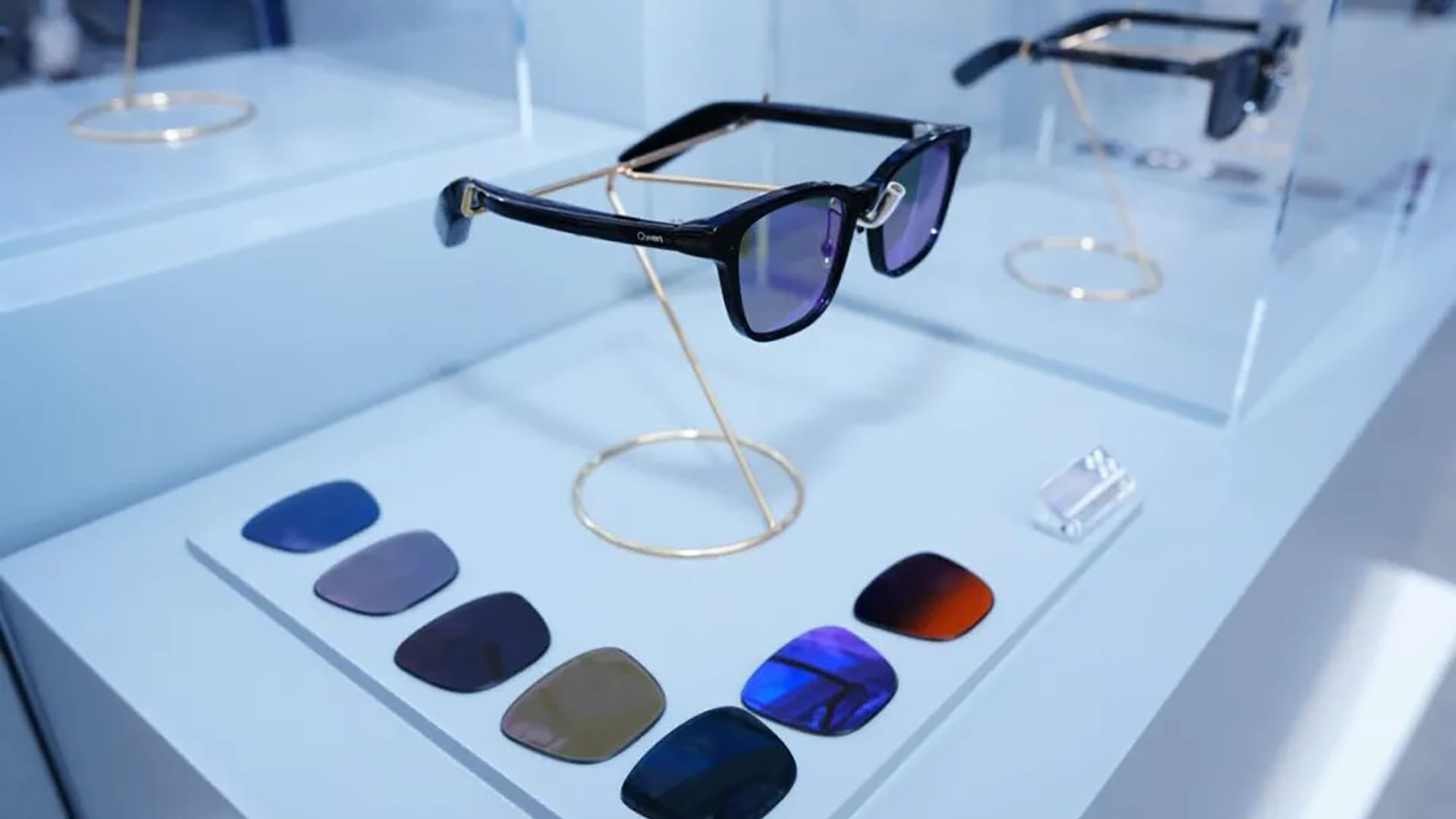
The device weighs approximately 40 grams, making it similar to ordinary eyewear in terms of comfort.
To address battery limitations, the glasses feature a hot-swappable battery system that allows users to replace power modules throughout the day.
Alibaba also showcased a G1 sunglasses model that includes dual flagship chips, two operating systems, and 64 gigabytes of onboard storage. The product line offers seven different lens color options.
Following subsidies and promotions in China, the device starts at RMB 1,997 (USD 279.6).
Preorders opened across China on March 2, with shipments scheduled to begin on March 8.
Qualcomm presents an end-to-end 6G prototype
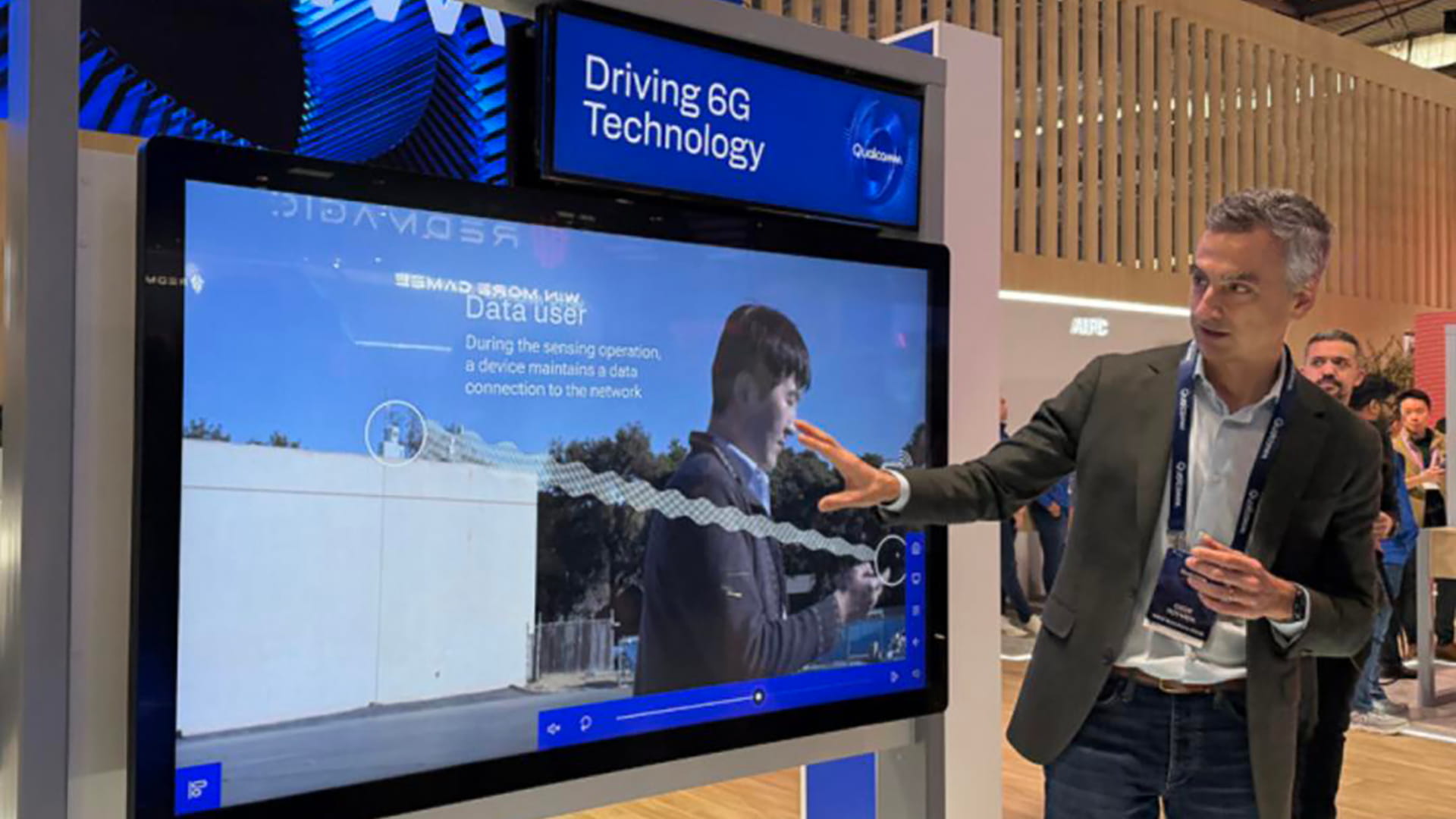
At MWC, Qualcomm demonstrated an end-to-end 6G prototype system.
The prototype incorporates three key technologies.
First, it uses ultra massive MIMO (multiple input, multiple output), integrating 2,048 antenna elements and 256 fully digital transceiver channels. Compared with 5G systems, both antenna density and system complexity increase by an order of magnitude.
Second, Qualcomm introduced probabilistic shaping, a modulation technique that reduces error rates under the same power and bandwidth conditions.
Third, the system features subband full duplex transmission, enabling simultaneous uplink and downlink communication.
Compared with traditional communication methods, the approach resembles a two-way highway without a central divider. Traffic can move in both directions at the same time without collisions.
The prototype suggests that 6G development is moving beyond theoretical research into early validation stages. Qualcomm said commercial 6G systems could begin deployment around 2029.
Vivo’s X300 Ultra targets professional filmmaking
Although Vivo’s booth was relatively small, its upcoming X300 Ultra photography kit attracted significant attention.
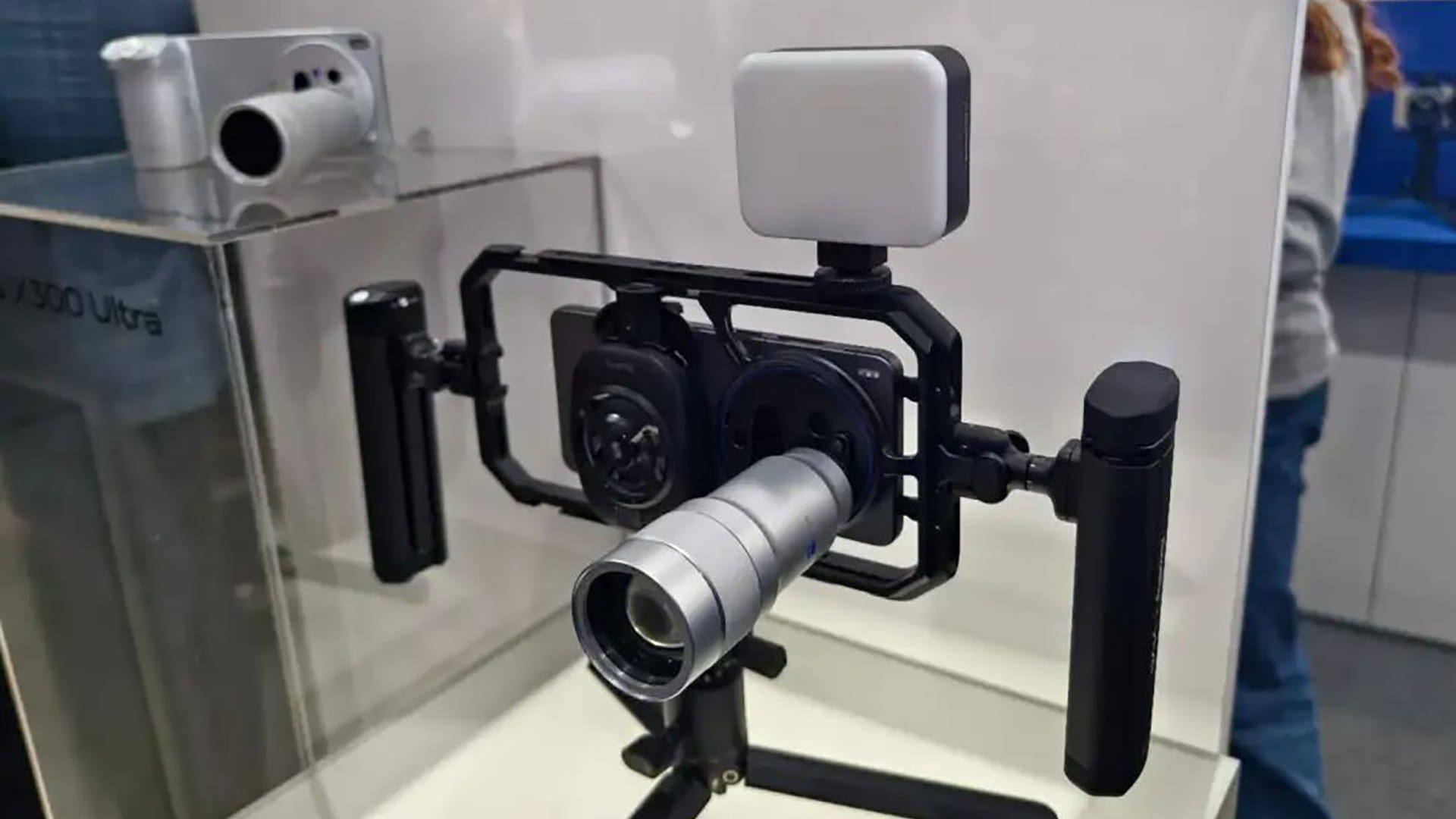
The smartphone is equipped with a 400-millimeter Zeiss telephoto extender and a SmallRig professional video accessory kit that includes a grip, cooling system, and fill light.
All camera lenses on the device, including the ultrawide, main, and telephoto cameras, can capture video at 4K resolution and 120 frames per second.
More importantly, the phone supports ten-bit color depth, wide dynamic range, and consistent log color profiles across all focal lengths.
This allows footage captured on the device to enter professional post-production pipelines.
Leju explores applications for Kuavo humanoid robot
China Mobile and Leju Robotics jointly showcased the latest commercial progress of the Kuavo humanoid robot, described as the world’s first humanoid robot equipped with 5G-Advanced (5G-A) technology.
At the exhibition, the robot played rock-paper-scissors with visitors.
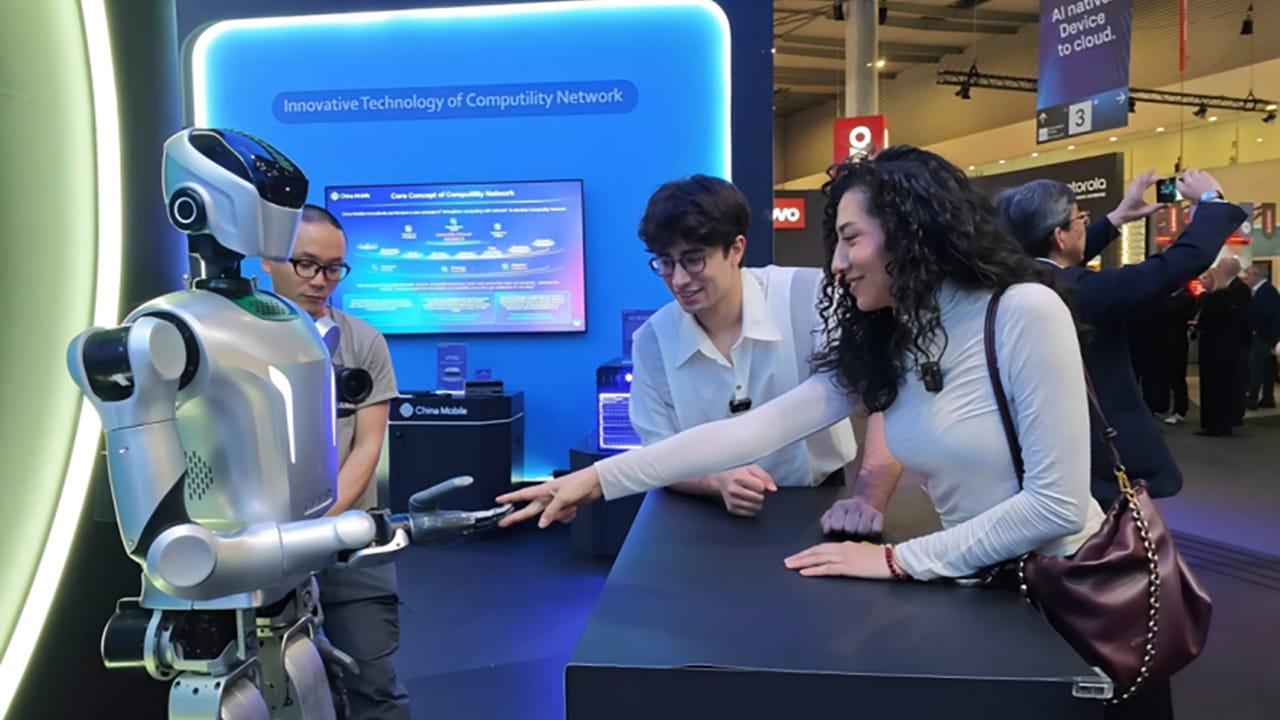
Using the high bandwidth and low latency of 5G-A networks, the robot can transmit high-definition video to cloud systems in real time for analysis and decision-making.
Chang Lin, CEO of Leju Robotics, said the high uplink bandwidth and low latency of 5G-A allow the robot’s multimodal sensory data to be transmitted continuously to large cloud models. This enables more complex motion control and human-robot interaction.
At the same time, high reliability and massive connectivity could allow multiple robots to collaborate across locations. This would support remote human-robot control and the evolution from single-agent intelligence to collective intelligence.
KrASIA features translated and adapted content that was originally published by 36Kr. This article was written by Qiu Xiaofen for 36Kr.